

Mostrando entradas con la etiqueta País Vasco. Mostrar todas las entradas
Mostrando entradas con la etiqueta País Vasco. Mostrar todas las entradas


Password pressure - PAU inglés 2015
>Exámenes selectividad inglés País Vasco resueltos
 Nothing is more annoying than sitting at a computer screen, looking at a message saying “Password incorrect”. Modern technology is a wonderful thing, but when it crosses the line that divides helpful from annoying it can become a problem. Whether we like it or not, much of our daily life is now conducted online. As a result, we have many internet accounts and we need to remember a large number of passwords and usernames to gain access to them.
The password pressure of modern life means that 61% of us use the same password wherever we can. In fact, one in 10 people have 50 or more online accounts and many are not only using the same password for everything, but also writing down all their passwords in one place, such as a Post-it note stuck to their computer.
Some personal data, such as your mother’s name, might seem hard to decipher but if someone has any information about you, it may be easy to guess. However, this doesn’t mean you have to remember 50 completely nonsensical things.
The same password can be used for low-security accounts, such as discussion groups, but if the account is more important your password should be more complex.Never use standard dictionary words. Criminals use software that can go through every word in the dictionary and try them out as passwords in seconds. For more security, try mixing letters with numbers and punctuation. And the longer the password, the better it is in terms of security. Many sites ask for a “minimum six characters”, but you don’t need to stop there. Think of a memorable phrase, take the spaces out, or use the first letter of each word.
According to the Microsoft website, it’s not necessarily bad to write your password down —a piece of paper is harder for a criminal to hack than something on your computer, as long as it is carefully protected. So hide your password or disguise it. And never write "My internet password" at the top of the page.
New clothes which make people invisible to cameras - PAU 2015
>Exámenes selectividad inglés País Vasco resueltos
 Celebrities may finally have a way to defend themselves against unwanted street photographers' cameras thanks to a clever new clothes collection which is designed to ruin any images taken using flash photography.
DJ Chris Holmes has invented the Flashback Collection, an anti-paparazzi type of clothing that reflects the light from a camera's flash, creating a hopefully useless image which completely hides the wearer's face.
The collection includes a hooded jacket, a scarf, and a coat that look like everyday pieces, but essentially act as a mirror when hit with bright light, making the wearer practically invisible in flash photography. Holmes has asked for suggestions for additions to the line in the comments section of the product’s web-page.
Mr. Holmes, who works with Paul McCartney, said that he was inspired to create the collection after he realised the reflective clothes he wears when he is on stage were spoiling the pictures. "While I wasn't happy that many of my photos were ruined, it gave me the idea that, perhaps, I could use this technology to design clothes which could make photos worthless-perfect for those who don't want their picture taken." he wrote.
He developed his product for a competition on new ideas called "Think Tank", which allows people to decide which items deserve to be funded and produced. These clothes are currently unavailable for buying, but fans have 20 more days to vote for them on the Think Tank website in the hope that they will eventually be sold in shops.
One person who will no doubt be delighted to see the concept turned into a reality is model Cara Delevingne, who is well-known for being one of the most photographed women in the world. In November, the model was actually seen wearing a reflective silver jacket made especially for her. The jacket was given to the star in order to test whether it actually worked when facing some of the world's most persistent celebrity photographers.
Your computer knows you better than your friends do - PAU 2015
>Exámenes selectividad inglés País Vasco resueltos

Scientists at the University of Cambridge showed that their software was able to predict somebody’s personality more accurately than a work colleague by analysing just 10 Facebook "likes". Inputting 70 "likes" allowed it to give a truer picture of someone’s character than a friend or flatmate could offer, while 150 "likes" out-performed a parent, brother or sister. It took 300 "likes" before the programme was able to judge character better than a husband or wife. Given that an average Facebook user has about 227 "likes", the researchers say this kind of artificial intelligence has the potential to know us better than our closest companions.
According to one of the scientists involved, Dr. Youyou, "Employers could match candidates with jobs better based on their personality. People may decide to improve their own intuitions with this kind of data analysis when making life decisions such as choosing their studies, jobs, hobbies or even romantic partners. Such computer-aided decisions may well improve people’s lives."
But the researchers share the concerns of those who fear a future in which our characteristics and habits become an "open book" for computers to read. However, they hope that governments and technology developers will confront those problems by supporting privacy-protecting laws and technologies, and giving the users full control over their digital footprints.
Student raises over £21,000 for homeless man who offered her money - PAU inglés 2015
>Exámenes selectividad inglés País Vasco resueltos

“I was touched by such a kind gesture from a man who faces prejudice every day. He has been homeless for 7 months through no fault of his own and needs to get back on his feet but cannot get work due to having no permanent place to live. So that’s when I decided to change Robbie’s life and help him,” Dominique explains on her donation page.
The campaign has received global attention and has become very popular by spreading rapidly on social media. Since the fundraising page was set up, it has frequently reported technical difficulties due to an unusually high number of visitors. Many have tweeted their support, including Ian Brown of the Stone Roses.
Dominique says the money will be used to find a home for Robbie and help other homeless people in the city. In fact, with Robbie’s agreement, she wants to help as many people without shelter as she can. Robbie has already suggested some local charities within Preston who have helped not only him but others throughout their adversity.
“The next few days will be spent carefully deciding where to donate the money and how it can be used in the most efficient way to benefit the homeless community within Preston,” she says on her Facebook page.
Headphones are a danger to life - PAU inglés 2014
>Exámenes selectividad inglés País Vasco resueltos
 Walking with your head in the clouds can be dangerous – but not as risky as listening to your iPod. The numbers of people suffering serious injury or death while wearing headphones for MP3 players has tripled in six years, according to a US study. An increase in the use of headphones while walking in the street has led to a dramatic rise in the number of injuries, with men and young adults the most at risk from hurting themselves.
In the study, experts looked at data from 2004 to 2011. They found that 116 people in the US wearing headphones had died or been seriously hurt during that period. The number of people who died or were injured jumped from 16 in 2004-2005 to 47 in 2010-2011. Most victims were men (68%) and under the age of 30 (67%), with about one in 10 of all cases under the age of 18.
According to the study, published in the online journal Injury Prevention, 70% of the incidents resulted in death. The study found that wearing headphones may have played a direct part in many of the accidents, because the users could not hear warnings that they were in danger. The experts concluded: “The use of headphones may result in a safety risk to pedestrians, especially in environments with moving vehicles.”
Other studies have found that people wearing headphones – or who are talking on a mobile phone – can suffer from ‘inattentional blindness’ or ‘iPod oblivion’. This is a reduction in attention to the outside world and it can lead to people paying less attention to traffic when they cross the street.
Kevin Clinton, the head of road safety at the UK Royal Society for the Prevention of Accidents, advised pedestrians with headphones to: “Ensure you are not dangerously distracted and that you remain aware of what is happening around you.”
Wanted: Two drinking pals for dad - PAU inglés 2014
>Exámenes selectividad inglés País Vasco resueltos
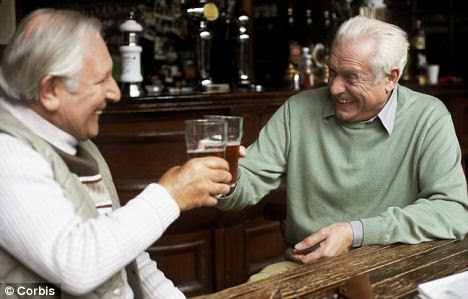 When Jack Hammond, 88, moved from his flat in Hampshire, southern England, to a nursing home 20 miles away, he struggled to find someone to have a beer with. Nearly all the residents of the home are women and Hammond, a radar technician during the Second World War, felt embarrassed asking the ladies to go for a drink with him.
As a last resort, Jack’s son, Mike, put an advert in the post office asking for a man with similar interests and background to accompany his dad to the pub. He offered £7 an hour plus expenses.
Mike was so inundated with offers that he interviewed all the candidates by phone. He then asked a small group of men to join him and Jack for a trial drink in the pub. The successful pair Mike finally chose were Henry Rosenvinge, 58, a former doctor, and Trevor Pugh, 78, a retired kitchen fitter. They will now spend several nights a week with Jack chatting about military history and current affairs.
Pugh said: “I like having topical discussions and meeting new people and I’m happy to take him down the pub. We are both ex-army so we have that in common.” He will accept the hourly fee to boost his pension, but he will not take the expenses. On the other hand, Rosenvinge will do the job for free. He said: “He has a lot of stories and we are both from Lancashire so we have a lot we can talk about.”
Mike has no regrets because his father has stopped feeling miserable and lonely. Ideally, Jack wanted to be taken out for a drink seven nights a week but his son cannot go out with him that often. Jack will now be going five times a week — three with his new friends and twice with his son.
Why do young readers prefer print to e-books? - PAU inglés 2014
>Exámenes selectividad inglés País Vasco resueltos
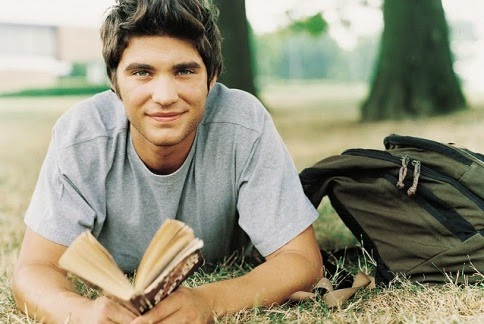 A recent survey by Voxburner, a British marketing strategy agency, has suggested that 62% of 16- to 24-year-olds prefer reading printed books to e-books. The research is especially interesting, as it reflects the opinions of people that are as dependent on mobile phones and laptops as they are on oxygen and water.
The two main reasons for preferring print are value for money and an attachment to physical books. In fact, more than 25% of the participants in the study think that ebooks are priced too high. They explained that, if you buy a book, you can share it with as many friends as you like. On the other hand, if you get it in an electronic format, you would have to lend your e-reading device out in order for anyone else to read it.
The top-rated emotional comments for preferring physical to digital products are "I like to hold the product", "I like the smell" and "I like the packaging". However, if traditional books and e-books contain the same content, aren't they basically the same thing?
The 20th century philosopher Jacques Derrida thought so. In his book Paper Machine, he described the transition his generation had seen from the pen to the introduction of the electronic typewriter and the computer. According to him, the ebook is just a phase in the evolution of reading technologies. Following his argument, e-books are not less natural than the printed ones, but people may feel that way because paper books have always been around.
Considering that millions of people read and generate billions of words per day on computers across the world, why can't young people come to terms with e-books?
They read the news, their mail, advertisements and text messages in a digital format on a daily basis. In fact, they belong to a generation umbilically linked to their mobiles and laptops so, why are they so resistant to e-books?
Rome bans lovers' locks to protect bridge - PAU inglés 2014
>Exámenes selectividad inglés País Vasco resueltos
 Thousands of ‘love locks’ fixed to an ancient bridge in Rome, the Italian capital, have been cut off to save the structure from damage. For years teenage lovers have written their initials on the love locks and attach them to the bridge. They have then sworn eternal love for each other and thrown the key into the Tiber river below. The habit has also become popular at other bridges around the world, particularly in Paris.
The love lock idea was first inspired by characters in the 2006 Italian teenage novel I want you, written by Federico Moccia. In the book, a young couple places a bicycle lock around a lamp post on the Milvian bridge and throws the key into the Tiber. The famous bridge was first built in 206 BC and is one of the oldest in Rome. It was the scene of an important Roman battle in AD 312.
In 2007 a lamp post on the ancient bridge almost collapsed under the weight of the love locks and special posts were put up for them. But last month officials said that enough was enough. “We decided to remove the love locks to restore the decorum of the bridge,” said the local area president, Gianni Giacomini. Since the habit started, the residential neighbourhood has become a busy centre for late-night bars and city officials said that 86% of local people wanted the locks to go. They promised to give the love locks a place in a Rome museum and said they would create a spot near the bridge where locks could be left in the future.
“The bridge will be guarded day and night to stop more locks being attached,” said local public official Stefano Erbaggi. However, Federico Moccia is unhappy about the move. “The removal of the locks is inconsiderate,” he told the newspaper La Repubblica. “Rome is giving Paris the ‘bridge of love’ tradition which was born here and should stay here.”
EOI País Vasco alemán B1 resuelto - Große Architekten sind nie zufrieden mit der Welt – und das ist gut so

Es gibt genügend Beispiele dafür, dass Regierungen Architekten engagierten, um ihre politischen Absichten in Bauten zu manifestieren. So entwarf der brasilianische Architekt Oscar Niemeyer für die Regierung irgendwo im Nirgendwo die Hauptstadt Brasilia, mit der sich für Brasilien der Aufbruch in eine neue Zeit verband. Visionen sind wichtig, um die Zukunft zu meistern. Heute suchen Architekten vor allem nach Antworten auf Fragen wie die nach der Erderwärmung oder nach sozialen Ungerechtigkeiten. Niedrigenergiehäuser für Privatleute, aber auch für Firmen werden das Stadtbild in Zukunft prägen. Bekannte Architekten wie Rem Koolhaas, Zaha Hadid oder Jürgen Mayer zeigen, dass in der Architektur oftmals aus visionären Entwürfen Antworten auf die gesellschaftlichen Veränderungen entstehen.
Wenn alle anderen Klassenkameraden mehr haben - PAU Alemán País Vasco 2013
 |
| Photo: Xue Jianyue |
Meine Schule liegt in einer wohlhabenden Gegend, dem Westend in Frankfurt. Dort mache ich nächstes Jahr mein Abitur. Mein Glück ist, dass ich nicht die Einzige bin, deren Familie wenig Geld hat. Es gehen auch Kinder aus dem weniger betuchten Gallus-Viertel auf mein Gymnasium. Armut bedeutet für mich, dass wir uns über alle Anschaffungen Gedanken machen müssen und nie Geld da ist, wenn es für mich drauf ankommt: Für Studienreisen zum Beispiel können meine Mitschüler Angebote in Japan, Rom oder den USA annehmen. Ich kann nur an obligatorischen Klassenfahrten teilnehmen, weil die vom Amt bezahlt werden. Ich muss dann jedes Mal einen sogenannten Beihilfeantrag vom Lehrer unterschreiben lassen. Das ist unangenehm, weil es die anderen oft mitkriegen.
Meine Mutter ist mit Ende Zwanzig als politischer Flüchtling aus dem Iran nach Deutschland gekommen. Weil ihre Zeugnisse hier nicht anerkannt wurden, hat sie ihr Abitur noch einmal gemacht und Soziologie studiert. Vor zwei Jahren hat sie eine Ausbildung zur Erzieherin begonnen und arbeitet nun in Teilzeit an einer Schule.
Insgesamt hat sie so um die 1.100 Euro im Monat für uns drei. Taschengeld ist für uns nicht drin. Mein Zukunftswunsch: Medizin studieren und später bei „Ärzte ohne Grenzen“ im Ausland arbeiten. Ich möchte anderen Menschen helfen und Dinge tun, die mich glücklich machen.
EOI País Vasco almán B1 resuelto - Organisiertes Verbrechen im Netz
 Die neue europäische Cyberpolizei macht im Internet Jagd auf Schwerverbrecher.
Was vor ein paar Jahren noch Inhalt eines Science-Fiction-Romans gewesen wäre, ist heute Realität: Im Internet treiben Verbrecherbanden ihr Unwesen und machen sich bewaffnet mit der Maus über Ersparnisse und Kreditkartenkonten her. In den virtuellen Briefkästen häufen sich täuschend echt aussehende E-Mails, die angeblich von Banken oder Zahlsystemen wie PayPal versendet werden und den Empfänger dazu auffordern, seine Passwörter preiszugeben. Phishing heißt diese Methode. In der Europäischen Union gibt es für Cyberkriminelle viel zu holen, über 70 Prozent der Europäer sind online, kommunizieren, shoppen, informieren und unterhalten sich im Netz. Seit Januar 2013 hat die EU ihre eigene Cyberpolizei.
Das European Cybercrime Centre (EC3) mit Sitz in Den Haag ist eine Abteilung der europäischen Polizeibehörde Europol und kooperiert mit nationalen Organisationen wie dem deutschen Bundeskriminalamt. Die Verbrecher im Visier der Ermittler sind keine Einzeltäter aus der Hacker-Szene. Laut der internationalen Polizeiorganisation Interpol, mit der das EC3 eng zusammenarbeitet, sind Banden weltweit mittlerweile für über 80 Prozent der im Internet begangenen Kriminalität verantwortlich. Es handelt sich längst um organisiertes Verbrechen im großen Stil, vergleichbar mit dem internationalen Drogenhandel. Verluste durch Cyber-Raubzüge schätzt Interpol allein in Europa auf rund 750 Milliarden Euro pro Jahr.
Verbrechen im Netz werde es in den kommenden Jahren noch mehr geben, befürchtet Troels Oerting, Chef des EC3: "Mit der wachsenden Vernetzung ärmerer Gegenden in Afrika, Südamerika, Asien oder auch Osteuropa wird eine große Welle".
EOI País Vasco inglés B2 resuelto - Au Renoir mister Franglais

Its rules are simple. Insert as many French words as you know into the sentence, fill in the rest with English, then speak it with absolute conviction. Although it wasn't known as such then, Franglais is found in Shakespeare and has probably been used for as long as the English and French have had to talk to each other.
But Miles Kington did it best. After all, he coined the name for this hybrid tongue. Kington studied languages, and it showed. In a long-running series of columns for Punch he satirised the earnest but doomed efforts of native English speakers to handle French. Like a phrase book, each of his "lessons" covered a particular situation.
Bodged attempts at foreign languages are as important as food poisoning to a good holiday anecdote, but Franglais is a daily reality for millions working in Europe, Africa and Canada.
The Canadian journalist Karl Mamer, author of a website on Franglais, says many Canadians speak "cereal box French", as they only get to practise it by reading the bilingual text on the back of the box in the morning.
When they then travel to French-speaking centres, like Montreal or Quebec City, their few words of French are used as a kind of peace offering to shopkeepers. He says they're thinking: ‘Look, I'm going to try speaking as much French as possible, showing you I'm making a sufficient effort, and then you please switch to your fluent English as soon as I've linguistically self-flagellated myself before you.’
Franglais might be good enough to buy your oignons, but it's different if you want to win votes.
Politicians running for office in an officially bilingual country need to try to master both languages, although some have made it to high office without knowing their coude from their elbow. According to Janyce McGregor, a producer who covers parliament for the Canadian Broadcasting Corporation, ‘they may be very clever, but their language skills are always going to be a factor.’
It's not just high office either. A Francophone bus passenger in Ottawa complained to the city transport authority last December that drivers must be bilingual, and be sent off for language training if necessary. But as Ms McGregor points out: ‘If people are bilingual, they probably won't apply to be bus drivers.’
In Canada, Franglais helps French and English speakers co-exist, even if it's a shoddy compromise for some. In France it is something quite different. It is a cultural attack. This is not the Franglais of the tourist asking awkwardly for a cup de cafe. What concerns them is the creeping advance of English words, especially American-English, into their language.
The Toubon Law, passed in 1994, was an attempt to restrict them. It makes French compulsory in government publications. Public bodies weed out English words and suggest French ones where they previously did not exist. So it was goodbye "e-mail", hello "courriel", although "le weekend" - for some the dark heart of Franglais - has survived.
London-based French journalist Agnes Poirier says those who suggest new words are often too late. ‘The man in the street will have already adopted English words to describe new trends.’
It's true that, like a really good French waiter, Franglais always seem to be hovering nearby with a suggestion. Need a three-word headline to sum up the man who has cost Societe Generale billions? Le Rogue Trader, as the Independent - Kington's own paper - described him last week.
So e-mails still swamp courriels on French web pages. And despite the Toubon Law, Ms Poirier says the internet has led to an invasion of English words, which are picked up by newspapers because they seem fashionable, and then find their way into speech.
But why does it matter? Ms Poirier's book, Touche, a French Woman's Take on the English, has plenty of examples of the English language adopting French words and phrases, even if some of them, like "double entendre", are not actually said in France. It's a kind of Franglais, but it has never seemed to bother anyone.
Other mixed languages like Spanglish and Denglisch (German and English) also exist without causing nearly so much anguish. The French see it differently because English is taking over the world and French isn't. English doesn't need defending, but French, once the European language of freedom and culture, does. And English is not just 600,000 eccentrically spelt words in a very large book, it is, to some, a symbol of Anglo-American cultural imperialism, the language of junk food. You might think we were talking about the last two speakers of a native American dialect, rather than French, which is used by more than 350 million people. But to some, a future of Franglais n'est pas un future at all.
Adapted from BBC.co.uk
Alemán A2 EOI País Vasco. Boris’ Söhne lernten ihre Schwester kennen
 Zum 1. Mal spricht unser Tennisheld über seine Groß-Familie
Wir sehen einen Bilderbogen voller Liebe, Glück und Zärtlichkeit. Der Mann im Mittelpunkt ist Boris Becker (38). In seinem früheren Leben als Nummer eins der Tennis-Welt ein Einzel-Spieler. In seinem heutigen Leben als Familien-Vorstand ein Team-Player.Boris, der Super-Daddy. Er hat immer gesagt: „Ich habe viele Schwächen, aber auch ein paar Stärken. Und dazu gehört ganz klar die Vater-Rolle.“
Zum ersten Mal hat sich jetzt die kunterbunte Becker-Familie unter einem Dach getroffen. „Weil es mir wichtig war, daß meine Söhne endlich ihre Schwester kennenlernen.“
Die Söhne sind Noah (11) und Elias (6) aus Boris‘ Ehe mit Barbara (38). Sie leben seit fünf Jahren in Miami (Florida). Die Tochter ist Anna (5), die mit ihrer Mutter Angela Ermakova (37) in London zuhause ist.
Und dann gibt es da ja seit ein paar Wochen auch noch Lilly (29). Boris‘ neue Freundin. Auch sie gehört jetzt sozusagen mit zur Familie. Schmust zärtlich in der Öffentlichkeit mit Boris. Nimmt die süße Anna an die Hand. Obwohl sie die Kleine auch erst jetzt in Miami gerade kennen gelernt hat. Boris aber hat seinen Freunden verraten: „Kinder lassen sich nichts vormachen. Sie spüren schnell, ob ein Mensch ihnen nur etwas vorspielt oder wirklich liebevoll ist.“
Und so kam es, nach über einem Jahr Planung und Gesprächen mit allen Beteiligten, jetzt in Miami zum freundlichen Showdown.
„Natürlich haben sich die drei Kinder zunächst nur erstaunt angeguckt“, erzählte Boris später. „Aber dann ist Noah gleich in seiner Rolle als großer Bruder aufgegangen und hat Anna und Elias eingefangen.“
Was dann folgte, war, so berichtete Boris, „wie in jeder anderen Familie auch.“ Es wurde zusammen gegessen, gespielt, getobt, gelacht. Eine ganze Woche lang.
Gestern abend flog Anna heim nach London. Zurück blieb die Hoffnung, daß die Patchwork-Familie noch enger zusammenwächst.
Gestern abend flog Anna heim nach London. Zurück blieb die Hoffnung, daß die Patchwork-Familie noch enger zusammenwächst.
Von ROLF HAUSCHILD
Bild.T-Online.de 20.01.06
The Jane Austen Centre - EOI País Vasco inglés A2

The Jane Austen Centre in Bath at No. 40 Gay Street is a house very similar to No. 25, where Jane Austen lived for a few months following her father’s death. These Georgian town houses in Gay Street were built between 1735 and 1760.
The houses are alike in design, although this house had a large extension added, during the 20th century, which covers the whole of the garden. It is in this space that the permanent exhibition is placed.
Within the exhibition are displayed a number of hand-made reproduction period costumes, which have been created using authentic fabrics, in colours contemporary with the period.
Refresh yourself during and after your visit at our Tea Rooms and enjoy a pot of real leaf tea, some home-made cakes or a delicious light snack.
The Centre Giftshop is a treasure of Jane Austen – related gifts, some specially designed for, exclusive to, the Centre. There is a range of writing paper, pens, post cards and high-quality reproduction cards. We have a comprehensive stock of books about Jane Austen, her life, her family and times.
It's all about me - EOI País Vasco inglés C1 resuelto

It was Margaret Thatcher who inadvertently provided the catalyst for all this navel-gazing and selfobsession when she infamously pronounced that there is "no such thing as society. There are individual men and women and there are families. And no government can do anything except through people, and people must look after themselves first." Since then it's all been about "me me me"; not even 11 years of a Labour government have managed to halt our increasing narcissism or inject any sense of collectivism back into the national psyche.
Bookshop shelves groan with the weight of self-help manuals, designed to pander to and heal just about every psychic and emotional stress known to humankind, while misery lit (or misery porn as it's more accurately known) is fast outselling any other genre.
As writers scribe in unflinching detail their stories of brutalised childhoods, and of their survivals against all the odds, we lap up these tales of woe and clamour for more. Narratives that were meant to inspire and empower us with their messages of triumph over adversity serve instead as fodder for our most voyeuristic tendencies; it's starting to feel like there's an incredibly tasteless competition on to find the poor sod who has had the most miserable childhood in the history of the world, ever.
But as Libby Brooks observed recently in her excellent piece on the debate about rape: "Creating a hierarchy of victimhood helps no one." I couldn't agree more.
Even those with all the advantages aren't exempt from all this wallowing and internal reflection.
Born with a silver spoon in your mouth and sent to all the best schools? Don't worry, there's a support group out there for you somewhere. Think you've always been happy and never wanted for anything? Well think again. No one gets through life unscathed: you're probably in denial and need a good dose of therapy to find out whatever it is you're repressing.
What's really lacking in all of this introspection is any sense of the bigger picture. These personal histories stand alone, testament to the individualism that has permeated every aspect of 21stcentury life. Rather than examining and critiquing our social conditions, we're encouraged instead to look inwards, to heal ourselves and rid ourselves of any demons we may have picked up along the way. As a consequence of this we're failing to make those vital connections between our personal experiences and how our lives have been shaped by forces beyond our individual control.
But "the personal is political" was not just some trite feminist slogan dreamed up to help bored housewives make sense of their lot. As Carol Hanisch said in her essay of the same name: "personal problems are political problems. There are no personal solutions at this time. There is only collective action for a collective solution." Isn't it about time we started to embrace that kind of thinking again?
The discriminations and prejudices I've encountered in my life are not because I'm me, Cath Elliott: they're a direct result of the gender and social class I was born into. Counselling, self-help books or holistic therapies might make me better able to deal with what life has thrown or has yet to throw at me, but it won't do anything to change the external conditions that impact negatively on me and mine.
So, the choice is ours. We can either continue to wallow in our victimhood, fighting to outdo each other with our tales of oppression and woe, and attempting to heal our lives in splendid isolation, or we can learn once again to recognise our shared experiences and start to fight together for change. We're only victims if we choose to be so. Personally I reject the label: I'd advise everyone else to do the same.
Adapted from The Guardian
Fugitive's Facebook habit leads to arrest - PAU inglés 2013
>Exámenes selectividad inglés País Vasco resueltos

School girls want plastic surgery - PAU inglés 2013 País Vasco
>Exámenes selectividad inglés País Vasco resueltos
 British youngsters are more and more image-conscious and they decide to undergo plastic surgery in growing numbers. The Observer found many clinics admitting to having given breast implants to girls of 15 and 16.
Sandra’s story is typical. At 17, she cannot yet marry without parent’s consent, buy alcohol, or vote. But she prides herself on her silicone-enhanced breasts in front of her jealous friends. “I feel more confident now and wear low tops.” The operation cost her father £2,450. She thinks he paid it to irritate her mother, from whom he is separated. Sandra is among an estimated 65,000 Britons who have cosmetic surgery each year. Out of these, 20 per cent will need corrective surgery later. There are risks in adolescents having surgery before they have stopped growing. A surgically reduced nose, for example, may deform as it grows. Even so, Dr. Eileen Bradbury, a psychologist from London’s Chelsea and Westminster Hospital, explained that we should not demonise cosmetic surgery because it can be of enormous help to those people who would otherwise be terribly unhappy. But the problem is that children today face a sense of competition in looking as good as possible. “Even the boys” – she said- “You can’t just be a great footballer, you have to look like Beckham too.” Plastic surgery seems to be a business without ethical limits to make a profit. Some plastic surgery clinics offer free consultation and do not discuss the potential risks this kind of operations might have. However, they do discuss credit card payments and offer discounts for two procedures (nose job and liposuction) done at once. This information does not surprise Ann Clywd, a Labour Member of Parliament who has been a long-time activist for clinic regulation. She believes that young girls are particularly vulnerable to sales techniques and that a lower age limit for plastic surgeon operations should be set.
The amazing story of Gerald Nathanson, who graduated at the age of 78 - PAU inglés 2013 País Vasco
>Exámenes selectividad inglés País Vasco resueltos
 I grew up in wartime Britain and my education was completely destroyed by the war. I was evacuated twice as a child – once, aged five, when the Second World War broke out, and a second time in 1940, when I was sent to Lancashire for two years.
After the war, I worked as a taxi driver for 42 years, but always felt very conscious that I hadn't received an education. So I enrolled in Birkbeck College (London), which specialises in evening classes.
It hasn't been an easy journey, but I feel privileged to have experienced student life. I soon realised that catching up on the education I had missed as a child wouldn't be a simple task. However, I had the support of my tutors who were able to guide me. The other students also helped to carry me through. There were students in their 20s and even one was in her 60s, but the average age was probably around 40.
My family was another source of support and encouragement. My wife Carole put aside everything to help me get my degree. She let me have the dining room, which I covered with books, articles and notes.
The day I found out I'd passed my degree was full of emotion. You can never be sure that you're going to make it – not until you've made it through the last exam. When I saw the results on my computer screen, I called Carole in and we both cried. I couldn't believe it.
The graduation ceremony was one of the proudest moments of my life. My wife, my two sons, my classmates and my tutors were all there to share the moment with me. When I heard my name read out and crossed the stage I was able to say that I truly had fulfilled a lifetime ambition.
Suscribirse a:
Entradas (Atom)

