>Exámenes selectividad inglés Comunidad Valenciana resueltos
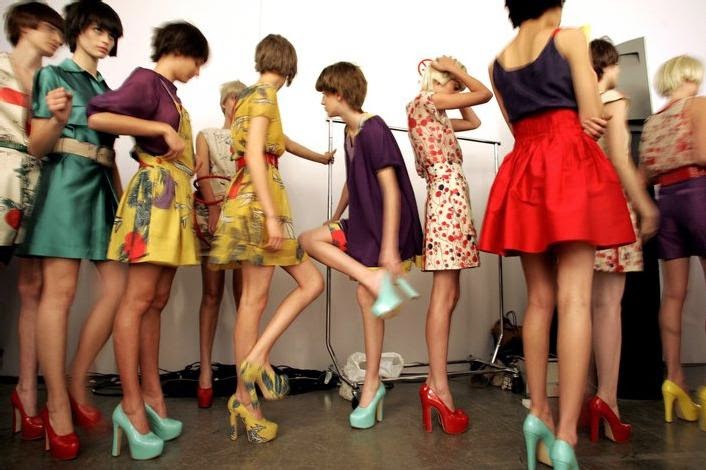
 They have been banned from the catwalk, blamed for devastating women’s self-esteem and suspected of suffering eating disorders. Now ultra-thin models face another accusation: that they’re not good at their job. New research has found that instead of being admired by women, excessively thin models are regarded as less truthful and appealing than “ordinary” women. ‘The advertising and fashion industries are reluctant to use larger models because they say that thinness sells’, said Dr Helga Dittmar, of the University of Sussex. ‘But our research has shown that thin models are less effective in selling products than average-size models’. Dittmar asked 800 women to rank the effectiveness of adverts featuring slim models. She expected women to find thin models more convincing and persuasive. ‘Instead, there was a strong message that models were evaluated more positively when they had a normal size’, she said.
These findings come after the controversy which erupted when Madrid said models at Pasarela Cibeles must have a weight in line with United Nations health guidelines. Dittmar said: ‘Only a small percentage of women can ever hope to have the bodies shown in most advertising. There are fears that images of ultra-thin models can have a number of significant consequences, including negative self-perception, depression and disordered eating. The conclusion is that thin models have a negative effect on the self-esteem of women, and this affects the effectiveness of the advertising message. ‘Compared with ultra-thin models, those who appear in ads with an average, healthy body size were viewed as more credible’.