
Mostrando entradas con la etiqueta resuelto. Mostrar todas las entradas
Mostrando entradas con la etiqueta resuelto. Mostrar todas las entradas


The pilot - PAU inglés 2016 Andalucía
>Exámenes selectividad inglés resueltos Andalucía

Half a century after this wartime incident and near the end of his career, my father was with a group of students at the end of a day's geological fieldwork. They all gathered around a campfire and he started to tell them his experience. Suddenly, one of the students interrupted him and said, "Let me finish the story." From that moment, to the amazement of all, the student provided the correct details of what had happened that day in Switzerland.
He told them that, when the farmworkers got to the place of the accident to assist the soldiers, they found that the photographer who was seated behind my father was dead. They liberated my disoriented but uninjured father from the plane and provided him with food and water. Some time later, the Swiss police arrived and interned him in a camp. In his youth, the student had heard this story many times from his mother, who happened to be one of the farm girls taking part in the events.
Museums are the new churches - PAU inglés 2016 Andalucía
>Exámenes selectividad inglés resueltos Andalucía

Art museums are the new churches not because the role of the church has declined in recent centuries and something had to fill the gap. The new status of museum architecture is rather a reflection of how art has changed over the years. Before the 18th Century, non-religious art could only be found in palaces and lacked any public function. By the 19th Century, museums were meant to serve as places for ethical and social improvement. But, in the 20th Century, aesthetic contemplation became a virtue in itself, and museum architecture changed accordingly. That is why modern museums are marked by pure, white walls and by giant spaces that, like the nave of a basilica, make visitors seem small in comparison.
Art has imitated religion in other ways too. These days, we frequently use religious language when talking about art. We make “pilgrimages” to museums in far-off places. We experience “transcendence” before major paintings. And, of course, Sunday is the busiest day of the week for most art museums.
The Notting Hill Carnival - PAU 2016 inglés Andalucía
>Exámenes selectividad inglés resueltos Andalucía
 The Notting Hill Carnival traces its origins back to the culture of the Caribbean. When African slaves were first brought to Trinidad, they were not permitted to dance or play their own music. However, as the slavery regime settled down, a strong local tradition of carnival emerged. Once a year, enslaved people symbolically escaped from the oppression of their daily routine by playing music, dancing, and dressing up in costumes which mimicked the European fashions of their masters. They even whitened their faces with flour or wore white masks.
The tradition came to London with the migration of workers and their families from the Caribbean to Britain after the Second World War. By the late 1950s, many Caribbeans were living in Notting Hill a poor area. There, they faced racism, bad housing conditions and, in 1958, violent attacks from white youths. The idea of a Caribbean carnival emerged as a way of reasserting community cohesion after the 1958 disturbance.
Claudia Jones, the editor of the West Indian Gazette, was the moving spirit behind the idea. The first carnival celebration was held in the town hall building in St. Pancras in 1962. This was a great success and became an annual event. In 1965, local social worker Rhaune Laslett suggested holding some outdoor festivities in Notting Hill. The two celebrations were combined, and so the Notting Hill carnival began. The skills of costume-making, steel drumming and calypso music gradually came together to establish a festival of music, arts and culture.
The Notting Hill Carnival is the largest European street party and the second major street festival in the world after Rio's Carnival. It is truly a spectacle not to be missed.
No Fear, No Surprise, No Hesitation - PAU inglés 2016 Madrid
>Exámenes selectividad inglés resueltos C. Madrid
 |
| Ancient Samurai Armor | by williamcho |
No fear. There should be nothing in this life that you are afraid of. If there is, you might need to overcome that fear. Here I have to confess to a certain fear of heights. Recently, owing to leaky rain gutters, I had to crawl out on our roof. I gritted my teeth and kept repeating, "No fear, no fear", until the job was done. Oh yes, and of course I didn't look down. Whatever your fear, face it head on and defeat it.
No surprise. Life seems to be full of them. You're going along swimmingly and suddenly something huge rears up ahead of you. But if you look carefully, there were clues all along the way that it was going to happen. So why does life seem to surprise us then? Because we are asleep half the time. Wake up and nothing can sneak up on you.
No hesitation. Weigh up the odds and then just get on with it. If you spend too long thinking, the opportunity will have passed. Once we have looked at the options, we make a choice; then, go for it. No hesitation means not waiting around for other people to help out or make up our minds for us. No hesitation means if there is a certain inevitability about a situation then just throw yourself in, head first, and enjoy the ride. If there is nothing to be done then waiting doesn't help.
Migrant crisis - PAU 2016 C.Valenciana
>Exámenes selectividad inglés Comunidad Valenciana resueltos
 NORWAY WILL RETURN BACK TO RUSSIA REFUGEES WHO EXPLOITED LEGAL BICYCLE GAP
Sylvi Listhaug, Norway’s immigration minister, has told refugees that exploited a legal gap to enter the country on bikes through an Arctic Circle crossing will have to return to Russia. Around 5,500 asylum seekers used bikes to travel through the Storskog crossing last year and, although Russia does not allow people to cross the border on foot and Norway does not let in motorists carrying people without documents, people on bicycles are allowed in on both sides.
Listhaug also announced that immigrants without a transit visa would be sent back to Russia. The two nations have been sending refugees back and forth since November 2015 when the new route was identified by authorities. Once they reach Norway, refugees spend time at a centre that provides shelter for around 600 people in barracks on a former military camp bordering the airport of Kirkenes. New arrivals are given fleece jumpers, waterproof jackets and other clothes appropriate for the Arctic climate, with most of them sleeping in bunk beds. On Thursday, Norwegian police confirmed that the refugees would not be forced to return across the border on two wheels, and could instead be taken by bus.
The number of people taking the Arctic route is tiny compared with the estimated 750,000 who arrived via the Mediterranean in 2015, a perilous journey that has led to the loss of at least 3,400 lives.
William Watkison, International Business Times, 15-1-2016
Why are British kids so unhappy? Two words: screen time. PAU Valencia 2016
 |
| Children at school-by-Lucélia Ribeiro |
AFC suggests limiting children’s screen time by planning fun activities for the whole family that don’t involve technology and creating a balance between technology use and other activities, insisting that, for every hour of screen, children should have to do an hour of something else.
Sorry, none of that’s ever going to work on any teen I know, for that matter; it’s too late for that now. No, it’s time for some Victorian-style parenting. So last night we sat our son Fred down and laid down the law: from this Sunday, he’s to hand in his phone to us by 10.30 pm on school nights - no discussion, no argument, just good old-fashioned “because I said so”. His response? “No way. That is so unfair. I’ve done nothing wrong!”
Sure, you can blame the parents for this whole mess -if we hadn’t filled our homes with smartphones and tablets and laptops and desktops, none of this would ever have happened. You can even blame society or the government. Or it could be Tim Berners-Lee’s fault for inventing the web.
Bob Granleese, The Guardian, 7-1-2016
Are you a Phubber? PAU 2016 resuelto
>Exámenes selectividad inglés resueltos Andalucía
 "Stop Phubbing" is a campaign aimed to embarrass people over the rude use of mobile phones. "Phubbing" is a slang word that means ignoring others in a social setting by looking at your phone instead of paying attention. "Tweeting" during weddings, or "instagramming" at dinner with friends are cases of phubbing. Posters have been created for use in cafes, bars and restaurants, with slogans including "Respect the food and the company you are in" or "Put your phone away and have a chat in the real world."
The campaign creator, Alex Haigh, an Australian student, explained how the idea of the campaign was born: "A group of friends and I were chatting when someone commented how annoying being ignored by people on mobiles was. It's the people who do it all the time that we are targeting. It's a paradox. You disconnect from those around you in favour of those pretty much anywhere else. This often irritates your friends, unless they're phubbing too, in which case you all might as well have stayed home."
Joseph Haddad, who owns a cafe in Brunswick, Germany, has displayed posters of the campaign to try to discourage bad manners: "It happens a lot, people come in and we ask them, 'what would you like?' and they stay on their phones. And we see a lot of people who are sitting at the table with friends, and they are on Facebook, or Twitter... don't you think they should be talking to each other instead?" Although the first "Stop Phubbing" campaign group started in Australia, at least five others have appeared as indignation about this new type of rude behaviour grows all over the world.
PAU 2015 Cantabria. Train to take you from Los Angeles to San Francisco in three hours
>Exámenes selectividad inglés Cantabria resueltos
 Everyone’s talking about California's high-speed rail project – a $68 billion network that could zip passengers from San Francisco to Los Angeles in less than three hours. Construction of the first phase of the line will begin next year in the Central Valley, a 28-mile stretch from Madera to Fresno. In future years, the rail line will stretch north to San Jose and south to Palmdale and the San Fernando Valley north of Los Angeles. The whole network might not be completed until 2028.
The project has been surrounded by controversy. Some have said even though the nation’s first bullet train will take a quarter of the time it currently takes, it will still not be fast enough to attract sufficient customers.
Others have said the price tag is too high. Yet officials at California’s High-Speed Rail Authority say it is still cheaper than building dozens of new airport runways and highways to accommodate a state population that is estimated to reach 46 million by 2035.
At a special ceremony in Fresno on Tuesday, California Governor Jerry Brown compared the rail line to the construction of the great cathedrals of Europe, which took generations. “The high-speed rail links us from the past to the future, from the south to the north,” he said. “It's not that expensive. We cannot really afford not to build it.
All these projects are a little controversial. You’ll always have some critics say why spend all this money?”
Last year, two government transport officials from the state, Brian Kelly and Mary Nichols, wrote in a newspaper article that the only genuine alternative to the high-speed train was to invest up to $150 billion to build 4,300 new lanes of highway, more freeways and hundreds of new airport gates and runways. They added: “This would cover large parts of the state with concrete and asphalt.”
By car, the journey takes at least six-and-a-half hours in optimum traffic conditions, and can cost about as much depending on the type of car, fuel and highway tolls. The high-speed train tickets will be similar to the cost of air travel, promoters say, and deliver people to central stations, saving more time and money.
The Independent, 7 January 2015 (Adapted)
PAU 2015 inglés. E-Cigarettes increase the risk of flu and pneumonia
>Exámenes selectividad inglés Cantabria resueltos
 Using electronic cigarettes may harm the body’s defences against pneumonia and flu, according to a recent study. The research, which reopens the debate on the dangers and benefits of e-cigarettes, suggests the vapour produced by the devices can compromise the immune system in the lungs, leaving them more vulnerable to infection by harmful bacteria and viruses.
Scientists from John Hopkins University exposed mice to e-cigarette vapour twice a day for two weeks.
They then administered some of the mice with an influenza virus and others with the bacteria which is responsible for pneumonia. The mice that had been exposed to the vapour were less able to fight off illness, and some died. Professor Shyam Biswal, senior author of the study, said the findings suggested that e-cigarettes are not neutral in terms of the effects on the lungs and that studies should now be carried out on people, particularly those with common lung problems which often affect smokers and ex-smokers – the main users of e-cigarettes.
It is true that e-cigarettes have been shown to be highly effective in helping smokers to quit, and there is a broad consensus that despite some uncertainty over their health impact, they are less harmful than tobacco cigarettes but Professor Biswal remains concerned e-cigarettes could pose risks to future generations, particularly given evidence from some countries that they are becoming more popular among young people who have never smoked.
He has recommended to the World Health Organisation that they be banned in indoor public spaces – a measure the Department of Health in England has ruled out, but which is being considered by the Welsh government.
However, Professor John Britton from the UK said the most important point was that harm to the lungs was less from e-cigarettes than from tobacco. “The lung is an exquisitely delicate organ and therefore nobody with any common sense would believe that inhaling heated vapour many times a day would be harmless,” he said. “What matters here is not a comparison of the effects of e-cigarette vapour compared with nothing, but the effects compared with those of tobacco smoke. Harm to the lungs will be less with electronic cigarettes than tobacco cigarettes, and any smoker who cannot quit using nicotine, and doesn’t find medicinal products effective, would be well advised to try an electronic cigarette.”
The Guardian, 4 February 2015 (Adapted).
Ces cerveaux européens qui émigrent en France . PAU francés 2015
Exámenes selectividad francés resueltos Andalucía
 À l´heure où la fuite des cerveaux français inquiète, Ana, Inge et José, tous trois diplômés de l´enseignement supérieur, ont posé leur valise à Paris. Ils mettent aujourd´hui leur intelligence et leur créativité au service de leur pays d´adoption. Grâce aux accords de Schengen, tous trois ont pu s´installer en toute liberté. Si les Européens représentent la moitié des immigrés arrivés en France en 2012, l´ Europe du Sud est la plus grosse contributrice. Mais ce ne sont plus les mêmes qui font leurs valises. Aujourd´hui, des jeunes bien formés la quittent, quand les vagues précédentes d´immigrés du sud touchaient des travailleurs manuels. Ainsi, plus de la moitié des Italiens et des Espagnols qui s´installent en France ont un diplôme du supérieur. Nombre sont ceux qui commencent par des petits boulots et saisissent le tremplin de la restauration ou de l´hôtellerie. C´est le cas de José Antonio Bautista, diplômé en Économie qui a quitté l´Espagne en 2008 : il a commencé comme réceptionniste de nuit dans un hôtel. Parti à cause de la crise, il n´a pas connu que des jours faciles en France : « Mais c´est quand même nettement moins dur ici qu´en Espagne. Le contrat de travail français est plus protecteur et si on n´est pas trop gourmand, on peut s´en sortir avec un salaire minimum. Ce qui n´est pas le cas en Espagne ».
lemonde.fr 26.12. 2014 (texte adapté)
Bénévolat: Tendre la main ne coûte rien . PAU francés 2015
Exámenes selectividad francés resueltos Andalucía
 Du 12 au 14 septembre, ce sont les 3J du bénévolat. L'occasion de se poser cette question : et si, moi aussi, j'aidais les autres ? Être bénévole, c'est aider, le plus souvent une association, sans être payé. En France, le nombre de bénévoles serait compris entre 12 et 14 millions, soit un Français sur quatre.
Ce sont surtout les étudiants et les retraités qui s'engagent le plus. Quand on choisit de devenir bénévole, c'est souvent pour défendre une cause qui nous touche. Par exemple aider des personnes handicapées, accueillir des enfants pour les vacances, protéger les animaux... Pour être bénévole, il suffit d'avoir du temps, et de l'énergie. Il faut normalement avoir 16 ans, mais on peut toujours aller donner un coup de main avec ses parents. D'ailleurs, la loi autorise même les enfants de 16 ans à créer une association.
S'engager comme bénévole, c'est un excellent moyen de découvrir la vie en société, de prendre des responsabilités. C'est une chose qui est très appréciée par les patrons quand on mentionne une telle expérience sur son CV.
Mais bien sûr, c'est une aide indispensable pour les associations, qui ont toujours besoin d'aide. Alors si devenir bénévole vous intéresse, pourquoi ne pas en parler à vos parents et chercher ensemble quel type de cause vous aimeriez aider ?
Journal des enfants 12.09.2012.
Nous collaborons à la disparition du français . PAU francés 2015
Exámenes selectividad francés resueltos Andalucía
 Les Anglo-saxons ont un projet explicitement hégémonique. On l'a vu lors des Jeux olympiques de Londres. À l'exception du prologue, le français en était totalement absent. Même constat dans les aéroports (control passport), ou dans les colloques internationaux, etc. : ils font perdre à la langue française sa visibilité. Le drame, c'est que nous collaborons à cette disparition -dans tous les domaines, « l’anglobal » est une forme de parasite. À la Renaissance, des milliers de mots italiens sont entrés dans la langue française, mais ils ont été rapidement absorbés, transformés, francisés. Aujourd'hui, et c'est nouveau, les mots anglais qui s'implantent chaque jour dans notre vocabulaire ne sont plus de l'ordre de l'échange, mais de la substitution ("checker" à la place de "vérifier"). En France colonisée, c'est Halloween tous les jours. Mais, plus que de colonisation, nous devons parler d'auto-colonisation. Tous les domaines sont victimes : la mode avec la "fashion week", la cuisine et ses "fast-foods", les conseils d'administration, la diplomatie, la défense, la chanson, l'aviation, la médecine, le sport... Tout le monde désormais fait des fautes massivement, et des fautes sur le logiciel, comme la confusion des sons et des temps, le futur et le conditionnel, etc. La langue et la culture françaises sont désirées partout dans le monde comme une alternative au modèle anglo-saxon. Mais nous les Français, nous y avons renoncé. Que nous propose-t-on à la télévision ? Des séries américaines. La France a renoncé à la francophonie pour prendre part à l'Europe anglophone.
L’Express 21.10. 2014 (texte adapté)
Apprendre une langue étrangère c'est bon pour le cerveau . PAU 2015
Exámenes selectividad francés resueltos Andalucía

L’Obs 04.06.2014 (texte adapté)
How Facebook affects us - PAU 2015
>Exámenes selectividad inglés Cantabria resueltos
 Two recent studies have revealed amazing facts about how Facebook affects its users. The first study, carried out by researchers at the University of Missouri-Columbia, has shown that being envious of Facebook friends can cause depression and that looking through the site to compare achievements with those of friends can have a very detrimental effect on a person`s mental health. Margaret Duffy explains, "Facebook can be a fun and healthy activity if users take advantage of the site to stay connected with family and old friends and to share interesting and important aspects of their lives. However, using it to see how well an acquaintance is doing financially or how happy an old friend is in his relationship can lead to feelings of depression."
Duffy and a colleague based in Singapore surveyed 700 students for the paper, published in the journal ‘Computers in Human Behaviour’. She went on to say, "Facebook can be a very positive resource for many people, but if it is used as a way to compare your own accomplishments against others, it can have a negative effect. It is important for Facebook users to be aware of these risks so they can avoid this kind of behaviour when using Facebook."
A second study, completely independent from the first, has shown that a computer can be better at assessing someone’s basic personality than close friends or family. A study of more than 86,000 users of Facebook has demonstrated the power of intelligent machines to predict an individual’s character based on what they have listed as their “Likes.”
Researchers said that the day when computers are able to judge a person’s personality accurately has almost arrived and even suggested that science fiction films like “Her”, based on a man’s emotional attachment to an intelligent computer, are closer than we think. In the future, computers could be able to infer our psychological characteristics and react accordingly in an emotionally-intelligent way. “People may choose to change their own intuitions and judgements with this kind of data analysis when making important life decisions such as choosing activities, career paths or even romantic partners,” said Wu Youyou of Cambridge University.
The Independent, 12 January and 4 February 2015 (Adapted)
Do young people care about learning foreign languages? - PAU 2015 inglés Cantabria
>Exámenes selectividad inglés Cantabria resueltos
 Do young people in the UK care about learning languages? Fewer students than ever are choosing to study a language degree at university, and since 2004, taking a language at GCSE* has not been compulsory, so the simple answer would seem to be no. This is disconcerting news for a country which is not exactly famous for its multilingualism.
However, research conducted by the organisation ICM paints a far more complex picture of youth attitudes in the UK. Those choosing to study languages may have dropped, but of the 1001 young people between the ages of 14-24 interviewed in the survey, almost 20% already speak another language at home with their family, and 70% would be interested in learning another language in the future.
When asked to pick the three main benefits of learning a language, students said that job prospects at home and abroad were both key incentives. Learning about another culture and the experience of communicating also scored highly in this section. So if languages offer you the ability to make new friends and work abroad, why are young people put off? Asked to pick the three main downsides of learning a language, the difficulty of the learning process was an important reason but the idea that they were less interesting than other subjects came top for our young interviewees. Interestingly, low confidence levels in speaking another language also played a role in this decision.
Asking interviewees to comment on their ability in the language they had studied at school provided perhaps the most revealing piece of data from the survey. For most of the languages, students don’t perceive themselves to be progressing past basic language levels. The survey suggested that the opportunity to use a language outside the classroom and communicate with native speakers would make language learning more attractive. As for teaching inside the classroom, young people want more interaction, and more technology.
November 2014, The Guardian (Adapted).
- *GCSE – General Certificate of Secondary Education (in the UK)
Qu'est-ce que le droit à la liberté d'expression? . PAU francés 2015
Exámenes selectividad francés resueltos Andalucía
 La Déclaration universelle des droits de l’homme et le Pacte international relatif aux droits civils et politiques protègent le droit à la liberté d’expression dans leurs Articles 19 respectifs. La liberté d’expression est non seulement importante en soi mais aussi essentielle à l’exercice d’autres droits humains.
Au niveau individuel, la liberté d’expression est essentielle au développement, à la dignité et à l’épanouissement de chaque individu. Les individus parviennent à comprendre leur environnement et le monde en échangeant librement des idées et des informations entre eux. La liberté d’expression renforce leur capacité à planifier leur vie et à exercer une activité professionnelle. Les individus se sentent plus en sécurité et respectés par l’État s’ils sont capables d’exprimer ce qu’ils pensent.
Au niveau national, la liberté d’expression est essentielle à la bonne gouvernance et, de ce fait, au progrès économique et social. La liberté d’expression et la liberté d’information contribuent à améliorer la qualité de la gouvernance de diverses manières : en garantissant que des personnes honnêtes et compétentes administrent l’État […], en favorisant la bonne gouvernance en permettant aux citoyens d’exposer leurs préoccupations devant les autorités […], en favorisant la mise en oeuvre d’autres droits humains […].
Pour toutes ces raisons, la liberté d’expression et la liberté d’information sont reconnues par la communauté internationale comme des droits humains primordiaux.
Articles 19 DUDH et PIDCP
Opération: Tous au restaurant - PAU francés 2016
>Exámenes selectividad francés Madrid resueltos
 Un repas acheté pour un repas offert, telle est la consigne de l ́opération Tous au restaurant pendant le mois de septembre. Sur plus de 1000 tables dans toute la France, 80 sont étoilées*.
Il y a des dates clés qu ́il ne faut pas oublier: le premier jour des soldes, la Saint-Valentin pour certains, le début de la saison de la chasse pour d ́autres, mais aussi depuis cinq ans, l ́ouverture, à dix heures précises, des réservations en ligne de l’évènement gastronomique Tous au restaurant.
L ́opération lancée en 2010 par Alain Ducasse**, mobilise plus d ́un millier de restaurants, dont 80 étoilés, à travers toute la France, sur un principe simple: un repas acheté, un repas offert. Elle se déroule en septembre et la période n ́a pas été choisie au hasard. Traditionnellement, le mois de septembre est mauvais pour la restauration. Les vacances et les impôts passés ont laissé les finances en mauvais état. Une addition pour deux couverts au prix d ́un seul est effectivement l’occasion de faire que l ́exceptionnel devienne accessible.
Conçu sur le modèle de la «Restaurant week» de New York, lancée en 1992 et désormais organisée deux fois par an, Tous au restaurant rencontre un succès grandissant. La manifestation, faite à l ́origine pour soutenir les tables françaises, s ́exporte pour la première fois dans cinq métropoles européennes: Berlin, Genève, Milan, Bruxelles et Luxembourg.
D’après Alice Bosio, Lefigaro.fr,9 septembre 2014
The birth of Rock and Roll - PAU 2016 Andalucía inglés
>Exámenes selectividad inglés resueltos Andalucía
 The origins of rock and roll have been fiercely debated by commentators and historians of music. There is general agreement that it began in the Southern United States – a region which would produce most of the major early rock and roll acts – through the meeting of various influences that embodied a merging of the African musical tradition with European instrumentation. The migration of many former slaves and their descendants to major urban centers such as Memphis, New York City, Detroit and Chicago meant that black and white residents were living in close proximity in larger numbers than ever before, and as a result heard each other's music and even began to emulate each other's fashions.
Radio stations that made white and black forms of music available to both groups, the development and spread of the gramophone record, and African American musical styles such as jazz and swing which were taken up by white musicians, aided this process of "cultural collision".
The immediate roots of rock and roll lay in the rhythm and blues, then called " race music", and country music of 10 the 1940s and 1950s.
Particularly significant influences were jazz, blues, gospel, country, and folk. Commentators differ in their views of which of these forms were most important and the degree to which the new music was a re-branding of African American rhythm and blues for a white market, or a new hybrid of black and white forms.
In the 1930s jazz, and particularly swing, both in urban based dance bands and blues-influenced country swing, was among the first music to present African American sounds for a predominantly white audience.
PAU Galicia 2015 inglés - The Polite Society
>Exámenes selectividad inglés Galicia resueltos
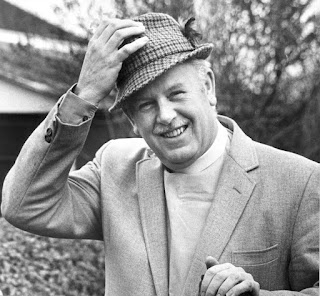 When was the last time you stopped to have a friendly chat with your neighbour, or paused to open the door for someone, or gave up your seat on the bus to an elderly person? If you have to stop to think, then it was too long ago.
Ian Gregory, the founder of the Polite Society, is the sort of person who does it every day and thinks that the world would be a better place if we all did the same. What we need, he says, is a touch more courtesy. Our society is full of rude, inconsiderate and selfish people who wouldn’t give you the time of day even if your life depended on it. He’s absolutely right, of course, but isn’t that “a sign of the times”? Well, he thinks there is something that is going wrong with the way we live our lives and interact with one another, especially on the roads, where an estimated 47 per cent of accidents can be traced back to some act of discourtesy.
There is nothing that legislation can do about this; there’s nothing that money can do about it either. You can’t impose a personality on a nation and say: “Well, let’s all be nicer to one another”. But the only way you are going to get anything effective done about it is if you persuade enough people that they can be happier, more successful individuals if they are more considerate to one another in their business, in their love lives, in their family lives, in everything.
You see, we are brilliant at discovering things, learning how to use computers, etc., but in terms of behaviour towards one another we are no better than cavemen.
There is nothing that legislation can do about this; there’s nothing that money can do about it either. You can’t impose a personality on a nation and say: “Well, let’s all be nicer to one another”. But the only way you are going to get anything effective done about it is if you persuade enough people that they can be happier, more successful individuals if they are more considerate to one another in their business, in their love lives, in their family lives, in everything.
You see, we are brilliant at discovering things, learning how to use computers, etc., but in terms of behaviour towards one another we are no better than cavemen.
Suscribirse a:
Entradas (Atom)

