
Mostrando entradas con la etiqueta B2. Mostrar todas las entradas
Mostrando entradas con la etiqueta B2. Mostrar todas las entradas


Exámenes EOI resueltos

MODELOS DE EXÁMENES OFICIALES ESCUELA OFICIAL DE IDIOMAS
EXÁMENES INGLÉS
EXÁMENES FRANCÉS
EXÁMENES ALEMÁN
EXÁMENES ITALIANO
PRUEBAS DE CERTIFICACIÓN DE LA EOI
+EXÁMENES RESUELTOS
Exámenes francés EOI resueltos

MODELOS DE EXÁMENES OFICIALES DE FRANCÉS EOI RESUELTOS
NIVEL BÁSICO - A2
NIVEL INTERMEDIO - B1
NIVEL AVANZADO - B2
PRUEBAS DE CERTIFICACIÓN DE LA ESCUELA OFICIAL DE IDIOMAS
+EXÁMENES RESUELTOS
Exámenes inglés Escuela Oficial de Idiomas resueltos

MODELOS DE EXÁMENES OFICIALES DE INGLÉS EOI RESUELTOS
NIVEL BÁSICO - A2
NIVEL INTERMEDIO - B1
NIVEL AVANZADO - B2
NIVEL SUPERIOR - C1
NIVEL EXPERTO - C2
PRUEBAS DE CERTIFICACIÓN DE LA ESCUELA OFICIAL DE IDIOMAS
+EXÁMENES RESUELTOS
Exámenes alemán EOI resueltos

MODELOS DE EXÁMENES OFICIALES DE ALEMÁN EOI RESUELTOS
PRUEBAS DE CERTIFICACIÓN DE LA ESCUELA OFICIAL DE IDIOMAS
NIVEL BÁSICO - A2
NIVEL INTERMEDIO - B1
NIVEL AVANZADO - B2
OTROS EXÁMENES RESUELTOS
Exámenes italiano EOI resueltos

MODELOS DE EXÁMENES OFICIALES DE ITALIANO EOI RESUELTOS
NIVEL BÁSICO - A2
NIVEL INTERMEDIO - B1
NIVEL AVANZADO - B2
PRUEBAS DE CERTIFICACIÓN DE LA ESCUELA OFICIAL DE IDIOMAS
+EXÁMENES RESUELTOS
Linkshänder - Die Welt falsch konstruiert . Alemán B2 EOI Aragón

Nicht nur Barack Obama macht alles mit links. Experten schätzen, dass die linke Hand bei etwa zehn bis 20 Prozent der Weltbevölkerung dominant ist. Doch immer noch scheitern deutsche Schüler wegen Linkshändigkeit.
Am Computer sitzt der Ziffernblock auf der falschen Seite. Am Geldautomaten wird der
5 -
Karteneinschub zur akrobatischen Fingerübung. Und aus der Gitarre wollen keine harmonischen Klänge herauskommen. Wenn es um das Bedienen technischer Geräte und das Spielen von Instrumenten geht, fühlen sich Linkshänder bisweilen, als ob sie gleich zwei linke Hände hätten. Ihr Problem: Fast alle Automaten, aber auch sämtliches Werkzeug oder Musikinstrumente sind für Rechtshänder konstruiert. Auf Benachteiligungen im Alltag, die für Linkshänder bestehen,
10 -
macht der Weltlinkshändertag an diesem Donnerstag aufmerksam.
5 -
Karteneinschub zur akrobatischen Fingerübung. Und aus der Gitarre wollen keine harmonischen Klänge herauskommen. Wenn es um das Bedienen technischer Geräte und das Spielen von Instrumenten geht, fühlen sich Linkshänder bisweilen, als ob sie gleich zwei linke Hände hätten. Ihr Problem: Fast alle Automaten, aber auch sämtliches Werkzeug oder Musikinstrumente sind für Rechtshänder konstruiert. Auf Benachteiligungen im Alltag, die für Linkshänder bestehen,
10 -
macht der Weltlinkshändertag an diesem Donnerstag aufmerksam.
Alltagshürden eines Linkshänders
Die Diskriminierung von Linkshändern fange schon in der Kindheit an, sagt Matthias Wüstefeld. Er ist Linkshänder, wurde jedoch in der Grundschule wie viele andere linkshändigen Kinder gezwungen, mit rechts zu schreiben. Erst vor knapp zehn Jahren – im Alter von 43 – begann Wüstefeld, sich auf seine eigentlich dominante Hand zurückzuschulen. Heute werde ihm
15 -
schwindlig, wenn er mit rechts schreiben müsse, sagt er. Beruflich hat Wüstefeld als Feinmechaniker begonnen. Doch die für Rechtshänder konstruierten Maschinen und Werkzeuge ließen ihn an seine motorischen Grenzen stoßen. Wüstefeld sattelte um, studierte Sozialpädagogik und betreibt heute in Münster eine von bundesweit 76 Beratungsstellen für Linkshänder.
20 -
15 -
schwindlig, wenn er mit rechts schreiben müsse, sagt er. Beruflich hat Wüstefeld als Feinmechaniker begonnen. Doch die für Rechtshänder konstruierten Maschinen und Werkzeuge ließen ihn an seine motorischen Grenzen stoßen. Wüstefeld sattelte um, studierte Sozialpädagogik und betreibt heute in Münster eine von bundesweit 76 Beratungsstellen für Linkshänder.
20 -
Mit links mehr Schulerfolg
Vor zwei Jahren erschien Alexandra Marschner mit ihrem Sohn Felix in der Beratungsstelle. Felix hatte damals erhebliche Probleme, in der Grundschule mitzukommen, erzählt Marschner: „Felix war immer sehr unkonzentriert.“ Dass ihr Sohn es nach der Grundschule auf das Gymnasium schaffen würde, daran hatten sie und ihr Mann schon fast nicht mehr geglaubt. „Wir haben zu Felix gesagt, wenn er es auf die Hauptschule schafft, ist das gut.“
25 -
Inzwischen ist von Hauptschule keine Rede mehr. Nach den Sommerferien geht es für Felix am Gymnasium weiter. Innerhalb von zwei Jahren hat der Elfjährige einen erstaunlichen Leistungsschub hingelegt – nach Überzeugung der Eltern ist die 2007 begonnene Rückschulung ihres Sohnes auf links der Grund.
25 -
Inzwischen ist von Hauptschule keine Rede mehr. Nach den Sommerferien geht es für Felix am Gymnasium weiter. Innerhalb von zwei Jahren hat der Elfjährige einen erstaunlichen Leistungsschub hingelegt – nach Überzeugung der Eltern ist die 2007 begonnene Rückschulung ihres Sohnes auf links der Grund.
Lehrer sind nicht ausreichend geschult
Felix sei kein Einzelfall, erklärt Wüstefeld. Viele Kinder blühten regelrecht auf, wenn sie damit
30 -
begännen, ihre dominante Hand zu gebrauchen. Sie gewännen an Selbstsicherheit und fühlten sich ausgeglichener. Im Gegenzug bringe das zwangsweise Drillen auf rechts gravierende Probleme mit sich: „Mögliche Primärfolgen sind Konzentrationsschwierigkeiten, Lese- und Rechtschreibschwächen oder auch Sprachstörungen wie Stottern.“ All dies könne dazu führen, dass sich die Kinder immer weiter zurückzögen oder sozial auffällig würden. Auch Inkontinenz sei
35 -
eine mögliche Auswirkung. Viele Jahrzehnte wurden linkshändige Kinder in deutschen Schulen zum Gebrauch der rechten Hand erzogen. „Noch bis vor Kurzem stand in den Lehrplänen einiger Bundesländer, dass Lehrer versuchen sollen, leicht linkshändigen Kindern das Schreiben mit rechts beizubringen“, beklagt Wüstefeld. Inzwischen werde das Problem in der Lehrerausbildung zwar behandelt, allerdings
40 -
nur stiefmütterlich.
30 -
begännen, ihre dominante Hand zu gebrauchen. Sie gewännen an Selbstsicherheit und fühlten sich ausgeglichener. Im Gegenzug bringe das zwangsweise Drillen auf rechts gravierende Probleme mit sich: „Mögliche Primärfolgen sind Konzentrationsschwierigkeiten, Lese- und Rechtschreibschwächen oder auch Sprachstörungen wie Stottern.“ All dies könne dazu führen, dass sich die Kinder immer weiter zurückzögen oder sozial auffällig würden. Auch Inkontinenz sei
35 -
eine mögliche Auswirkung. Viele Jahrzehnte wurden linkshändige Kinder in deutschen Schulen zum Gebrauch der rechten Hand erzogen. „Noch bis vor Kurzem stand in den Lehrplänen einiger Bundesländer, dass Lehrer versuchen sollen, leicht linkshändigen Kindern das Schreiben mit rechts beizubringen“, beklagt Wüstefeld. Inzwischen werde das Problem in der Lehrerausbildung zwar behandelt, allerdings
40 -
nur stiefmütterlich.
Aufstand lohnt
Eine gezielte Förderung von linkshändigen Kindern finde etwa in Nordrhein-Westfalen nicht statt. „In Düsseldorf ist man der Ansicht, eine solche Förderung braucht man nicht im Lehrplan. Die Lehrer wüssten, was zu tun ist, und andere Sachen seien wichtiger“, kritisiert Wüstefeld. NRW sei aber nicht das einzige Bundesland, das hinterherhinke. Ganz anders sehe der Lehrplan von
45 -
Bayern aus. Dieser sei in Bezug auf die Förderung von Linkshändern sehr gut. Die noch immer allumfassende Dominanz der Rechtshänder erklärt der Münsteraner Experte mit dem Unvermögen der Linkshänder, sich Gehör zu verschaffen. „Das Problem der Linkshänder ist, dass sie es nicht schaffen, sich als Gruppe zusammenzutun und zu sagen, wir legen jetzt mal alle unsere Probleme auf den Tisch. Auch viele Linkshänder meinten: ‚Ach, dafür lohnt sich doch
50 -
der Aufstand nicht.´“
45 -
Bayern aus. Dieser sei in Bezug auf die Förderung von Linkshändern sehr gut. Die noch immer allumfassende Dominanz der Rechtshänder erklärt der Münsteraner Experte mit dem Unvermögen der Linkshänder, sich Gehör zu verschaffen. „Das Problem der Linkshänder ist, dass sie es nicht schaffen, sich als Gruppe zusammenzutun und zu sagen, wir legen jetzt mal alle unsere Probleme auf den Tisch. Auch viele Linkshänder meinten: ‚Ach, dafür lohnt sich doch
50 -
der Aufstand nicht.´“
© FOCUS
London restaurants - EOI Aragón inglés B2 resuelto
A. Anchor & Hope
Great things at friendly prices come from the open kitchen at this packed, no-reservations, leading gastropub on the Cut in Waterloo: pot-roast duck and chicken pithivier (puff pastry pie) are two standouts. It's cramped, informal, and highly original, and there are great dishes for groups, like slow-roasted leg of lamb. Expect to share a table, too.
 B. Boxwood Café
Attached to the Berkeley and in the Gordon Ramsay stable, the Boxwood is the best uptown but relaxed place to dine in Knightsbridge, with opulent marble, brown, and greens. The New Yorkstyle restaurant is open late (until midnight Thursday-Saturday) and set lunch is useful at £28. Favorite dishes range from Orkney scallops to yellowfin tuna, and veal burger to treacle tart. Service is top-notch, and you'll find a fashionable buzz.
C. Great Queen Street
Expect crowds and a buzz at Covent Garden's leading gastropub that showcases classic British dishes in a burgundy and bare oak-floor-and-table setting. Old-fashioned dishes like pressed tongue, mackerel and gooseberry, and mussels and chips may be revived from a bygone era, but Londoners adore them. Dishes for the whole table—like venison pie or seven-hour shoulder of lamb—are highly convivial. There's little for nonmeat eaters, and no dinner Sunday.
D. Skylon
Located in the Royal Festival Hall, Skylon is the Southbank Centre's destination restaurant/bar/grill. Spacious, attractive, and with huge picture windows with spectacular views of the Thames, Skylon guarantees a classy pre- or post-performance meal in the '50s Festival Hall.
Against a background of dancing and music, concertgoers sip lush cocktails at the central bar and dine on lamb and harissa at the grill, or Anjou pigeon, spelt risotto, and sea bass with bok choy in the restaurant. The food is accomplished, and the setting impressive.
E. Yauatcha
It's a superbly lighted slinky Soho classic. Well designed by Christian Liaigre—with black granite floors, aquarium, candles, and a starry ceiling—the food is a match for the seductive setting.
There's wicked dim sum (try prawns or scallops), crispy duck rolls, silver cod, fancy cocktails, and tea and colorful cakes in the first-floor tearoom. Note the quick table turns, and ask to dine in the more romantic basement at night.
F. Cecconi's
Enjoy all-day buzz at this Italian brasserie opposite the Royal Academy on Burlington Gardens.
Between Savile Row and New Bond Street, clients pitch up for breakfast, brunch, and Italian tapas (cichetti) at the bar, and return for something more substantial later on. Ilse Crawford's green-andbrown interior is a stylish background for classics like veal Milanese, Venetian calves' liver, and tiramisu. Note: it's a nice pit stop during a shopping spree.
G. Scott's
Scott's is so hot that it's where the A-list go to celebrate. Founded in 1851, and recently renovated and reborn as a glamorous seafood haven and oyster bar, it draws beautiful people who pick at Cumbrae oysters, Red Sea prawns, and Stargazy pie. Standouts like cod with chorizo and padron peppers are to die for. Prices are high, but you're dining at the hippest joint in town.
H. Tayyabs
City finance boys, Asians, and medics from the Royal London Hospital swamp this high-turnover halal Pakistani curry canteen in Whitechapel. Expect queues after dark, and bear in mind it's BYOB, jam-packed, noisy, and mildly chaotic. Nonetheless, prices are dirt cheap and you can gorge on minced meat shami kebabs, skewed beef seekh kebabs, karahi chicken, or marinated lamb chops.
Stress am Arbeitsplatz - Alemán B2 EOI Asturias

TEIL 2. "Ich denke, heute ist es so, dass der Erschöpfte den Gebrechlichen ersetzt," sagt Andrea Gensel. Mit Erschöpfung am Arbeitsplatz kennt sich die 48-Jährige aus. Vor zehn Jahren hat sich die gelernte Betriebspsychologin mit einer Personalberatung für Führungskräfte selbstständig gemacht. Am Anfang ging es in ihren Seminaren noch hauptsächlich um arbeitstechnische Fragen: "Wie komme ich in Verkaufsgesprächen überzeugend rüber, wie löse ich Konflikte mit Mitarbeitern?" Im Laufe der Zeit aber hat sich das geändert: "Und wir haben schon vor fünf Jahren ganz deutlich in meinem Unternehmen bemerkt, dass immer wieder Fragen in dem Bereich der psychischen Störungen auftauchten, dass das Coaching kein technisches Coaching unbedingt mehr war, also wie gestalte ich meine Arbeitszeit optimaler, sondern das waren immer mehr psychologische Themen."
TEIL 3. Als sich Krankheitsbilder wie Burn-out und Depression häuften und viele ihrer Kunden mit dem Wunsch nach einer psychologischen Einzelberatung zu ihr kamen, erkannte Andrea Gensel die Marktlücke und reagierte. 2009 gründete sie das Unternehmen CarpeDiem24. Sein Angebot nennt sich externe Mitarbeiterberatung. Das Prinzip: Ein Arbeitgeber schließt einen Vertrag mit CarpeDiem24 und zahlt eine monatliche Pauschale. Im Gegenzug können alle seine Angestellten eine Hotline wählen und sich von geschultem Fachpersonal am Telefon psychologisch beraten lassen. Bis zu vierundzwanzig Stunden am Tag, kostenlos und anonym. Egal, wo der Schuh drückt: ob beruflich oder privat. Jeder, der die Hotline wählt, landet erst einmal hier. Da der Service komplett anonym ist, muss der Anrufer bis auf den Namen seines Arbeitgebers keine Angaben machen. Dann wird er zum persönlichen Gespräch an einen der Berater durchgestellt. Für viele, die anrufen, geht es erst einmal darum, sich über ihr Problem selbst klar zu werden. Vertrauen ist das wichtigste Kapital von Andrea Gensel. Und darum wirbt sie. Bei jedem neuen Kunden spricht sie auf der Betriebsversammlung vor allen Mitarbeitern. "Das ist ganz wichtig. Weil so sieht die gesamte Belegschaft ein Gesicht dazu. Die sehen, dass wir bodenständig sind.“ Zum Vertrauen gehört aber auch, dass nichts von den Gesprächen nach außen dringt. Stichwort Datenschutz. Deshalb unterliegen nicht nur alle Berater der Schweigepflicht; auch wer als Journalist über CarpeDiem24 berichtet, muss schriftlich seine Verschwiegenheit versichern. Für die Arbeitgeber gibt es zweimal im Jahr eine Auswertung mit viel statistischem Material. Darin steht dann beispielsweise, wie häufig die Mitarbeiter insgesamt angerufen haben und mit welchen Themen. Rückschlüsse auf konkrete Personen ergeben sich daraus nicht.
TEIL 4. Im Schnitt sind es um die zehn Prozent der Mitarbeiter in einem Unternehmen, die das Angebot von CarpeDiem24 nutzen. Die meisten wegen privater Probleme: Krach in der Ehe, ein plötzlicher Krankheitsfall in der Familie oder Schuldenprobleme - oft sind es ganz konkrete Dinge, von denen sich Menschen überfordert fühlen. Der Anteil der Anrufer mit psychischen Störungen liegt bei insgesamt zwanzig Prozent. Tendenz steigend. "Wir beraten zu Depression, Zwänge, Ängste, psychische Störungen, Suchtprobleme, alles, was das Leben zeigt.“. Doch gerade wenn ein psychisches Störungsbild vorliegt, kommt es vor, dass die telefonische Beratung an ihre Grenzen stößt. Dann hilft nur noch eine Therapie: "Manchmal reichen drei bis fünf Gespräche, um den Menschen wieder stabilisieren zu können und wenn es nicht reicht, das sind zwanzig Prozent der Gespräche, wo wir dann sagen, hier vermitteln wir weiter an niedergelassene psychologische Psychotherapeuten."
TEIL 5. Zu den Kunden von CarpeDiem24 zählt seit Kurzem auch der Schlüsselhersteller Assa Abloy. Das mittelständische Unternehmen mit Sitz in Berlin hat rund vierhundertdreißig Beschäftigte. Für sie nimmt vor allem die Arbeitsdichte immer mehr zu, stellt Personalleiter Alexander Vath fest: "Das merken mit Sicherheit viele Mitarbeiter, dass die Arbeit heutzutage trotz der technischen Verbesserungen, E-Mail etc., nicht einfacher geworden ist, sondern wahrscheinlich schwieriger geworden ist. Die Zeit ist die gleiche, aber es spielt sich einfach viel, viel mehr ab in der gleichen Zeit als früher und das ist das Problem." Für Vath sind deshalb die Unternehmen in der Pflicht, sich mehr um die seelische Gesundheit ihrer Mitarbeiter zu kümmern.
TEIL 6. Anders als in den Vereinigten Staaten gibt es hierzulande noch keine verlässlichen Studien über die Auswirkungen der externen Mitarbeiterberatung. Sichtbar jedoch ist der Erfolg bei den Kunden: 25 Unternehmen mit insgesamt rund 25.000 Beschäftigten betreut Carpe Diem 24 derzeit an seinen Standorten in Lübeck und Hamburg. Der Preis pro Mitarbeiter liegt zwischen 1,10 Euro und 5,80 pro Monat. Je nachdem wie groß ein Unternehmen ist und ob es den Service für den ganzen Tag oder nur für ein paar Stunden bucht.
Kritik an diesem Modell kommt von den Gewerkschaften. Zwar sei die externe Beratung am Telefon durchaus ein sinnvolles Angebot, sagen auch sie. Allerdings nur als ergänzende Maßnahme. Denn die eigentlichen Ursachen von Stress und psychischer Überforderung am Arbeitsplatz beseitige sie nicht. Für Hanns Pauli, Gesundheitsexperte beim Deutschen Gewerkschaftsbund, hilft da nur eins: bessere Arbeitsbedingungen in den Betrieben und die genaue Einhaltung von arbeitsschutzrechtlichen Vorschriften. Eine externe Unterstützungsstruktur sei für die Beschäftigten auf jeden Fall sinnvoll. Aber das ändere nichts daran, dass letztendlich intern auch etwas getan werden muss und dass vor allen Dingen das Thema auch der Gefährdungsbeurteilung maßnahmenorientiert weitergetrieben werde und die Beschäftigten auch gefragt würden, was sich an ihren Arbeitsbedingungen ändern sollte."
Quelle: www.dradio/ firmenporträt
Quebec, 400 ans d'histoire - EOI francés B2

Les premières tentatives françaises de s’implanter à Québec au bord du Saint-Laurent remontent à 1541 avec Jacques Cartier. Cet explorateur passe l’hiver dans la région et ramène à la Cour de France des échantillons d’une pierre qu’il pense précieuse. Las, il s’agit de quartz, et une nouvelle expression surgit parmi les courtisans, « faux comme un diamant du Canada ». Plus de soixante ans s’écoulent avant que Pierre Duga des Monts, un homme d’affaires, finance l’expédition de Champlain dans le pays du Saint-Laurent. Ce militaire de carrière choisit Québec pour ses qualités de forteresse naturelle puisqu’une falaise protège d’éventuelles invasions, et il y construit sa première habitation, à la fois résidence, fort, magasin pour les marchandises de traite. Le premier hiver est rude, quinze Français sur 28 décèdent de maladie.
La colonie démarre doucement, car la métropole suit de très loin le destin de cette terre française située à des mois de voyage en voilier. L’ennemi anglais en profite et s’empare de la localité en 1629. Il faut trois ans de négociations à la couronne française pour que Québec retombe dans son giron à la faveur du traité de Saint-Germain en Laye. Malgré cette entente, certains songent à abandonner la Nouvelle-France. L’arrivée au pouvoir de Louis XIV, qui nourrit de grandes ambitions pour ses colonies, change la donne. Il nomme Jean Talon intendant. Ce dernier développe et diversifie l’agriculture pour que les habitants puissent devenir autosuffisants, encourage la production de souliers et chapeaux et fonde même une brasserie afin de diminuer les importations de vin de la mère-patrie. Il corrige aussi le déséquilibre démographique car on manque cruellement de femmes en
Nouvelle-France. En dix ans, plus de 800 filles du Roy prennent donc le bateau pour fonder une famille. La moitié d’entre elles viennent d’un établissement public parisien qui recueille des filles indigentes.
La situation économique s’améliore avec le commerce de fourrures et des pêcheries, et les débuts de l’industrie forestière. Québec devient la capitale de la Nouvelle-France en 1663, et son séminaire forme tous les prêtres de la colonie.
Coup de théâtre en juin 1759
Les Britanniques, désireux de conquérir les colonies françaises américaines, passent à l’attaque avec 40 vaisseaux de guerres, et 9 000 soldats. Pendant plusieurs jours, ils bombardent la ville, la rasant en partie.
Québec résiste. Le 12 septembre, près de 5 000 soldats débarquent de leurs navires et arrivent en haut de la falaise. La bataille des plaines d’Abraham ne dure qu’une trentaine de minutes, scellant le sort de la Nouvelle-France. Trois jours après cette défaite, les Français capitulent. L’Amérique sera anglaise. Dès lors, Québec s’adapte à ses nouveaux maîtres. En 1791, elle devient capitale du Bas-Canada, et son port connaît une expansion spectaculaire grâce aux exportations de bois vers la Grande-Bretagne. L’industrie navale se développe aussi, et des dizaines de milliers d’immigrants anglais, écossais, irlandais viennent travailler à Québec.
L’arrivée des navires à coques d’acier sonne le glas de la construction navale vers 1870, tandis que sur le plan politique Québec perd son statut de capitale, avec le choix d’Ottawa comme siège du nouveau Canada uni. De nombreux fonctionnaires partent, suivis des milliers de soldats avec le départ de la garnison britannique en 1871.
L’industrie prend le relais cependant des emplois perdus, on fabrique à Québec des corsets, des chaussures, des produits de tabac. Le tourisme devient aussi une source intéressante de revenus. Les Américains d’abord, puis les Européens, adorent les rues étroites bâties à même le cap, les panoramas spectaculaires sur le fleuve et les fortifications. […]
par Pascale Guéricolas (source Internet)
RFI 25/06/2008
Dans les moteurs de l’avenir - EOI francés B2

À l’avant-scène, une profusion d’informations contradictoires sur la fin du pétrole, le boom des énergies vertes et le bruit des éoliennes. Dans les coulisses, un ballet réglé d’intérêts: les forgerons de l’ordre mondial s’affairent. Spectacle à fronts renversés? Comprendre le grand jeu de l’énergie dont dépend l’avenir de l’humanité implique une démarche volontariste.
Trois traits caractérisent le paysage énergétique global. En premier lieu, les connaissances fiables dont nous aurions besoin pour peser sur les choix de demain sont confisquées au public: elles hibernent dans les coffres d’Etats et d’entreprises. Ensuite, les investissements nécessaires à la mise en oeuvre d’une nouvelle filière sont si lourds qu’ils engagent un pays sur plusieurs générations. Dès lors, les intérêts économiques priment, même lorsqu’ils fusionnent avec d’autres considérations d’allure plus présentable: aux questions géopolitiques, aux débats éthiques, aux controverses climatiques répondent presque toujours les profits des multinationales.
Selon l’Agence internationale de l’énergie (AIE), le «pic» pétrolier aurait été atteint en 2006. Mais il faut se méfier des effets d’annonce. Dans ce domaine, on ment et on bluffe pour influencer les marchés et justifier des investissements irrationnels. La perplexité est aussi de mise quand l’Organisation de coopération et de développement économiques (OCDE) affirme que les coûts de l’électricité solaire et éolienne rejoignent ceux du courant d’origine nucléaire ou fossile. Difficile d’oublier que les énergies dites «vertes» constituent le nouveau Graal des industriels. Les géants de l’économie mondiale tiennent désormais deux fers au feu: d’un côté, les «renouvelables» ; de l’autre, les hydrocarbures.
Contrairement au négoce des clarinettes, le commerce de l’énergie est condamné à tenir compte des enjeux stratégiques. Gazoducs et oléoducs doivent répondre à des critères de sécurité maximum pour irriguer les coeurs économiques. Au-delà du calcul classique de rentabilité, les sommes engagées intègrent une dimension politique et stratégique. Pour éviter les zones dangereuses et s’assurer le contrôle des routes, les grandes puissances se livrent des batailles épiques.
L’emprise des peuples sur leur avenir énergétique peut donc paraître bien limitée et la perspective d’une planète à dix milliards d’êtres humains obligera à rationaliser un secteur esclave des absurdités du marché. «En six heures, les déserts dans le monde reçoivent plus d’énergie que l’humanité entière n’en consomme en une année.» Cette citation orne le site Internet de la fondation Desertec, un projet intercontinental qui regroupe différents pays au sein d’un immense réseau de production d’énergie renouvelable spécialisée selon les milieux géographiques: panneaux solaires dans le désert, éoliennes sur les côtes, barrages dans les montagnes... Utopie éblouissante qui ne pourra nous faire oublier cette réalité: un tiers de l’humanité utilise encore exclusivement le bois et le charbon de bois pour se nourrir, se chauffer et travailler.
Source : www.monde-diplomatique.fr
Texte adapté pour cette épreuve
Concilier travail et vie de famille reste compliqué - EOI francés B2

Mise en place, en 2004, du crédit d'impôt famille destiné à favoriser la création de crèches, lancement, en 2006, de chèques emploi-service pour financer les modes de garde: les pouvoirs publics demandent aux entreprises d'accompagner l'une des révolutions du XXe siècle, le travail féminin. De 1962 à 2005, le taux d'activité des femmes est passé de 42% à 82%: près de 60% des enfants de moins de 6 ans grandissent désormais au sein de couples "biactifs".
Pour mesurer les efforts des employeurs, l'Institut national des études démographiques (INED) a réalisé, en 2004-2005, une grande enquête sur les politiques de conciliation des entreprises. Près de 10.000 personnes de 20 à 49 ans et plus de 2500 entreprises de plus de vingt salariés ont été interrogées. Il s'agit, précise l'économiste Thomas Piketty dans sa préface, de "l'enquête la plus ambitieuse menée à ce jour sur l'articulation entre vie familiale et vie professionnelle".
Premier constat: malgré les efforts du secteur public et des grandes entreprises, les politiques de conciliation restent rares. Plus de la moitié des établissements (20% des salariés) n'offrent quasiment aucun soutien à la parentalité. "Les aides ne sont pas toujours bien ciblées et elles ne font que rarement l'objet d'une politique cohérente et délibérée".
Les entreprises font des gestes: beaucoup d'établissements ont ainsi mis en place des prestations financières à destination des familles, qu'il s'agisse de complément d'indemnisation aux congés maternité et paternité, de primes à la naissance ou d'aides aux frais de garde. Mais les services, notamment les crèches, restent rarissimes: en 2005, elles concernaient à peine 3% des établissements. Surtout, les entreprises rechignent à répondre à la principale revendication des salariés: l'introduction d'une certaine souplesse dans les horaires. "Lorsque des ajustements existent, ils concernent bien plus souvent des événements rares que l'organisation quotidienne du travail. Ainsi, des assouplissements d'horaires sont permis de façon ponctuelle le jour de la rentrée scolaire ou en cas d'enfant malade, mais il existe peu d'aménagements réguliers."
Deuxième constat: contrairement à ce que l'on dit souvent, l'entreprise est un lieu où les dissymétries hommes-femmes restent encore très marquées. Avant même de choisir un emploi, les femmes anticipent le fait qu'elles assumeront en moyenne 80% du noyau dur des tâches domestiques: elles accordent beaucoup plus d'importance que les hommes aux horaires, ce qui les cantonne souvent dans les emplois de "petits temps" (temps partiel).
Pour les chercheurs qui ont participé à ce travail, la conciliation travail-famille passe donc par une réflexion approfondie sur l'organisation du travail. Il faut, affirment-ils, rompre avec les cultures d'entreprises qui font de la présence un signe de motivation.
"Tant que les réunions importantes se tiendront à 19 heures, il est sans doute vain d'espérer une réelle égalité hommes-femmes dans les carrières professionnelles et les tâches domestiques".
Ils plaident aussi pour des politiques publiques ambitieuses - développement massif des modes de garde et création d'un congé parental plus court, mieux rémunéré et mieux partagé avec le père. Nicolas Sarkozy a promis une réforme du congé parental mais en matière d'offre de garde, les ambitions, en un an, ont été sérieusement revues à la baisse: après avoir annoncé la création de 350.000 places d'accueil pour les moins de 3 ans d'ici à 2012, le gouvernement évoque maintenant le chiffre de 200.000 places.
Source : www.lemonde.fr
Texte adapté pour cette épreuve
Texte adapté pour cette épreuve
The decline in home cooking - EOI Extremadura inglés B2 resuelto
 |
| Image: Daragh Mc Sweeney |
These bistros, or porte-pots as they were known, originated as places where the Lyon white-collar work force could stop and eat perfectly cooked, comforting, motherly food made from seasonal, often inexpensive ingredients.
Les Mères often worked with only one assistant, and their short menus and practical techniques are in marked contrast to the technique heavy "haute cuisine" prepared by brigades of male chefs today.
The decline in French home cooking—specifically the nurturing, bourgeois home cooking for which French women have always been admired-- joins a trend that has affected all major European nations as their societies and economic structures changed post World War II.
Home cooking is in decline in Southern Europe as it is in the northern and Nordic countries, yet in each there are variables in the style of change. It is happening faster in certain countries—such as the U.K., where total industrialization was complete in the 19th century—than others.
Analyzing the decline across these nations is mainly a matter of reading the figures for sales of convenience and fast food, and collecting statistics that mark change in attitude and trend. Market-research firm Euromonitor carried out a comprehensive study of changing habits across Europe from 2000–2007. It found that among large, less affluent populations in European countries, the take up of fast food and convenience food is increasing. The researcher's latest figures this year for sales of packaged food in the U.K., France, Italy, Denmark and Germany, for example, show an average increase of 15% in consumption.
But there is a parallel story of a much smaller number of wealthier women and men in the same countries becoming increasingly concerned about their health, trying organic and cooking fresh foods from scratch. When this group buys convenience food, they tend to buy the healthier, often natural or organic, option.
You cannot pin the demise of home cooking in European countries on a single issue. The loss of structured mealtimes can be put down to a number of causes including urbanization and smaller households, but the changing role of women in European society in the past 40 or 50 years is very significant. Exercising their right to equality in the workplace raises the family income and the hardpressed career woman relies more on prepared food or eating out when it comes to feeding her family. Mr. Marquis, an acclaimed chef, believes that aspirational tastes have put good traditional home cooking lower on the agenda in upwardly mobile European families. "In my youth, we had one car and ate very well on a budget supported only by my father's salary," he says. "Now everyone wants three cars, Apple technology and long-haul holidays, so both parents must work. Food becomes less significant," he adds.
There is the added dynamic that women are sometime sole breadwinners.
Their male partners can enthusiastically take up the home-cooking role. Male keenness for cookery remains in the margin of wealthier families, but there is a role reversal that fits with the eminence of chefs in the media and heading up kitchens in the world's "best restaurants."
Controversially, there is the accusation that liberated women (who gave up cooking) inadvertently generated a modern irresponsible food industry. The women that chose not to follow their mother and grandmother's career, left the door open. Had the food companies created a healthy surrogate for all and not just wealthy society—we might not have the fast-food industry and ensuing health problems, such as rising obesity. It is important to note that no feminist would have intended such an outcome, and that other environmental and economical factors have contributed to the problem.
It is not that women in Europe need leave their jobs and go back to housework, but families risk rearing a generation of "kitchen orphans," men and women who have never witnessed their parents cooking. There is no substitute for this; no popular TV chef can replace the effectiveness of the conversation about the right way to prepare a dish between mother and daughter, or indeed father and
son. The talented Les Mères gave up their kitchens to male chefs and their brigades of helpers, worn down by an unequal society that gave them too much work and little assistance, as did millions of stay-at-home mothers throughout Europe. In a culture where gender roles are more evenly balanced, there is a chance to revive the heroic, nurturing motherly food of each nation. It isn't just a sociological need, but an economic one. Mr. Marquis, whose life's work has been to emulate this, says a return to these basics is politically necessary. "In the past there were economic reasons for women getting out of the kitchen; now there is an economic reason for their simple, perfectionist cooking to be restored. This is the culture that is the envy of the world."
The most powerful woman in Hollywood - EOI Castilla y León inglés B2 resuelto

On the morning of 5th September 1932, the Hollywood producer Paul Beern was found dead on the floor of the house he shared with his new wife, the then popular actress Jean Harlow. The housekeeper rang Harlow, one of MGM's most glamorous stars, who was staying with her mother, and her mother. in turn, knew just who to call: not the police, not 311 ambulance. She called Howard Strickling, MGM's head of publicity.
Strickling spoonfed stories to the gossip columnists. When actors were hired at MGM they were immediately sent to Strickling's office, where he would ask, after hearing their life story. 'Are you holding anything back? Is there anything embarrassing in your past that we should know about? If you tell me now. I can make sure anything like that stays out of the press.’ Contractually speaking, the film studios in those days virtually owned the stars who worked for them and stage-managed their lives, and when that wasn't possible, their lives were rewritten with happier endings. Strickling, in the words of his biographer, 'was as likely to arrange a wedding as cover up a death.'
Although film studios no longer own their stars, publicists still wield the power in Hollywood and one of the most powerful is Pat Kingsley. She is feared by the press and revered by her clients. Stories of her techniques are legendary. Believing overexposure to be one of the prime risks of celebrity, she will drastically curb the number of interviews her clients give, she will demand that her stars appear on the cover of magazines or not at all, that they have the right to veto over writers and photographers, that they get copy approval, and often she herself will be present throughout the interview. In short, she will ensure that nothing escapes her control. If she doesn't like what a writer or magazine has done with one of her clients, she is reputed to forbid access to all of her other clients for ever more -- and she represents everyone (or did until recently). In the past 18 months she has been fired by Tom Cruise in favour of his fellow Scientologist sister (resulting in outlandish behaviour that vindicates, to most eyes. Kingsley's conviction in exercising restraint.)
Still, no one who relies on celebrity interviews to keep their circulation up dares to cross Pat Kingsley. If you have ever read an interteriew with say, Al Pacino, or Jodie Foster or, in the past, Nicole Kitdman, Julia Roberts or Tom Cruise, and found it somewhat unrevealing, you have Kingsley to thank. It would he hard to overstate the reach of Kingsley's invisible touch. For instance. many of her clients have come to rely on her opinion so extensively that they ask her advice on scripts they are sent. Another example: the work of Kingsley's company is 30 per cent corporate — they represent big companies like American Express, Reebok, Cadillac, among others, and their aim is to fuse their entertainment contact with their corporate clients. So. for example, their film star clients are driven to the Oscar Awards in Cadillacs; for Tom Cruise's film, Minority Report, Kingsley arranged for it that Cruise would walk into a shopping mall in which the shops and advertisements that were seen all belonged to her corporate clients. Her influence may be subliminal, but that's why it works - on all of us.
When I told one of my Los Angeles friends I was coming to meet Pat Kingsley, she gasped and said: 'Here that's like saying you're coming to meet the Queen.' All this was rather awe-inspiring and with some unease I waited for Kingsley to arrive. She eventually walks into the room. At 73, she has greying ash-blond hair, a well-meaning look in her eye and a leisurely Southern accent that seems in its lilt, conspiratorially sly. Kingsley, of course. plays down her power. She believes that stars can't be manufactured any more and she says that it is all based on the quality of their work, and that is something she is not responsible for. When I suggest that some excellent actors don't get the attention they deserve, meaning that there is more in the publicity aspect than she is letting on, she replies sympathetically, 'That's always been the case and always will be. Some of our best actors still struggle mightily to get work.'
Adapted © The Observer Review 2005
Chaque femme est un roman - EOI francés B2

«Roman en liberté» et «livre foutraque1» de l'aveu même de son auteur, Chaque femme est un roman constitue le dernier volet d'une trilogie familiale entamée avec Le Zubial et poursuivie avec Le roman des Jardin. Après avoir dévoilé au grand jour les secrets d'une famille excentrique, Alexandre Jardin se concentre sur les «adorables perturbatrices» qui l'ont aidé à se construire et à penser autrement, «loin des glissières de sécurité». Jardin, pour qui les femmes sont des «tremplins vers le fabuleux», convoque un bouquet de créatures et de séducteurs. Voici notamment une blonde voisine qui fait l'amour «comme on sort de la route» alors qu'il essaye de réviser sagement pour son baccalauréat; une mère qui brûle sa bibliothèque; un ministre de la Ve République qui a fait le gigolo; ou cette Milou qui croit au pouvoir des mots. Le savoureux portrait de l'éditrice Françoise Verny vaut le détour. De l'Alexandre Jardin pur jus!
Je m'appelle Alexandre et je suis écrivain.
Longtemps je me suis cru l'héritier d'une famille givrée2, portée par l'écume du siècle et engagée dans des tournois sentimentaux qui me dépassaient - alors que je suis né de mes rencontres avec d'étourdissantes perturbatrices. Ce sont les femmes, en effet, qui m'ont appris à penser autrement, loin des glissières de sécurité. Les hommes, en revanche, ne sont pas mon genre. [...] L'improbable roman de mes apprentissages se confond avec celui de mes rapports avec des filles toquées de3 liberté. Toutes ont dynamité mes opinions ou fait craquer la tunique de mes réflexes trop sérieux.
Ma mère, la première, réprima mon inclination pour la tranquillité en faisant la guerre à mon fond d'idées stables. Saute toujours dans le vide, jamais dans ce plein, me répétait-elle souvent. Dans son esprit, cela signifiait torpiller l'idée même du repos. Chaque jour, je devais larguer les amarres, effondrer mes certitudes et, surtout, envisager l'inconcevable. Il ne fallait consentir à rien de fixe et à rien qui manquât de hauteur. Avide de tempéraments de son calibre, je me suis ensuite efforcé de dénicher des filles inclassables et souvent dénuées de ballast4 moral. Ces faux départs passionnels, à l'ouverture de ma vie, ne furent pas les moins formateurs. Le goût des femmes différentes, chez moi, a suppléé une fréquentation de l'université (où je n'ai fait qu'un saut tant je craignais d'y expier mon ignorance). Aujourd'hui encore, je continue à vivre des intérêts de ce pactole de liaisons et d'amitiés avec de robustes luronnes. C'est en faisant à leurs côtés l'expérience de l'inimaginable ou de l'impossible tenté que j'ai appris à apprendre et surtout à désapprendre.
- Des réservoirs sur les bateaux permettant de changer l’immersion ou l’équilibre.
Ce livre foutraque est le recueil de leurs préceptes, ou plutôt l'histoire électrique des interrogations qu'elles n'ont cessé d'allumer en moi. Parfois, il me semble que les femmes sont des tremplins vers le fabuleux. [...] Depuis mon plus jeune âge, je sais que chaque femme est un roman. Voici en quelque sorte mes études littéraires, blondes et brunes.
Ce volume, crucial à mes yeux, a failli ne pas voir le jour! [...] Pourquoi passe-t-on tant de temps à éluder ce qui nous est essentiel? Mi-avril 2007, je prends une décision difficile: je brûle l'ouvrage - fabriqué, chargé de brillances et finalement raté - sur lequel je m'échinais depuis plus d'un an. Quel soulagement! Façon sans doute de me sentir à nouveau fils de ma mère. [...] Je flambe donc ce manuscrit mort-né avec l'espoir que cette taille fera remonter en moi une sève franche. Au fond, j'ai moins été déçu par ce roman glacé que par l'homme déloyal que j'étais devenu en l'écrivant. Je m'y dérobais derrière des mots.
Illico, je préviens ma mère de mon autodafé. Fidèle à son logiciel d'aventurière brevetée, elle me rétorque:
- Bravo mon chéri! Je n'en attendais pas moins de toi. On devrait toujours flamber ses livres... Je recommande cette ascèse.
- Pourquoi?
- Pour ne pas vieillir avant l'heure. C'est pour cela que je n'ai jamais publié les miens...
- Tu as écrit des romans... toi aussi?
- Pour les brûler, cinq ou six. Tu vois, il arrive que nous soyons de la même famille... Curieuse lignée de brûleurs de livres...
Texte adapté. © Alexandre Jardin, Chaque femme est un roman.
(Encadré : © www.lire.fr) (696 mots)
Les telephones intelligents, trop envahissants? - EOI francés B2
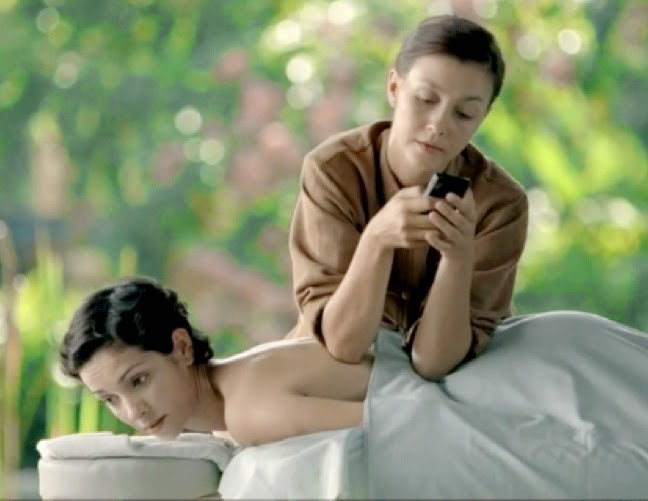
Les "téléphones intelligents", trop intelligents, seraient-ils devenus la bête noire des entreprises ? La salve est venue d'Alain Afflelou qui s'est lancé dans une diatribe pour dénoncer les BlackBerry, le 12 novembre dernier sur Europe 1. Il mettait en avant la question de la sécurité, pour les données confidentielles, ainsi que l'addiction engendrée selon lui par les BlackBerry. Décision a été prise de les remplacer par un ordinateur portable, alors que c'est lui-même qui les avait introduits au sein de sa société, il y a un an.
Sans aller aussi loin qu'Alain Afflelou, des entreprises ont déjà commencé à les interdire pendant les réunions, pour que leurs salariés restent concentrés. Si pour le moment aucune étude sérieuse n'a été faite sur les dangers de ces supers téléphones au travail, Bernard Salengro, médecin du travail et membre de la CFE-CGC, la Confédération française de l'encadrement, joint par TF1 News, reconnaît plusieurs remontées de témoignages de la Médecine du travail qui confirment une dépendance à ces appareils. Il met en avant le manque de dialogue et le stress. Stress engendré, entre autre, "par le manque de séparation entre vie privée et publique". Il ajoute :"Les employés sont soumis a une pression permanente, ils ne se déplacent plus pour parler à un collègue mais communiquent uniquement par portable mobile. Il n'y a aucune pause pour le cerveau qui n'a pas été construit pour ce rythme là".
Virginie Govaere, chercheuse à l'INRS, dans le département "Homme au travail", rechigne à parler d'addiction mais constate qu'il y a "une segmentation de l'activité : ces outils, ultra-performants, nous interrompent, demandent des décisions rapides sans le temps de la réflexion et à chaque interruption demandant un effort de reconcentration".
D'autres pays ont commencé à s'alarmer de ce phénomène. Le site BusinessMobile.fr rapporte que le phénomène d'addiction aux terminaux BlackBerry inquiète les autorités canadiennes. Selon Reuters, Richard Fadden, ministre adjoint de la Citoyenneté et de l'Immigration au Canada, a envoyé une consigne à ses employés pour appeler à un usage raisonnable du terminal. Dans sa lettre il recommande à ses équipes d'éteindre leur appareil entre 19h et 7h ainsi que le week-end et en période de congés.
D'après le journal britannique Independent on Sunday plus d'un tiers des utilisateurs de BlackBerry au Royaume-Uni, montrent des signes d'addiction presque semblable à des symptômes de l'alcoolisme. Aux Etats-Unis, certaines entreprises auraient déjà fait l'objet de plaintes de la part de leurs employés qui les accusent d'être directement responsables de leur divorce. Le Blackberry plus fort qu'une maîtresse ?
Source: © TF1 News le 19 novembre 2009
EOI País Vasco inglés B2 resuelto - Au Renoir mister Franglais

Its rules are simple. Insert as many French words as you know into the sentence, fill in the rest with English, then speak it with absolute conviction. Although it wasn't known as such then, Franglais is found in Shakespeare and has probably been used for as long as the English and French have had to talk to each other.
But Miles Kington did it best. After all, he coined the name for this hybrid tongue. Kington studied languages, and it showed. In a long-running series of columns for Punch he satirised the earnest but doomed efforts of native English speakers to handle French. Like a phrase book, each of his "lessons" covered a particular situation.
Bodged attempts at foreign languages are as important as food poisoning to a good holiday anecdote, but Franglais is a daily reality for millions working in Europe, Africa and Canada.
The Canadian journalist Karl Mamer, author of a website on Franglais, says many Canadians speak "cereal box French", as they only get to practise it by reading the bilingual text on the back of the box in the morning.
When they then travel to French-speaking centres, like Montreal or Quebec City, their few words of French are used as a kind of peace offering to shopkeepers. He says they're thinking: ‘Look, I'm going to try speaking as much French as possible, showing you I'm making a sufficient effort, and then you please switch to your fluent English as soon as I've linguistically self-flagellated myself before you.’
Franglais might be good enough to buy your oignons, but it's different if you want to win votes.
Politicians running for office in an officially bilingual country need to try to master both languages, although some have made it to high office without knowing their coude from their elbow. According to Janyce McGregor, a producer who covers parliament for the Canadian Broadcasting Corporation, ‘they may be very clever, but their language skills are always going to be a factor.’
It's not just high office either. A Francophone bus passenger in Ottawa complained to the city transport authority last December that drivers must be bilingual, and be sent off for language training if necessary. But as Ms McGregor points out: ‘If people are bilingual, they probably won't apply to be bus drivers.’
In Canada, Franglais helps French and English speakers co-exist, even if it's a shoddy compromise for some. In France it is something quite different. It is a cultural attack. This is not the Franglais of the tourist asking awkwardly for a cup de cafe. What concerns them is the creeping advance of English words, especially American-English, into their language.
The Toubon Law, passed in 1994, was an attempt to restrict them. It makes French compulsory in government publications. Public bodies weed out English words and suggest French ones where they previously did not exist. So it was goodbye "e-mail", hello "courriel", although "le weekend" - for some the dark heart of Franglais - has survived.
London-based French journalist Agnes Poirier says those who suggest new words are often too late. ‘The man in the street will have already adopted English words to describe new trends.’
It's true that, like a really good French waiter, Franglais always seem to be hovering nearby with a suggestion. Need a three-word headline to sum up the man who has cost Societe Generale billions? Le Rogue Trader, as the Independent - Kington's own paper - described him last week.
So e-mails still swamp courriels on French web pages. And despite the Toubon Law, Ms Poirier says the internet has led to an invasion of English words, which are picked up by newspapers because they seem fashionable, and then find their way into speech.
But why does it matter? Ms Poirier's book, Touche, a French Woman's Take on the English, has plenty of examples of the English language adopting French words and phrases, even if some of them, like "double entendre", are not actually said in France. It's a kind of Franglais, but it has never seemed to bother anyone.
Other mixed languages like Spanglish and Denglisch (German and English) also exist without causing nearly so much anguish. The French see it differently because English is taking over the world and French isn't. English doesn't need defending, but French, once the European language of freedom and culture, does. And English is not just 600,000 eccentrically spelt words in a very large book, it is, to some, a symbol of Anglo-American cultural imperialism, the language of junk food. You might think we were talking about the last two speakers of a native American dialect, rather than French, which is used by more than 350 million people. But to some, a future of Franglais n'est pas un future at all.
Adapted from BBC.co.uk
Spanish supermarket chain finds recipe - EOI Asturias inglés B2

You are going to read an article about Mercadona, a popular Spanish
supermarket chain.
As Country's Jobless Rate Approaches 25%, Mercadona Keeps Hiring and Boosting Sales Using a German Template
By D. BALL and I. BRAT
MADRID—Spain's unemployment rate is near 25%, retail sales have declined for 25 straight months and the country is closer than ever to a bailout from the European Central Bank. Yet supermarket chain Mercadona S.A. hired 6,500 employees last year, more than any Spanish company, and its sales increased 8% and remain on the rise.
The secret to its success: a German-style recipe for higher productivity that includes flexible working conditions, extensive employee training and performance-linked bonuses - a rare mix in Spain. As a result, the family-controlled retailer is fast becoming a model in a country urgently trying to rewrite the rules for its economy.
A decade ago, corporate Germany reached a compromise with employees who agreed to work more hours and for wages growing more slowly than productivity. In return, workers were awarded better job security, even in difficult times. Labour costs fell 1.2%, while productivity rose 9% between 1999 and 2006, according to Deutsche Bank. But in Spain, easy money silenced companies into accepting rigid labour contracts. Corporate earnings were artificially boosted by inflation, relieving the pressure to keep costs under control. The result: Spanish labour costs rose 23% over the same period.
"The whole country went over the top - including trade unions, businessmen, bankers and politicians," Juan Roig, Mercadona's billionaire owner, said at a company presentation this year.
Mercadona has become a point of reference in Spain, though it will take a while for anyone to copy it, says Luis Simoes, who runs the Spanish office of consulting firm Kantor Worldpanel. "Mercadona has invested in its employees for years and years." The chain had 1,356 stores and 70,000 permanent employees at the end of last year. Profit increased 19% to €474 million on €17.83 billion in revenue. The closely held company doesn’t release quarterly figures.
Mr. Roig's drive to transform Mercadona began in the early 1990s. Big international chains such as Carrefour S.A. started raising competitive pressure on Mercadona, which started as a butcher shop in eastern Spain in the 1970s. Mr. Roig decided that Mercadona needed to offer consistently low prices to compete. "We had to find a model that would differentiate us from our competitors," he says by email. Among his models was Wal-Mart Stores Inc.
Mr. Roig visited his stores and noticed poorly stocked shelves and managers checking employee bags for stolen items at the end of shifts. He decided that temporary contracts - which then covered about 60% of Mercadona's workers - hurt morale. He abolished the practice. Today, about 90% of Mercadona workers have permanent, full-time contracts. At other big Spanish retailers, 60% of employees work part-time, according to the country's General Workers' Union.
Mercadona invests about €6,500 and four weeks of training in each new employee - largely unheard of in Spain. Employees receive an additional 20 hours of training a year. The Spanish government recently followed Mercadona's example by granting all workers in the country a right to 20 hours of training a year.
Mercadona also pays above-average wages and never has conducted mass layoffs. If the company hits certain profit targets, nearly all employees receive a bonus of up to two months' salary. In exchange, Mercadona requires dedication from its employees. They are sometimes called on to help with other jobs around a store, giving the company freedom to adjust to changes in shopper traffic. Workers are trained to keep a close eye on customer needs. When a shopper spends a long time before a fresh-food shelf, for example, an employee can offer help in around seven seconds, the company says.
Although Mercadona unions have expressed support for the company, the approach occasionally causes tension. Workers with minor medical conditions face pressure to consult company physicians instead of independent doctors who might authorize longer sick leave, some union officials say. A company spokesman says workers are free to visit any doctor and that under federal law, sick-leave can only be approved by state health-service doctors.
Adapted from online.wsj.com 23 October 2012
Più Bentley per tutti

Inizia l'era del capitalismo etico. Basta con l'ostentazione volgare del lusso. Il nuovo verbo è la sobrietà. Via libera alle fuoriserie rivestite di cartone per sembrare furgoni da idraulico. È il momento del capitalismo etico. Primo effetto: all'ultimo vertice dei paesi ricchi, i primi ministri hanno consumato la cena di lavoro invitando i camerieri a sedersi a tavola con loro: Un duro colpo all'idea di privilegio di classe, che ha avuto il suo momento culminante con la gara di rutti e il pokerino finale tra le stoviglie unte. Per la cronaca, hanno vinto i primi ministri e i camerieri hanno dovuto pagare sull'unghia settemila euro. Questi gli altri provvedimenti varati, di ordine tecnico ma anche politico-culturale.
Banche
Da tempio della speculazione smodata, devono diventare la sede ideale del risparmio virtuoso. Basta con le filiali imponenti e lussuose, d'ora in poi gli sportelli saranno ispirati alle vecchie botteghe artigiane: una modesta vetrinetta sulla strada, un solo impiegato molto alla mano e un grosso salvadanaio nel quale i clienti infileranno le monete potendone udire il tintinnio. Gli esperti concordano: l'immaterialità della valuta è stata la causa principale della spirale debitoria, urge restituire al denaro la sua perduta sostanza. In progetto la moneta da cento euro, grande come un frisbee, e quella da mille euro, una ruota di pietra con un buco al centro per inserire i semiassi e trasportarla più agevolmente. A Natale le enormi strenne fotografiche in regalo ai clienti, in genere dedicate ai pioppeti della Lomellina, verranno sostituite da un foglio ciclostilato con una sola fotografia, sempre di un pioppo della Lomellina. Bancomat Per favorire il risparmio ed evitare prelievi inutili, i bancomat verranno ripensati. Non basta più il Pin: si deve anche abbassare una leva posta al fianco dello schermo, come nelle slot machine, e solo se verranno tre prugne o tre ciliegie si potrà usufruire del servizio. Altrimenti si perderà per intero la somma richiesta, che servirà a ripianare il buco finanziario della banca.
Licenziamenti
Il licenziamento etico prevede una nuova prassi: la lettera che lo comunica dovrà essere rigata dalle lacrime del capo del personale, che renderanno illeggibile la cifra della buonuscita impedendo al licenziato di avanzare pretese. Il padrone allegherà alla lettera anche una sua fotografia particolarmente brutta, che dia al licenziato l'idea di profondo disagio esistenziale che il suo datore di lavoro sta vivendo.
Lusso
Con l'avvento del capitalismo etico finisce l'ostentazione volgare del lusso. Parola d'ordine: sobrietà. Già pronte sagome di cartone da applicare sulle Bentley e le Maserati per farle sembrare furgoni da idraulico. Carte da parati trompe l'oeil, con ragnatele o finte macchie d'umido, diventeranno il segno di distinzione nelle case dei ricchi etici. Molto ricercati anche i sopra-cravatta cinesi, con orribili motivi a losanghe, per avvolgere le cravatte di Marinella. Di moda le nuove lampade a raggi Uva retroversi, che assorbono l'abbronzatura appena ottenuta sulle nevi svizzere conferendo al volto un pallore da muratore moldavo. I ristoranti più costosi già servono le ricercatissime ostriche 'en travesti', avvolte in foglie di lattuga oppure VOTO nascoste nel nodo del tovagliolo. Le carte di credito non si chiameranno più Golden e Platinum ma Truciolar e Ruggine.
Profitto
Il profitto rimane il valore-base, ma verrà reso meno impopolare grazie all'introduzione del profitto etico: il capitano d'industria o il finanziere che ha appena incassato cento milioni di euro affamando gli operai o rovinando i risparmiatori dovrà mostrarsi molto dispiaciuto, scuotere il capo e allargare le braccia senza darsi pace. Una apposita commissione valuterà il grado di dispiacere, conferendo un ulteriore premio governativo in denaro a chi risulterà più avvilito.
© Michele Serra, www.lespresso.it (Febbraio 2009)
Oggi mentire è una virtù

Dallo studio americano arriva un’altra imbarazzante scoperta: i più menzogneri sembrano essere i più simpatici e intelligenti, quelli che vengono invitati, ascoltati, ricercati da amici e colleghi (in altre parole, ci si fa strada sparandole grosse).
“Raccontare falsità è diventata un’abitudine che fa parte della vita di tutti i giorni. Questa sorta di legittimazione della menzogna ha stupito anche me”, commenta lo stesso Feldman. Se è così, la bugia perde il suo significato negativo e diventa la scorciatoia socialmente accettata per avere successo nei rapporti con il prossimo. E allora come la mettiamo con la verità, la trasparenza? Che fine fa quel sano impulso di sembrare ciò che si è senza falsi abbellimenti e mistificazioni? Viene da pensare che la sincerità non rappresenti più un bene assoluto. È tempo di mentire o di dichiarare chiaro e forte il valore dell’autenticità?
Maria Barretini, insegnante di Filosofia della comunicazione ed Estetica all’Università di Milano dice: “Il diritto alla verità non è a 360 gradi, va considerato a seconda delle situazioni in cui ci si trova e delle relazioni nelle quali siamo coinvolti. Esiste anche il diritto al segreto, l’esigenza di mantenere nel chiuso della propria coscienza o della famiglia qualcosa di sé. È un principio che voglio ribadire proprio in risposta a chi predica una trasparenza totale che va contro la privacy, il rispetto dell’altro, la difesa dell’intimità. Basti pensare ai vari reality-show, dove imperversa l’esibizione di sé, che di certo non rappresenta un aspetto positivo del nostro tempo.Tutta la verità e nient’altro che la verità va bene nelle sale dei tribunali ma trasportare una formula processuale in un principio etico-morale da applicare nella vita quotidiana è impensabile. Si tratta di un estremismo pericoloso, perché toglie lo spazio ai chiaroscuri, al non-detto, a quell’ambiguità indispensabile del vivere sociale. I moralisti contemporanei che condannano ciecamente qualsiasi cosa si discosti dal vero, rischiano, in realtà di creare un assolutismo spietato”.
“Forse è ora di recuperare una sorta di educazione delle relazioni. Vale la pena, oggi più che mai, di ristabilire la priorità di ciò che conta davvero: l’attenzione, la sensibilità, il garbo verso l’altro. Il che significa tenere conto dello stato d’animo del momento, delle particolari circostanze, al di là dei diktat dei paladini del Vero. Ci sono bugie che non danneggiano nessuno, che non nascondono né calunnie né spietati opportunismi e neanche la vigliaccheria dei tanti Ponzio Pilato che seppure con il silenzio cavalcano le mistificazioni. Sono le bugie bianche, le bugie bonarie, spesso altruiste, che scegliamo di dire quando la verità fa troppo male. Oppure quelle che diciamo per compiacenza. Insomma, non dimentichiamo – né facciamo finta di dimenticare – che mentire appartiene a quel linguaggio sociale che tutti conosciamo e riconosciamo e che continua a intrecciarsi nei nostri rapporti con gli altri”. Gian Paolo Caprettini, docente di Semiotica dell’Università di Torino afferma: “Non ci sono giustificazioni per sostenere l’elogio della menzogna. L’autenticità rappresenta uno di quei valori che vale la pena mantenere se desideriamo che le nostre relazioni abbiano un senso. Detto questo è indubbio che oggi siamo sollecitati a mentire soprattutto per fermare chi cerca di intrufolarsi nella nostra esistenza e per arginare il voyeurismo dilagante. Ma qui si tratta di legittima difesa. Respingo qualsiasi giustificazione che porti a fare della bugia un’abitudine accettata. Dobbiamo opporre una strenua resistenza alla menzogna e ostentare un atteggiamento controtendenza. In altre parole, occorre essere tanto sinceri da sbilanciare le strategie degli intriganti che si muovono nella menzogna e nella calunnia. Lo ripeto con forza: non sottovalutiamo l’autenticità. Perché spesso il suo effetto è dirompente, contagia anche chi è abituato a tacere o a omettere, fa uscire allo scoperto chi ha tenuto dentro di sé angherie subite per colpa di falsità altrui, trascina altre voci e altre verità. Penso che la bugia sia uno scudo per proteggersi perché, in realtà, la debolezza è di chi non riesce a contraccambiare la sincerità delle parole e delle emozioni. E accade spesso, purtroppo. Perché, con il trascorrere del tempo, l’abitudine a fingere e mentire diventa una prigione da cui non sei in grado di uscire. Alla fine si rischia di diventare burocrati dei nostri stessi sentimenti. La felicità non passa certo da qui. C’è da sperare, quindi, che ci sia ancora chi sa riconoscere il valore della sincerità”.
(Da L’Espresso)
Suscribirse a:
Entradas (Atom)

