Mostrando entradas con la etiqueta examen junio. Mostrar todas las entradas

The Notting Hill Carnival - PAU 2016 inglés Andalucía

>Exámenes selectividad inglés resueltos Andalucía


PAU Andalucía 2016 - The Notting Hill Carnival The Notting Hill Carnival traces its origins back to the culture of the Caribbean. When African slaves were first brought to Trinidad, they were not permitted to dance or play their own music. However, as the slavery regime settled down, a strong local tradition of carnival emerged. Once a year, enslaved people symbolically escaped from the oppression of their daily routine by playing music, dancing, and dressing up in costumes which mimicked the European fashions of their masters. They even whitened their faces with flour or wore white masks.
The tradition came to London with the migration of workers and their families from the Caribbean to Britain after the Second World War. By the late 1950s, many Caribbeans were living in Notting Hill a poor area. There, they faced racism, bad housing conditions and, in 1958, violent attacks from white youths. The idea of a Caribbean carnival emerged as a way of reasserting community cohesion after the 1958 disturbance. 
Claudia Jones, the editor of the West Indian Gazette, was the moving spirit behind the idea. The first carnival celebration was held in the town hall building in St. Pancras in 1962. This was a great success and became an annual event. In 1965, local social worker Rhaune Laslett suggested holding some outdoor festivities in Notting Hill. The two celebrations were combined, and so the Notting Hill carnival began. The skills of costume-making, steel drumming and calypso music gradually came together to establish a festival of music, arts and culture.
The Notting Hill Carnival is the largest European street party and the second major street festival in the world after Rio's Carnival. It is truly a spectacle not to be missed.

No Fear, No Surprise, No Hesitation - PAU inglés 2016 Madrid

>Exámenes selectividad inglés resueltos C. Madrid


Samurai Armor - PAU 2016 Madrid - No Fear, No Surprise, No Hesitation
Ancient Samurai Armor | by williamcho
Where does this saying come from? It's from a seventeenth-century samurai warrior. This way his key to successful living.
No fear. There should be nothing in this life that you are afraid of. If there is, you might need to overcome that fear. Here I have to confess to a certain fear of heights. Recently, owing to leaky rain gutters, I had to crawl out on our roof. I gritted my teeth and kept repeating, "No fear, no fear", until the job was done. Oh yes, and of course I didn't look down. Whatever your fear, face it head on and defeat it.
No surprise. Life seems to be full of them. You're going along swimmingly and suddenly something huge rears up ahead of you. But if you look carefully, there were clues all along the way that it was going to happen. So why does life seem to surprise us then? Because we are asleep half the time. Wake up and nothing can sneak up on you.
No hesitation. Weigh up the odds and then just get on with it. If you spend too long thinking, the opportunity will have passed. Once we have looked at the options, we make a choice; then, go for it. No hesitation means not waiting around for other people to help out or make up our minds for us. No hesitation means if there is a certain inevitability about a situation then just throw yourself in, head first, and enjoy the ride. If there is nothing to be done then waiting doesn't help.

Migrant crisis - PAU 2016 C.Valenciana

>Exámenes selectividad inglés Comunidad Valenciana resueltos


PAU 2016 C.Valenciana - Migrant crisis NORWAY WILL RETURN BACK TO RUSSIA REFUGEES WHO EXPLOITED LEGAL BICYCLE GAP

Sylvi Listhaug, Norway’s immigration minister, has told refugees that exploited a legal gap to enter the country  on bikes  through an  Arctic  Circle  crossing  will  have to  return  to  Russia.  Around 5,500 asylum seekers used bikes to travel through the Storskog crossing last year and, although Russia does not  allow people  to  cross  the  border  on foot  and  Norway  does  not  let  in  motorists carrying people without documents, people on bicycles are allowed in on both sides. 
Listhaug  also  announced  that  immigrants  without  a  transit  visa  would  be  sent  back  to  Russia. The two  nations  have  been  sending  refugees  back  and  forth  since  November  2015  when  the  new route was identified by authorities. Once they reach Norway, refugees spend time at a centre that provides shelter for  around  600  people  in  barracks  on  a  former  military  camp  bordering  the airport  of Kirkenes. New arrivals are given fleece jumpers, waterproof jackets and other clothes appropriate for the  Arctic climate,  with  most  of  them  sleeping  in  bunk  beds.  On  Thursday, Norwegian  police confirmed that the refugees would not be forced to return across the border on two wheels, and could instead be taken by bus. 
The number  of  people  taking  the  Arctic  route  is  tiny  compared  with  the  estimated  750,000  who arrived  via  the  Mediterranean  in  2015,  a  perilous  journey  that  has  led  to  the  loss  of  at  least 3,400 lives. 
William Watkison, International Business Times, 15-1-2016

Why are British kids so unhappy? Two words: screen time. PAU Valencia 2016

PAU 2016 C.Valenciana - Why are British kids so unhappy? Two words: screen time
Children at school-by-Lucélia Ribeiro
Peter Wanless has warned of a nation of deeply unhappy children, due to “the pressure to keep up with friends and have the perfect life online... adding to the sadness that many young people feel every day”. New research by Action For Children (AFC) finds that one in four parents struggles to control their  children’s  screen  use, 10% of parents find it hard to get their kids to do homework, and 18% can’t get them to go to sleep at night.

AFC suggests limiting children’s screen time by planning fun activities for the whole family that don’t involve technology and creating a balance between technology use and other activities, insisting that, for every hour of screen, children should have to do an hour of something else.
Sorry, none of that’s ever going to work on any teen I know, for that matter; it’s too late for that now. No, it’s time for some Victorian-style parenting.  So last night we sat our son Fred down and laid down the law: from this Sunday,  he’s to hand in his phone to us by 10.30 pm on school  nights - no discussion,  no argument,  just good old-fashioned “because I said so”. His response? “No way. That is so unfair. I’ve done nothing wrong!”
Sure, you can blame the parents for this whole mess -if we hadn’t filled our homes with smartphones and tablets and  laptops and desktops, none of this would ever have happened.  You can even blame society or  the government. Or it could be Tim Berners-Lee’s fault for inventing the web.
Bob Granleese, The Guardian, 7-1-2016

Are you a Phubber? PAU 2016 resuelto

>Exámenes selectividad inglés resueltos Andalucía


"Stop Phubbing" is a campaign aimed to embarrass people over the rude use of mobile phones. "Phubbing" is a slang word that means ignoring others in a social setting by looking at your phone instead of paying attention.  "Tweeting" during weddings, or "instagramming" at dinner with friends are cases of phubbing. Posters have been created for use in cafes, bars and restaurants, with slogans including "Respect the food and the company you are in" or "Put your phone away and have a chat in the real world." 
The campaign creator, Alex Haigh, an Australian student, explained how the idea of the campaign was born: "A group of friends and I were chatting when someone commented how annoying being ignored by people on mobiles was. It's the people who do it all the time that we are targeting. It's a paradox. You disconnect from those around you in favour of those pretty much anywhere else. This often irritates your friends, unless they're phubbing too, in which case you all might as well have stayed home." 
Joseph Haddad, who owns a cafe in Brunswick, Germany, has displayed posters of the campaign to try to discourage bad manners: "It happens a lot, people come in and we ask them, 'what would you like?' and they stay on their phones. And we see a lot of people who are sitting at the table with friends, and they are on Facebook, or Twitter... don't you think they should be talking to each other instead?" Although the first "Stop Phubbing" campaign group started in Australia, at least five others have appeared as indignation about this new type of rude behaviour grows all over the world. 

PAU 2015 Cantabria. Train to take you from Los Angeles to San Francisco in three hours

>Exámenes selectividad inglés Cantabria resueltos


PAU 2015 Cantabria - Train to take you from Los Angeles to San Francisco in three hoursEveryone’s talking about California's high-speed rail project – a $68 billion network that could zip passengers from San Francisco to Los Angeles in less than three hours. Construction of the first phase of the line will begin next year in the Central Valley, a 28-mile stretch from Madera to Fresno. In future years, the rail line will stretch north to San Jose and south to Palmdale and the San Fernando Valley north of Los Angeles. The whole network might not be completed until 2028.
The project has been surrounded by controversy. Some have said even though the nation’s first bullet train will take a quarter of the time it currently takes, it will still not be fast enough to attract sufficient customers.
Others have said the price tag is too high. Yet officials at California’s High-Speed Rail Authority say it is still cheaper than building dozens of new airport runways and highways to accommodate a state population that is estimated to reach 46 million by 2035.
At a special ceremony in Fresno on Tuesday, California Governor Jerry Brown compared the rail line to the construction of the great cathedrals of Europe, which took generations. “The high-speed rail links us from the past to the future, from the south to the north,” he said. “It's not that expensive. We cannot really afford not to build it.
All these projects are a little controversial. You’ll always have some critics say why spend all this money?”
Last year, two government transport officials from the state, Brian Kelly and Mary Nichols, wrote in a newspaper article that the only genuine alternative to the high-speed train was to invest up to $150 billion to build 4,300 new lanes of highway, more freeways and hundreds of new airport gates and runways. They added: “This would cover large parts of the state with concrete and asphalt.”
By car, the journey takes at least six-and-a-half hours in optimum traffic conditions, and can cost about as much depending on the type of car, fuel and highway tolls. The high-speed train tickets will be similar to the cost of air travel, promoters say, and deliver people to central stations, saving more time and money.
The Independent, 7 January 2015 (Adapted)

How Facebook affects us - PAU 2015

>Exámenes selectividad inglés Cantabria resueltos


Two recent studies have revealed amazing facts about how Facebook affects its users. The first study, carried out by researchers at the University of Missouri-Columbia, has shown that being envious of Facebook friends can cause depression and that looking through the site to compare achievements with those of friends can have a very detrimental effect on a person`s mental health. Margaret Duffy explains, "Facebook can be a fun and healthy activity if users take advantage of the site to stay connected with family and old friends and to share interesting and important aspects of their lives. However, using it to see how well an acquaintance is doing financially or how happy an old friend is in his relationship can lead to feelings of depression."
Duffy and a colleague based in Singapore surveyed 700 students for the paper, published in the journal ‘Computers in Human Behaviour’. She went on to say, "Facebook can be a very positive resource for many people, but if it is used as a way to compare your own accomplishments against others, it can have a negative effect. It is important for Facebook users to be aware of these risks so they can avoid this kind of behaviour when using Facebook."
A second study, completely independent from the first, has shown that a computer can be better at assessing someone’s basic personality than close friends or family. A study of more than 86,000 users of Facebook has demonstrated the power of intelligent machines to predict an individual’s character based on what they have listed as their “Likes.”
Researchers said that the day when computers are able to judge a person’s personality accurately has almost arrived and even suggested that science fiction films like “Her”, based on a man’s emotional attachment to an intelligent computer, are closer than we think. In the future, computers could be able to infer our psychological characteristics and react accordingly in an emotionally-intelligent way. “People may choose to change their own intuitions and judgements with this kind of data analysis when making important life decisions such as choosing activities, career paths or even romantic partners,” said Wu Youyou of Cambridge University.
The Independent, 12 January and 4 February 2015 (Adapted)

PAU Galicia 2015 inglés - The Polite Society

>Exámenes selectividad inglés Galicia resueltos


Ian Gregory - The Polite Society - PAU Galicia 2015 inglésWhen  was  the  last  time  you  stopped  to  have  a  friendly  chat  with  your  neighbour,  or  paused  to open  the door for someone, or gave up your seat on the bus to an elderly person? If you have to stop to think, then it was too long ago.
Ian Gregory, the founder of the Polite Society, is the sort of person who does it every day and thinks that the world would be a better place if we all did the same. What we need, he says, is a touch more courtesy. Our society is full of rude, inconsiderate and selfish people who wouldn’t give you the time of day even if your life depended on it. He’s absolutely right, of course, but isn’t that “a sign of the times”? Well,  he  thinks there is  something  that  is  going  wrong  with  the  way  we  live  our  lives  and  interact  with one another, especially  on  the  roads,  where  an  estimated  47  per  cent  of  accidents  can  be  traced  back  to some act of discourtesy.
There is nothing that legislation can do about this; there’s nothing that money can do about it either. You can’t impose a personality on a nation and say: “Well, let’s all be nicer to one another”. But the only way you  are going  to  get  anything  effective  done  about  it  is  if  you  persuade  enough  people  that  they  can  be happier, more successful individuals if they are more considerate to one another in their business, in their love lives, in their family lives, in everything.
You  see,  we  are  brilliant  at  discovering  things,  learning  how  to  use  computers,  etc.,  but  in  terms  of behaviour towards one another we are no better than cavemen.

PAU inglés Galicia 2015 - Attitudes towards Britain and the British

>Exámenes selectividad inglés Galicia resueltos


PAU inglés Galicia 2015 - Attitudes towards Britain and the BritishThe  British  Council  recently  conducted  a  31-nation  survey  (including  Spain)  of  attitudes towards Britain and the British, as part of the British Government’s efforts to improve the UK’s image  overseas.  In  general  the  attitudes  of  people  in  Africa,  the  Middle  East  and  South  Asia were  quite  positive,  but  those  in  Western  Europe  and  East  Asia  gave  more  critical  responses. However,  all  areas  agreed  on  Britain’s  most  famous  representatives:  David  Beckham,  Hugh Grant and Mr Bean.
In  Spain people  were  more  critical  than  in  other  countries  when  asked  about  Britain.  As  far  as British  people  are  concerned,  Spanish  attitudes  were  positive  in  some  aspects  and  negative  in others.  On  one  hand  they  seemed  to  think  that  the  British  are  honest,  fair, hardworking  and loyal,  but,  on  the  other  hand  they  regarded  them  as  being  rather  conservative,  a  little  bit  dull, and not terribly friendly, particularly to people from other countries and cultures. The country’s main  strengths  were  felt  to  be  the  English language, the nation’s stable economy and its legal, government and education systems. The country’s higher education system, its universities and colleges,  were  well thought of and most Spanish people believe  that if they  go to the UK, they will  get  a  good academic experience in the universities and colleges there. Britain’s art world was widely praised, especially because of its tremendous capacity for innovation.
Contrary  to  people  from other  countries,  the  Spanish  are  more  or  less  aware  of  the  differences between the four countries that make up the United Kingdom. Scotland (whose key images were mountains,  kilts  and  whisky)  was  the  most  recognised,  ahead  of  England  (best  known  for London,  the  Royal  Family  and  the  Tower  of London),  Wales  (the  Prince  of Wales,  castles  and rugby) and Northern Ireland (violence and the IRA).

Tattoos - PAU 2015 inglés Andalucía resuelto

>Exámenes selectividad inglés resueltos Andalucía


Tattoos: prehistoric mumiesThe discovery of mummies with very simple decorative tattoos has proved the existence of tattooing since prehistoric times. Scientists have not been able to explain the symbolism of these designs made up of lines and dots, but it is thought they were part of a medical healing process.
However, for nearly as long as there has been tattooing, there has been condemnation. The Romans used tattoos to mark slaves and criminals and the Japanese also considered them punishment. If you were a convicted criminal, you would get a mark on your forehead, convicted twice get another, and if you were convicted a third time, you would receive a third and final mark making the Japanese symbol for “dog”.
In some other societies, tattoos gained respect and assured the owners status for life. The Polynesians developed them to mark rank, and there is evidence that the Incas tattooed their warriors to remind them and others of their success and bravery in battle.
In the late 1700s, Captain Cook and his men reintroduced tattooing in Europe. Returning from one of his trips, he brought a heavily tattooed Polynesian man who was a sensation among London upper-class. They were so fascinated that they began adorning themselves with body marks in discreet places and, for a short time, tattooing became a trend.
After World War II, tattoos had a terrible reputation because newspapers reported stories of blood poisoning and other diseases and the people who wore them were associated with delinquents. Today they are becoming so popular that it is getting harder and harder to find individuals without a tattoo. This rise in popularity has placed tattooists in the category of “fine artists”.

Eating less meat could save lives - PAU 2015 Andalucía resuelto

>Exámenes selectividad inglés resueltos Andalucía


I've cut down on my red meatMore than 45,000 lives a year could be saved if everyone began eating meat no more than two or three times a week, health experts claim today. Widespread change to low-meat diets would stop 31,000 early deaths from heart disease, and 9,000 from cancer, according to new analyses of British eating habits. Dramatically reduced meat consumption would slow down climate change and deforestation in South America, where rainforests are being chopped down to raise cows, which are later exported to Europe.
Eating too much meat, particularly processed meat, is unhealthy because it can involve consuming more fat than official guidelines recommend. "We don't need to go vegetarian to look after ourselves and our planet, but we do need to cut down on meat," said Peter Bennett. "While the government has ignored the environmental aspect of meat and dairy consumption, it can't ignore the lives that would be saved by switching to less and better meat."
Meat producers criticised the report. "The vast majority of consumers eat less than average recommendations of red meat already," said Chris Lamb. "It is over-simplistic to say that changing one element of the diet can have such a dramatic result. Red meat has a valuable role to play as part of a healthy diet." Jen Elford, of the Vegetarian Society, added: "Of course less meat is better than more, but we can't start solving the environmental and health problems without moving away from animal protein."

Screen dinosaurs - PAU inglés 2015 Andalucía resuelto

>Exámenes selectividad inglés resueltos Andalucía


Screen dinosaurs - PAU Andalucía 2015In 1922 a short film confused its audience by showing dinosaurs that were taken for real, living dinosaurs that had somehow escaped extinction. The next day newspapers revealed the truth: they were just special effects. Well, today we think we know what dinosaurs looked like because we’ve watched hours of films and documentaries – from the black-and-white, robotic figures of old movies to today’s computer-generated dinosaurs. But although animatronics have become extremely sophisticated and realistic, what we see on screen today is a combination of fact and fantasy, just as it was 100 years ago.
Much of what movies have taught us is wrong. For instance, the latest paleontological research says now that velociraptors (which were also much smaller than in Jurassic Park, about the size of a large chicken), and quite possibly T-rex itself, could have had their bodies covered in feathers rather than skin – although they lacked the ability to fly.
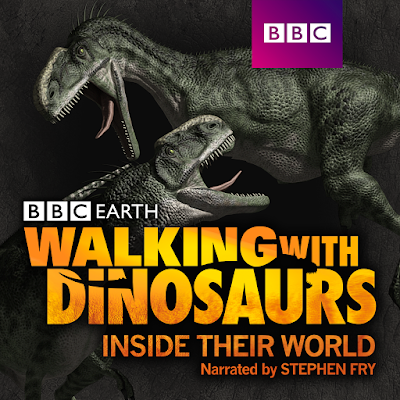
In the end, fiction is fiction, so perhaps it doesn’t matter very much if Jurassic Park and other movies change some facts to add excitement. However, mixing truth and conjecture is more significant in programmes that could be mistaken for reality, like Walking with Dinosaurs, often cited as the most successful television documentary series of all time. But can it truly be classified as a documentary? Its format is familiar to viewers as it resembles real-life wildlife programmes. So it feels like everything you are shown and told in those so-called documentaries is established beyond doubt. But people should be aware that many of today’s dinosaur programmes represent just the way things might possibly have been, and so they should be enjoyed as a hybrid of fact and fiction.

Esperanto and universal communication - PAU 2015 Cataluña

>Exámenes selectividad inglés Cataluña resueltos


Esperanto and universal communicationToday, English has no rival as an international lingua franca. However, things could have been different if Esperanto, an artificial language invented in 1887 by Ludwig Lazarus Zamenhof, a Jewish doctor from Bialystok (modern-day Poland but then part of the Russian Empire), had become a common language. Esperanto is made up of key structures from different linguistic families (Latinate, Germanic, Slavic and Semitic). The word Esperanto derives from Doktoro Esperanto (“Esperanto” translates as “one who hopes”), the pseudonym under which Zamenhof published the first grammar of Esperanto. Zamenhof’s goal was to create an easy-to-learn, politically neutral language that would transcend nationality and encourage peace and international understanding between people with different languages.
In a letter to a friend, Zamenhof explained why he was worried about human communication: “The place where I was born and spent my childhood gave direction to all my future struggles. In Bialystok the inhabitants were divided into four distinct elements: Russians, Poles, Germans and Jews; each of these spoke their own language and looked on all the others as enemies. Living in such a town made me feel the misery caused by language division. The diversity of languages is the first, or at least the most influential, basis for the separation of the human family into groups of enemies. I was brought up as an idealist. I was taught that all people were brothers, while outside in the street at every step I felt that there were no people, only Russians, Poles, Germans and Jews.”
In 1905, Esperanto’s first international congress took place in Boulogne-sur-Mer, in France. Then, in 1920, the League of Nations (the precursor of the United Nations) recommended that its member states incorporate the language, despite misgivings in France, as at that time French was the dominant international tongue. However, the advent of the Second World War and Nazi expansion put an end to the possibility of the language, which was invented by a Jew, from becoming the new international lingua franca. Nevertheless, more than a century since Zamenhof published his first grammar enthusiasts of Esperanto continue to promote the usefulness of the tongue. “Esperanto is much easier to learn than English,” says Ramon Perera, a member of the Associació Catalana d’Esperanto and a teacher of the language for the past 20 years. “Esperanto,” he says, “is a fairer language because none of its speakers have an advantage over the others.” Perera says that up to two years are needed to learn the language, “depending on the capabilities of each person, the hours dedicated to it and the level they want to reach.”
Perera began learning the language some 38 years ago when a friend lent him a book written in Esperanto. He took a four-week intensive course, which left him captivated by the language’s “simple and logical” grammar. From that moment on, he became a dedicated “Esperantist” and has since met speakers from all over Europe, something that has been aided by the advent of the Internet. “It is a language that works and that could solve the world’s communication problems,” he says. In fact, the French economist François Grin, in 2005, presented a report to the European Parliament that proposed adopting Esperanto as a common language in the European Union, which would save the Union 25 million euros every year. For the moment, that report has been filed away somewhere, but according to estimates by the World Esperanto Association, there are as many as two million Esperanto speakers who hope that one day their adopted language will take root and a new era of universal communication will begin.
Text adapted from Catalonia Today (October 31, 2013)

Are love-locks on bridges romantic or a menace? PAU Cataluña 2015

>Exámenes selectividad inglés Cataluña resueltos


Are love-locks on bridges romantic or a menace? - Give Paris Love not LocksBeautiful bridges in Paris are being ruined by an epidemic of padlocks. But is the growing trend for love-locks a thoughtless act of vandalism, or just a harmless expression of love?
It seemed romantic when Carolyn Barnabo and Clive Roberts attached a padlock to the Pont des Arts and symbolically threw the key into the Seine. Five years later they are married and their love is still strong, but Carolyn’s fondness for love-locks certainly isn’t. “It’s just out of control and I feel so bad that we contributed to it,” says Carolyn. “This beautiful bridge is ruined.” There were just a few love-locks on the bridge when she attached hers and posted photos on her blog. Now there are thousands on bridges all over Paris.
The locks first started appearing on bridges in Paris around 2006, shortly after young couples in Italy had begun attaching padlocks to the Ponte Milvio over Rome’s river Tiber, mimicking the protagonists of a popular Italian novel. In 2007 the mayor of Rome introduced fines for anyone leaving a padlock on this bridge. “After Rome started forbidding the locks, couples from all over Europe came to Paris,” Lorna Taylor explains. She and friend Lisa Anselmo started the No Love-Locks campaign in January 2014. “The delicate Pont des Arts, which has become a freakish mass of indistinguishable metal pieces, is now in mortal danger,” Lisa Anselmo adds. They say the City of Love has now become the City of Locks, and they have counted at least eight bridges over the Seine and three over the Canal Saint Martin where padlocks have spread “like fungus.” Anselmo thinks that this trend “defaces and damages historic structures, and it is already imposing itself on other cities around Europe, where some of the bridges involved are hundreds of years old.”
The padlock supposedly symbolises a bond between two people in love—but local authorities are now removing some padlocks from time to time. It was only after a wall on the Pont des Arts collapsed under the weight of the locks that the Paris authorities got serious about putting an end to the practice. “Some of the railings have 500 kilograms of locks by the time they are removed. The one that collapsed weighed 700 kilograms. They’re a costly problem for the city and also a safety one,” Lorna Taylor says. Now, city officials in Paris are experimenting with panels of thick glass to protect the bridges from the damage caused by padlocks.
Described as an “epidemic” by the No Love-Locks campaign, padlocks are spreading around the world, and they are no longer restricted to bridges. Love-locks have appeared on the top of the Eiffel Tower and others can be found on fences in London. And they are not restricted to tourist destinations either—four have already appeared on St Botolph’s Bridge in Boston, Lincolnshire, which only opened in February 2014. Many businesses have benefitted from this trend: some offer engraved padlocks in heart shapes and even one website suggests locations to attach them in Amsterdam, Chicago, Prague, Rome or Sydney. Lisa Anselmo says: “If a city wants to designate a space uniquely for love-locks, and restrict the practice on non-designated areas, that’s not a bad idea. The question is how to find a way for love-locks and heritage to co-exist.”
Despite attaching her own love lock in Paris five years ago, Carolyn now regrets that she contributed to this horrendous sight. “I would hate to see any beautiful bridges in England get like that. It was a nice idea, but I hope it dies out soon.”
Text adapted from BBC News (May 5, 2014)

Imaginary friends – Why more children have one now - PAU 2015

>Exámenes selectividad inglés Cantabria resueltos


Imaginary friends – Why more children have one nowWhen journalist Eleanor Tucker was at primary school in the 1970s, she had a friend. He wasn't a child and he wasn't a girl. He was in his 30s, he had a beard and his name was Klas.
She explains: “Klas was my imaginary friend. He wasn't about all the time, because he lived near my grandmother in a white house by the station, about half an hour's drive from ours. But as I grew up, he was often mentioned and even blamed for some mistakes I made. If I talked when nobody was around, it was to Klas. If I sometimes played without my sister, I was playing with Klas. It seemed quite normal at the time to have an imaginary friend but lots of things pass for normal when you're a kid. By the time I went to secondary school, Klas had stopped visiting. I filed him away under “the past” and forgot about him, until a book I read recently made me think of him again.”
The author of the book is Nikki Sheehan, and as part of her research, she discovered that rather than being an outdated phenomenon, imaginary friends might actually be more common nowadays. But why? First, it's probably just a more accurate representation of the way that children play. “For most of the 20th century the general idea was that imaginary playmates were a sign of insecurity, so people may have been less inclined to admit to having an imaginary friend.” Sheehan also suggests that within smaller family units, children these days are more likely to play in a certain solitary way, which creates an environment that is welcoming to imaginary friends.
Imaginary friends come in a huge range of guises, as educational psychologist Karen Majors discovered.
They might be smaller versions of the children themselves; humans or sometimes animals; based on real people or TV characters; single or multiple; and varied in terms of gender, age and temperament. In general, girls often create imaginary friends who need taking care of, but the characters impersonated by boys are often “super competent” and might be a representation of the child's own aspirations.
(28.02.2014 The Guardian, Adapted).

Cats recognise their owners' voices but never evolved to care- PAU 2015

>Exámenes selectividad inglés Cantabria resueltos


Cats recognise their owners' voices but never evolved to care
Any cat owner will tell you that although they are sometimes kept as pets, felines are friends to no one. A new study from the University of Tokyo has confirmed this, showing that although pet cats are more than capable of recognising their owner’s voice they choose to ignore them - for reasons that are perhaps rooted in the evolutionary history of the animal.
The study tested twenty housecats in their own homes, waiting until the owner was out of sight and then playing them recordings of three strangers calling their names, followed by their owner, followed by another stranger. The researchers then analysed the cats’ responses to each call by measuring a number of factors including ear, tail and head movement, vocalization, eye dilation and finally whether or not the cats moved towards the voice. When hearing their names being called the cats generally moved their heads and ears about to locate where the sound was coming from. Although they showed a greater response to their owner’s voice than to strangers’, they declined to move when called by any of the people.
“These results indicate that cats do not actively respond with communicative behaviour to owners who are calling them from out of sight, even though they can distinguish their owners’ voices,” wrote the researcher. “This cat–owner relationship is in contrast to that with dogs. Historically speaking, cats, unlike dogs, have not been domesticated to obey humans’ orders. Rather, they seem to take the initiative in human–cat interaction.” This is in contrast to the history of dogs and humans, where the former has been bred over thousands of years to respond to commands. Cats, it seems, never needed to learn.
However, it's unlikely that this will dismay cat owners (or indeed, be of any surprise) and the paper notes that although “dogs are perceived by their owners as being more affectionate than cats, dog owners and cat owners do not differ significantly in their reported attachment level to their pets”.
(27.11.2013 The Independent)

Ma vie de prof en ZEP - PAU 2015

>Exámenes selectividad francés Cataluña resueltos


Cela fait dix-huit ans qu’Agnès Dibot, 45 ans, enseigne au collège George-Sand, un établissement de très mauvaise réputation qui compte 460 élèves, situé dans une ZEP* à Châtellerault, où, malgré les opérations de rénovation, la pauvreté persiste. 83 % de sa population est classée « défavorisée ». Ici, quelques pères Courage partent encore travailler la semaine, à Paris, à 300 km. Mais la plupart de ses habitants subsistent avec de petits boulots* ou des aides sociales. Et leurs adolescents sont scolarisés au collège George-Sand, dont les pourcentages de réussite sont parmi les plus faibles de la zone de Poitiers.
Benoît Bassereau enseigne à George-Sand depuis dix ans : « C’était une volonté de ma part ». D’où un engagement à plein temps : en plus d’être professeur principal des élèves de la section sport-études, il organise le cross annuel et le tournoi de foot. « Je donne beaucoup, parce que ce sont eux qui en ont le plus besoin », dit-il brièvement, avec un mélange de bienveillance et d’autorité.
« Est-ce qu’on a été efficace ? » La demande angoisse Benoît Santa-Cruz depuis quelque temps. « Quand le boulanger goûte son pain, il sait s’il est bon. Nous, on ne sait pas », précise ce professeur de français, 29 ans, à George-Sand depuis 2011. Il comptait y rester un an. Il est encore là. « Il y a un côté sacerdoce. On est en mission, ici », assure-t-il. « En ZEP,* c’est là qu’on apprend tout. » Benoît Santa-Cruz est présent dès 7 h 45. Il prépare sa salle, dépose les documents sur les tables pour « éviter les temps morts » : « Mon métier est un sport qui nécessite un entraînement. Pour que le savoir passe, il faut une autorité ferme sur le groupe. Si je ne prends pas l’ascendant sur eux, je n’arrive pas à faire mon cours. Mais ils demandent aussi beaucoup d’affects et de contact ». Face aux adolescents, Benoît Santa-Cruz joue un personnage, qui séduit. Il fait un show. Il parcourt à grands pas la salle, lance des « OK, c’est parti ! », claque des doigts. « On a des élèves qui ne s’intéressent pas au savoir qu’on leur propose », précise-t-il. « Le claquement des doigts, c’est pour instaurer un rituel, leur signifier qu’il faut travailler. »
« C’est un sport de combat », précise Jules Aimé, 29 ans, qui enseigne l’histoire et la géographie dans la salle d’à côté depuis 2012. Comme pour illustrer sa difficulté à transmettre son savoir, il dit : « On est face à des élèves qui sont dans un monde qu’ils ne comprennent pas ou qu’ils ne veulent pas comprendre. Ils n’ont aucun contrôle sur eux-mêmes ». En début d’année, Jules Aimé ne leur demande pas le métier de leurs parents, ce qui est inutile et stigmatisant. Certains ne le savent pas, les autres sont au chômage. « Ce qui est dur », ajoute-t-il, « c’est le désert culturel de nos gamins.* Ils ne lisent pas. Chez certains, il n’y a que la télé. Pas de livre ». Pendant le cours, lui n’utilise que l’ordinateur qui projette la leçon sur le mur : « Écrire au tableau et leur tourner le dos, en ZEP,* ce n’est pas possible », justifie-t-il. « Leur attention se relâche immédiatement. Avec le numérique, ils sont plus réactifs. » Le prof déambule dans la classe avec son clavier, le tend à l’un ou l’autre, pour qu’ils s’en servent eux-mêmes : « Ils n’ont pas forcément accès à ces outils chez eux. Ça les valorise. Ma vie de prof en ZEP,* c’est une vocation et beaucoup d’implication ».
D’après Marianne (12-18 décembre 2014)

Alerte aux « big mothers » - PAU 2015

>Exámenes selectividad francés Cataluña resueltos


Alerte aux « big mothers » GPS pour enfants
De leurs ordinateurs, de leurs tablettes ou de leurs portables, les parents 2.0 peuvent surveiller les moindres déplacements de leurs enfants. Et ils sont de plus en plus nombreux à le faire. Il leur suffit d’avoir doté leur précieuse progéniture de GPS portatifs. Ces dispositifs géolocalisent l’enfant et envoient, par exemple, une alerte lorsque l’écolier pénètre dans l’établissement scolaire. « Au travail, j’ai l’emploi du temps de ma fille aînée », raconte Laëtitia, 33 ans. « Quand elle doit être à la maison, je regarde vite fait si elle y est. Si elle doit rentrer à 18 heures et qu’elle est en retard, je consulte mon portable et, si elle est juste au coin de la rue, je ne panique pas. » C’est ainsi qu’Allison, 12 ans, ne parcourt jamais sans son GPS les 300 mètres qui séparent sa classe de La Poste, où son papa lui donne rendez-vous après l’école.
Aline, 30 ans, a opté pour une caméra infrarouge afin de superviser le sommeil de Céleste, 3 ans. « Quand je travaille, parfois j’ouvre une fenêtre avec l’image transmise par la caméra sur mon fond d’écran », explique la jeune maman. « Je l’utiliserai jusqu’à ses 6-7 ans, après je lui laisserai son intimité. » Ces cordons ombilicaux high-tech laissent pourtant les pédopsychiatres* stupéfaits. « Cette hyperattention empêche l’enfant de grandir », estime le psychanalyste Michael Stora. « Les périodes d’absence du parent permettent au bébé de s’autonomiser en développant sa pensée. Si, à cause de ces objets, sa maman vient trop vite quand il pleure, elle ne lui laisse pas le temps de vivre l’expérience du manque et, ainsi, de s’individualiser. »
Pour les parents inquiets, ces appareils les inciteraient au contraire à donner plus de liberté à leur enfant. « S’ils n’avaient pas le GPS, je ne les laisserais pas rentrer à la maison à pied à midi, ils iraient à la cantine », explique Grégory, papa de Jules et Rose, 9 et 8 ans. Les géniteurs n’ont qu’une peur : la mauvaise rencontre. Pour la psychanalyste Claudia Fliess, « il faut que l’enfant apprenne qu’il est capable de se défendre par lui-même ». De son côté, Michael Stora précise : « Ces objets provoquent un paradoxe. Les parents disent à leur enfant : “ Je te fais confiance, mais parce que je te surveille ” ». Et ils créent de nouvelles angoisses. « Une fois j’ai appelé ma femme car mon fils de 5 ans n’était pas à l’école », reconnaît Max. « En fait, il était au sport. »
Le risque est grand de se perdre dans cette dynamique. Agnès, malgré les meilleures intentions du monde, l’a expérimenté. Déconcertée par la soudaine hostilité de son adolescente de 17 ans, elle a cédé à la tentation il y a quelques mois. « Elle était devenue insupportable. Un jour, je lui ai pris son téléphone. J’ai tout lu et je suis tombée des nues.* » Marie prend des drogues. Cette nuit-là, avec son mari, Agnès décide d’installer une application espionne sur le portable de Marie, qu’elle emmène par ailleurs chez un psychiatre. Dès le réveil, à la moindre minute libre, la maman inquiète se connecte pour voir si la demoiselle reste clean.* Des heures à dévorer des SMS. « Partout, j’allumais mon portable pour ne pas perdre le fil. Je lisais, je pleurais. Je suis rentrée dans sa tête. J’étais presque devenue elle. » C’est sa soeur qui va lui imposer d’arrêter. Agnès a fini par supprimer l’application. En deux secondes, elle était libérée. Et le cordon ombilical, enfin coupé. « Jamais, même sur mon lit de mort, je ne lui dirai que je l’ai espionnée. »
D’après Le Nouvel Observateur (9 octobre 2014)

Words on trial - PAU Murcia 2015

>Exámenes selectividad Murcia inglés resueltos


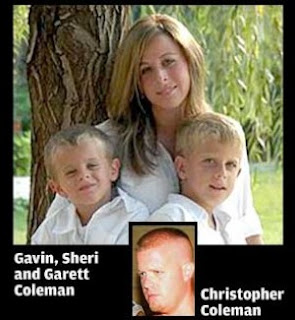
Words on trial - Chris ColemanJanuary 2009. Chris Coleman began telling friends and associates that he was worried about the safety (1) of his family. He had been receiving death threats (2) by email, which also mentioned his wife and his sons. Coleman asked his neighbor across the street, a police officer, to set a security camera on the front of his house.
May 2009. Coleman left his home early to work out (3) at the gym. Later on, when he called his wife and got no answer, he asked his neighbor the policeman to check on her. The officer found a horrifying scene. Red graffiti —“Fuck you” and “U have paid!”— was scrawled1 on the walls and on the sheets of the beds in which Coleman’s wife and kids lay strangled to death. Although a back window was open —suggesting that someone had entered the house out of view of the camera—, the police quickly came to suspect Coleman himself, as they found out that he was having an affair (4) with a cocktail waitress.
However, his DNA2 was not found anywhere that would connect him directly to the crime. At the trial, experts showed that some of the threatening e-mails had been sent from Coleman’s computer, but they couldn’t prove it hadn’t been hacked. They could demonstrate Coleman had bought a can of red spray paint months before, but they couldn’t link him to the can used in the crime. Toward the end of the trial, prosecutors3 asked for the testimony of Dr. Robert Leonard, a forensic linguist who, relying on (5) word choice and spelling largely, suggested that the same person had written the threatening e-mails and sprayed the graffiti, and that those specimens4 were similar to Coleman’s prose style.
  • 1 Scrawl: Garabatear 
  • 2 DNA: ADN 
  • 3 Prosecutor: Fiscal 
  • 4 Specimens: Muestras

Your mom’s wrong! - PAU inglés Murcia 2015 resuelto

>Exámenes selectividad Murcia inglés resueltos


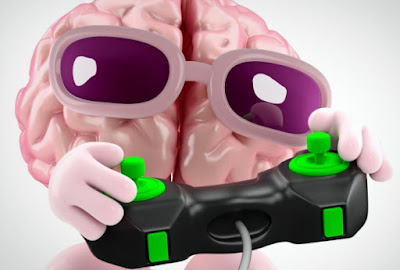
Your mom’s wrong! - video gamer's brainTo better understand how video games affect the brain, German researchers conducted a study in which they asked 23 adults in their mid-twenties to play “Super Mario 64” for 30 minutes a day over a period of two months. A separate control group did not play video games at all.
Examining the brains of the two groups using an MRI machine they found that the gaming group had a rise (1) in grey matter in the areas of the brain responsible for spatial navigation, memory formation, strategic planning and fine (2) motor skills in the hands. “While previous studies have shown differences in brain structure of video gamers, the present study can demonstrate the direct causal link (3) between video gaming and volumetric brain increase and that specific brain regions can be trained by means of video games,” study leader Simone Kühn said.
Another study, carried out at the University of Padua, throws cold water on the idea that video games are bad for the brains of young children. In February, the Italian researchers presented evidence (4) that playing fast-paced video games can improve the reading skills of children with dyslexia.
The team separated children age 7 to 13 into two groups, one of which played an action game called “Rayman Raving Rabbids” while the other played a lower tempo game. When the reading skills of the children were tested afterwards, those who played the action game were capable of reading faster and more accurately (5). The authors of the study hypothesized that the action games help kids increase their attention spans, a skill considered crucial to reading.
  • 1MRI: Magnetic Resonance Imaging, a system for producing electronic pictures of the organs inside a person’s body, using radio waves and a strong magnetic field. (Important note: You can perfectly do this exam without knowing the meaning of “MRI machine”).
Related Posts Plugin for WordPress, Blogger...