Mostrando entradas con la etiqueta anglés. Mostrar todas las entradas

Spain's jobless women become the boss to beat the recession - PAU 2014 inglés C. Valenciana

>Exámenes selectividad inglés Comunidad Valenciana resueltos


Spain's jobless women become the boss to beat the recessionWhen it comes to finding a job in Europe, not all citizens are born equal. If you are Spanish you have a one in four chance of being unemployed, rising to one in two if you are young. And if you are a young woman in Spain? The chances of finding yourself among the unemployed are even higher, at 54.7%. Now however, young Spanish women are finding their own solutions to the crisis, discovering the value of enterprises that has resulted in a record 800,000 businesses being set up by women in the past five years.
“The crisis allowed women to seriously consider becoming businesswomen, something many had never thought of before,” said Joan Torrent Sellens. In the past decades Spanish women have advanced in government and the public sector, but are still behind in setting up enterprises, creating less than 20% of businesses. When analysing the same figures during the crisis, Torrent Sellens found a surprising result: the number of businesses created by women had nearly doubled during the crisis, to just under 40%.
“These days you can act like a big businessman without having a lot of employees,” said Torrent Sellens. “The crisis allowed women to ask: ‘Why do I have to be a director at a multinational, earning a third of what my male counterparts are earning when I can create, my own business and lead my own project?’ The crisis gave them an alternative, their own way of breaking through the glass ceiling,” he added.
Adapted from an article by Ashifa Kassam,
The Guardian, 3 February 2014

How racist is Britain? - PAU inglés C.Valenciana 2009

>Exámenes selectividad inglés Comunidad Valenciana resueltos

How racist is Britain?In Britain, social and ethnic division is a plain fact. Ethnic minority populations concentrate in particular areas. Although mixed-race marriages are on the rise, they still comprise only 2% of all marriages. For the most part, people mix and marry with people mainly of their own cultural background, as determined by a combination of country, family origin or religion. 
Britain is a patchwork of almost hermetically sealed sub-worlds, in which class as much as race is a crucial factor. We all like to feel that we are open-minded people who can be friends with anyone, and we can also probably find a few examples of friends who do not match our demographic profile to prove our lack of insularity. But if we are honest, the vast majority live, work and socialise overwhelmingly with people of a similar social type. And the opportunities to mix are limited because many areas remain deeply inhospitable to “outsiders”.
Besides, well-intentioned promotion of multiculturalism can actually exacerbate the paranoid feeling of Britishness being under threat. When people are informed by local and national governments that they ought to embrace minority cultures more than they do, they feel they are being told that their own way of life simply isn’t good enough.
This is all clearly bad news for optimistic multiculturalists, and some will think that it suggests a negative view of human nature. On this view, the best we can hope for is little tension between communities by means of mutual tolerance. But toleration implies putting up with something you don’t much like, not embracing difference.
Julian Baggini, The Guardian, 23-1-2007

Why thin doesn’t sell? - PAU inglés C.Valenciana 2006

>Exámenes selectividad inglés Comunidad Valenciana resueltos

Why thin doesn’t sellThey have been banned from the catwalk, blamed for devastating women’s self-esteem and suspected of suffering eating disorders. Now ultra-thin models face another accusation: that they’re not good at their job. New research has found that instead of being admired by women, excessively thin models are regarded as less truthful and appealing than “ordinary” women. ‘The advertising and fashion industries are reluctant to use larger models because they say that thinness sells’, said Dr Helga Dittmar, of the University of Sussex. ‘But our research has shown that thin models are less effective in selling products than average-size models’. Dittmar asked 800 women to rank the effectiveness of adverts featuring slim models. She expected women to find thin models more convincing and persuasive. ‘Instead, there was a strong message that models were evaluated more positively when they had a normal size’, she said.
These findings come after the controversy which erupted when Madrid said models at Pasarela Cibeles must have a weight in line with United Nations health guidelines. Dittmar said: ‘Only a small percentage of women can ever hope to have the bodies shown in most advertising. There are fears that images of ultra-thin models can have a number of significant consequences, including negative self-perception, depression and disordered eating. The conclusion is that thin models have a negative effect on the self-esteem of women, and this affects the effectiveness of the advertising message. ‘Compared with ultra-thin models, those who appear in ads with an average, healthy body size were viewed as more credible’.

Amphibians may soon disappear - PAU C.Valenciana inglés 2008

>Exámenes selectividad inglés Comunidad Valenciana resueltos

Red eyed tree frog
Source: Swami Atma
The Chinese calendar says 2008 is the year of the Rat, but according to the Association of Zoos and Aquariums (AZA), 2008 should be the Year of the Frog. The reason is that frogs are disappearing from our planet at an alarming rate and, in a few years, they may all be extinct.
In August 2007, more than 230 delegates representing zoos and aquariums from 35 countries gathered in Hungary to sign a petition, calling on governments to help preserve amphibian life. This marks the first time that zoos and aquariums have initiated a global call to action on behalf of an endangered class of animals. Their concern is that one-third to one-half of all species of frogs are in danger of becoming extinct in the near future — which would be the largest mass extinction since the disappearance of the dinosaurs.
About 4,000 species of amphibians exist worldwide and most of them are frogs and toads. The term amphibian comes from the Greek amphibios and means double life, referring to the fact that they begin life in the water as tadpoles and gradually transform themselves into land dwelling creatures with legs. Frogs are "cold-blooded" and rely on the environment to regulate their body temperature. The skin of a frog is moistened by the secretion of numerous mucous glands and plays a vital part in the frog's water balance, respiration and protection. But since the skin is highly permeable to water, it also makes them highly susceptible to environmental changes.
Doug Porter, 2 April 2008 - www.stopglobalwarming.org

Turning education upside down - PAU 2014 inglés C. Valenciana

>Exámenes selectividad inglés Comunidad Valenciana resueltos


Turning education upside down - Flipped schoolThree years ago, Clintondale High School became a “flipped school,” one where students watch teachers’ lectures at home and do what we’d otherwise call “homework” in class. Teachers record video lessons, which students watch on their smartphones, home computers or at lunch in the school’s tech lab. In class, they do projects, exercises or lab experiments while the teacher circulates.
Now flipped classrooms are popping up all over. Havana High School (Illinois) is flipping, too, after the school superintendent visited Clintondale. The principal of Clintondale says that some 200 school
officials have visited them.
It’s well known by now that online education is booming. You can study any subject free in a massive open online course. Courses are being offered by universities like Harvard and by the teenager next door making videos in his garage. But while online courses can make high-quality education available to anyone with an Internet connection, they also have the potential to displace humans, with all that implies for teachers and students.
Like everything innovative, online education is highly controversial. But the flipped classroom is a strategy that nearly everyone agrees on. “It’s the only thing I write about as having broad positive agreement,” said Justin Reich, from Harvard University.
Flipping is still in the early stages, with much experimentation about how to do it right. Flipping’s track record in schools, while impressive, is anecdotal and short. But many people are holding it up as a potential model of how to use technology to humanize the classroom.

Adapted from an article by T. Rosenberg, The New York Times,October 2013

How's my driving? Ask my car - PAU C.Valenciana inglés 2009

>Exámenes selectividad inglés Comunidad Valenciana resueltos

Risky driving talking on the phoneUsing gadgets while you're driving can be a very bad thing, but an expert on automotive distractions says using a gadget that watches you while you're driving can be a very good thing. 
"People don't always understand the degree of distraction they may be exposing themselves to ... so the idea is to help people understand that distraction by providing them with feedback," says John D. Lee.
Lee outlines the magnitude of the problem: More than 40,000 people die every year in motor vehicle crashes, and research indicates that failures of attention -including distractions or drowsiness- probably played a role in most of those crashes.
Crashes and near-crashes are about three times as likely to happen when the driver is performing a complex task not related to driving (such as dialing a phone or even texting), and twice as likely during a moderately complex task (such as inserting a CD), Lee reported.
As new technologies are introduced, the list of potential distractions keeps getting longer. 
Of course, most drivers overestimate their own abilities: In one survey, 88 percent of the respondents judged themselves to be safer than the average driver.
So how does watching the driver help? Lee's method was to install a special camera system that saves
video snippets for the 10 seconds before and after every abrupt movement on the road.
After the feedback sessions, the number of events triggered by risky drivers declined 89 percent, Lee said, and the rate of risky driving remained low even six weeks later.
(Source: msnbc.com April 16, 2009 by Alan Boyle)

Addicted to her mobile - PAU 2006

>Exámenes selectividad inglés Comunidad Valenciana resueltos

Addicted to her mobileA teenager is to undergo psychiatric treatment after becoming addicted to her mobile phone. Like the worst type of addicts, Caroline regularly blows all her spending money. “I know it sounds like a silly addiction but it is real to me”, she said. “When I hear my phone beeping with a text message I am all smiles and it makes me happy. When I don’t have any credit left I become depressed. I haven’t got enough money for proper food and I have to borrow it”. Her parents have become so worried that next week she is due to begin a course of treatment from a specialist. She first revealed her craving to her doctor, who advised her to switch the phone on the silent mode, put it in a cupboard and forget about it. But he has now referred her for more psychiatric care after the scale of the problem became apparent.
Caroline said: “I have become protective of the phone. I can’t let anyone take it from me and I check where it is every two minutes”. A leading psychologist has classified Caroline’s plight as “technology addition”, in which sufferers experience a “high” when they receive a message bleep from their mobile. “It is like the first flush of love when you receive an e-mail or text, you feel good”. Caroline became hooked at 12 after her parents gave her a mobile for Christmas. Since then she has spent all her pocket money on phone cards.

Town vs. country - PAU C.Valenciana inglés 2006

>Exámenes selectividad inglés Comunidad Valenciana resueltos

Town vs. countryTo those outside Britain —and many inside it— the fury that exploded last week over foxhunting, the House of Commons voted to ban, doesn't make much sense. The new law, which starting July 2006 will make it a crime to hunt wild mammals with dogs, is supported by 70% of Britons —including more than half of those living in the countryside. But some 10,000 passionate pro-hunting demonstrators came to London to denounce what they declare is an arrogant government violating their human rights as part of a cynical stratagem by Prime Minister Tony Blair to pacify left-wing MPs who are angry at him over the Iraq war. Most of the protesters were peaceful, but a few flying bottles and smoke bombs triggered bloody clashes with police protecting the House of Commons. Five men, including a polo-playing friend of Princes’ William and Harry, managed to evade security by pretending they were building contractors and rushed into the chamber during the debate —the first such invasion since 1947.
Britons love animals, but the protesters are right when they point out the illogic of the ban. Foxes will still have to be killed as agricultural pests, just by snares and shooting instead of by baying hounds pursued by red-coated riders. Other forms of hunting and fishing will remain legal. A government report estimates that 6,000 to 8,000 full- and part-time jobs depend on hunts, which involve about 1.2 million people, 50,000 horses and 70,000 dogs each year. In the rest of Europe, hunting foxes remains resolutely uncontroversial.
J.F.O. McAllister
Time, September 27, 2004

Brilliantly boring - PAU Comunidad Valenciana 2007

>Exámenes selectividad inglés Comunidad Valenciana resueltos

Big Brother logoIt is agreed that we are more bored today than ever before. And at the age of the Internet, when the average person has access to vastly more fascinating information than at any point in history, what are the sites that consistently achieve cult status, from the birth of the web up to the present day? The most boring ones.
Just as frequently, though, boredom seems to be the very point of a boring website - as if we truly appreciate the quiet, uncomplicated space of a few moments spent watching, for example, a nest full of eggs or chicken in a farm with our web cam. In an information-saturated society, writes sociologist Orrin Klapp, we suffer anxiety, since the slow horse of our comprehension is unable to keep up with the fast horse of the information that we can access. It would be nice to believe that boring websites are popular because they are a rebellion against too much information overload - a space for our slow horses to live.
Except for one problem. The truth is that we all know how the web has a power of distraction, somehow absorbing our boredom without really curing it. This is what we mean when we say that web-surfing is addictive. Big Brother has this effect, too: you don’t feel bored while you’re watching it, but afterwards, you still wish you hadn’t spent so long in front of the TV. Similarly, the fact that you just spent 10 minutes watching the Big Brother website does not automatically mean that you really wanted to, nor that it was good for you to do so.

Oliver Burkeman (The Guardian 3-4-2007, G2, p. 4-7)

Boys and girls - PAU Valencia 2003

>Exámenes selectividad inglés Comunidad Valenciana resueltos

Cute boy&girl couple
Source: Skin&Blis
Boys tend to play outside, in large groups that are hierarchically structured. Their groups have a leader who tells others what to do and how to do it, and resists doing what other boys propose. It is by giving orders that high status is negotiated. Another way boys achieve status is to take centre stage by telling stories and jokes, and by challenging the stories and jokes of others. Boys´games have winners and losers and elaborate systems of rules that are frequently the subjects of arguments. Finally, boys are frequently heard to boast about their skills, likes and possessions, and argue about who is best at what.
Girls, on the other hand, play in small groups or pairs. The centre of a girl´s social life is her best friend. Within the group, intimacy is key: differentiation is measured by relative closeness. In their most frequent games, such as jump rope and hopscotch, everyone gets a turn. Many of their activities (such as playing with dolls) do not have winners or losers. Although some girls are certainly more skilled than others, girls are expected not to boast about it, or show that they think they are better than the others. Girls don´t give orders: they express their preferences as suggestions, and suggestions are likely t be accepted.
Martin, N. (2000). “Women must wait 15 years for equality on housework”

Chernobyl "poses more risk than Fukushima" - PAU C.Valenciana 2011

>Exámenes selectividad inglés Comunidad Valenciana resueltos

Chernobyl graffitti: child crying
Sergei Supinsky/AFP/Getty Images
The recent nuclear disaster at the Fukushima plant in Japan has been described as "the next Chernobyl" but Chernobyl itself poses an even greater threat, according to campaigners. Twenty-five years on from the accident, the sarcophagus hastily put in place to prevent further poisons seeping into the atmosphere is now crumbling. And this poses a great danger to the people of the region, according to Adi Roche, Chief Executive of Chernobyl Children International (CCI).
A quarter of the region is now unoccupiable and already 200,000 people have been displaced from their homes, but the nightmare may not be over for the people of Belarus.
In the aftermath of the explosion in 1986, emergency teams covered the stricken reactor with a massive steel and concrete structure to seal in the lethal mix of radioactive fuel and materials like concrete and sand that fused together in the 1986 blast. That has come to the end of its lifespan and must be replaced but, to date, nothing has been done.
"It is a crumbling sarcophagus", and "The next Chernobyl could be Chernobyl", said Ms Roche of the structure of nearly 700,000 tons of steel and 400,000 tons of concrete. She estimates that just three per cent of the radiation escaped in the original explosion -leaving 97% of the material "still rumbling away". She was "heartbroken" when the catastrophe struck at the Fukushima plant in Japan. She also pointed out immediately after the Japanese disaster, experts had said: "This is not Chernobyl". But now, weeks later: "It is Chernobyl".
Irish Independent, 22nd April, 2011, p. 13

Spain: No country for the young? - PAU C.Valenciana inglés 2011

>Exámenes selectividad inglés Comunidad Valenciana resueltos

What's next graffitti- youth unemploymentDuring the last 10 years booming Spain was a magnet for immigrants, attracting 5 million foreigners. Now Spaniards are talking of a return to the mass emigration of 1960s, when 2 million left looking for jobs in northern Europe. "I only see jobs for exploited interns who earn €300 (£263) a month. That's barely enough to cover the costs of getting to work and back every day", said Luna, a Spanish graduate. "Opportunities are scarce in a country with youth unemployment over 40%".
The crucial difference between those leaving now and the manual labourers who sought work in Germany in the 1960s is that today's emigrants are mostly young graduates. It is no longer clear that a degree is useful in Spain's paralysed job market. Unemployment among graduates aged 29 or under is running at 19%, almost the same as the national average for all age groups, regardless of education.
Many graduates lie about their education when applying for work, worried that they will be rejected for being overqualified. And 44% of those who find work do so at below their skills level, twice the European average. The contrast with booming Germany, which is short of 48,000 engineers, could not be greater. Those graduates who have left say that opportunities are far more plentiful abroad. "Salaries, working hours, conditions and opportunities to advance in your career are far greater here", said 28-year-old Paula, who left Valencia five years ago and is now an IT consultant in Edinburgh.
Giles Tremlett, The Guardian, 28th March, 201

Young turn to piracy to watch pay TV for free - PAU C.Valenciana 2012

>Exámenes selectividad inglés Comunidad Valenciana resueltos


Television satellite piracyBroadcasting analysts are predicting a fresh tide of television piracy with the launch of Sky Atlantic, the satellite channel that has bought the UK rights to many of America's most successful drama series.
Fans of popular US shows are already developing new, illicit ways of accessing episodes of the shows they love without the need to pay at least £20 a month to subscribe to Sky. While many non-subscription viewers are still happy to wait for the release of DVD box sets, younger audiences are already resorting to accessing episodes from illegal sites.
“If I have a good connection I will download a whole show in bits and see it whenever I like,” said Jake, from Bournemouth. “It is not about the money. It is about impatience and getting some power back.” Jake and his friends tend to watch television on the screens of their Macs, occasionally gathering together around a traditional TV set for live shows.
The trend is growing among those who are used to accessing music from pirate sites, says John Enser, a partner at media law firm Olswang. “Young people already know where to move from. And, broadly speaking, they know a legal site from an illegal one,” said Enser.
Yet the truth is that few who transgress will ever be fined, or even reprimanded. Broadcasters would not enjoy seeing their name linked to a legal action against a 12-year-old who has downloaded from the wrong place. As a result, the chances of any individual being pursued are tiny.

Adapted from an article by Vanessa Thorpe, The Observer, 6 February, 2011

Cleaner ruins 800,000€ artwork that she thought was dirty - PAU 2012

>Exámenes selectividad inglés Comunidad Valenciana resueltos


Recreation of First Public Demonstration of Auto-Destructive Art- Gustav Metzger
Recreation of First Public Demonstration of Auto-Destructive Art
An overzealous cleaner in Germany has ruined a piece of modern art worth 800,000€ after mistaking it for an eyesore that needed a good scrub.
The sculpture, by Martin Kippenberger, had been on loan to the Ostwall Museum in Dortmund. The work, called When It Starts Dripping from the Ceiling, comprised a rubber bucket. Inside the bucket, Kippenberger had spread a layer of paint representing dried rainwater. He thought it was art, but the cleaner saw it as a challenge, and set about making the bucket look like new and removed the patina from the four walls of the bucket. "It is now impossible to return it to its original state", a spokeswoman for the museum said. She said that cleaning crews had been told to keep 20cm away from artworks, but it was unclear if the woman had received the memo.
But Kippenberger is not the only artist to have his works ruined by cleaners. In 1986, a "grease stain" by Joseph Beuys valued at about 400,000€ was mopped away at the Academy of Fine Arts in Düsseldorf.
In 2004, a cleaner at Tate Britain in London threw away part of a work by another German artist, Gustav Metzger, after mistaking it for rubbish. The cleaner failed to realise that a plastic bag containing discarded paper and cardboard was an integral part of Recreation of First Public Demonstration of Auto-Destructive Art, and not just some litter. The bag was later recovered, but it was too damaged to display, so Metzger replaced it with another bag.
Adapted from an article published in guardian.co.uk, 3 November 2011

Teenage Pregnancy - PAU inglés 2002

>Exámenes selectividad inglés Comunidad Valenciana resueltos

Teenage pregnancy by Lisa Arai
Book by Lisa Arai
The UK has the highest teenage pregnancy rate in Western Europe: around 9000 girls under 16 become pregnant every year. A high percentage of them drop out of school (the British government admits it doesn’t know how many), and some end up in special schools, such as the Riverside Young Mothers’ Unit in North Shields. Built for nine young mothers or mothers-to-be, it now welcomes 18 although no one is ever turned away. As well as education, Riverside offers a nursery and transport: 2 buses, complete with baby seats, take mothers and babies to school.
Most of their pregnancies are unplanned. They take mothers with babies who are six months old but they’ll take them earlier if there are exceptional circumstances. They try and encourage the girls to study maths, English and science, and they have to do child development. They get very good results. Holidays are when trouble starts. Sometimes the girls are alone and have very little support. These are probably the only girls in the country who can’t wait for holidays to finish and to get back to school.
Colors, 48: February-March 2002, p. 5.

First-born, middle or last-born? - PAU inglés 2004 C.Valenciana

>Exámenes selectividad inglés Comunidad Valenciana resueltos

Jonas Brothers“Where do you come in your family?” According to Frank Sulloway, a US sociologist, the order in which we came into this world –first-born, middle or last-born– can not only help shape our personality, it could affect the success of our relationships, too. Sulloway has interviewed more than 6000 people over the past 26 years in an attempt to prove this theory: “Children compete for a place in the family”, he says, “and if one role has already been taken, later-born children have to choose from what’s left”. Because first-borns begin life with exclusive parental attention, they are often more open to accepting their parents’ values, while later-born children, forced to compete for a place in the family, may grow into rebellious adults.
So if birth order has such a significant impact on our behaviour, does it affect our interaction with other people? Can we, for example, judge the suitability of our partners by their birth order?
Absolutely, says Sulloway, “Birth order is an excellent way of telling whether a relationship will survive. For example, a marriage between a typical first-born husband, who’s dominating and assertive, and a later-born wife who likes being looked after, is very likely to work out”.
Marie Claire, April 2002, p. 111

Schools 'exclude 10 pupils a day' - PAU C.Valenciana inglés 2006

>Exámenes selectividad inglés Comunidad Valenciana resueltos

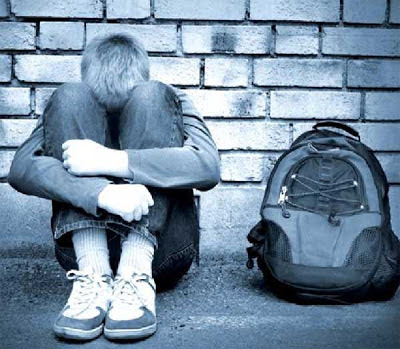
Bullying and exclusion at shoolAn average of 10 pupils a day were excluded from school in England last year, according to the Department for Education and Skills (DfES). More than 624 pupils were excluded for violence towards teachers or students, and 16,800 were suspended for cases of assault during the year.
However, the department stressed that these figures, which were published last week, should be treated with caution as some local education authorities had submitted incomplete data. The real figures, it said, were likely to be higher, although the government still insisted annua exclusion rates were falling.
"We believe that numbers of fixed period exclusions, as with the number of permanent exclusions, are reducing as our behaviour policies are now taking effect. The 82 schools that face the greatest challenges are receiving intensive support from the ‘behaviour improvement programme’, where there has been a decrease in fixed period exclusions of 11% from the previous year," said the DfES.
In addition, 10,000 learning mentors are now helping individual pupils overcome behavioural problems in schools, and 17,000 children who are at risk of exclusion are receiving intensive support from more than 100 specialist behavioural education support teams.
Rebecca Carver
Saturday July 31, 2004

Arctic Sea ice melting faster - PAU C.Valenciana inglés 2007

>Exámenes selectividad inglés Comunidad Valenciana resueltos

Polar bear swimming
Picture by Irishwildcat
Climate scientists may have significantly underestimated the power of global warming from human-generated heat-trapping gases to shrink the cap of sea ice floating on the Arctic Ocean. A new study concluded that an open-water Arctic in summers could be more likely in this century than had been estimated in the latest international review of climate research released in February.
“There are huge changes going on,” said Julienne Stroeve, author of this new study. “Just with warm waters entering the Arctic, combined with warming air temperatures, this is causing destruction on the sea ice.”
She also concluded that if emissions of heat-trapping gases like carbon dioxide were not significantly reduced, the region could end up with no floating ice in summers sometime between 2050 and the early decades of the next century.
For the new study, Dr. Stroeve reviewed nearly six decades of measurements by ships, airplanes and satellites estimating the maximum and minimum area of Arctic sea ice, which typically expands most in March and shrinks most in September.
With an expert from the National Center for Atmospheric Research, they then compared the observed trends with the projections made for the United Nations Intergovernmental Panel on Climate Change, using the world’s most advanced computer models of climate.
Dr. Stroeve found that since 1953 the area of sea ice in September has declined at an average rate of 7.8 per cent per decade. Computer climate simulations of the same period had an average rate of ice loss of 2.5 per cent per decade.
ANDREW C. REVKIN
May 1, 2007 - The New York Times

Britain’s mean streets - PAU 2008

>Exámenes selectividad inglés Comunidad Valenciana resueltos

Time's covered: Unhappy, unloved and out of controlStaying home in the face of danger isn’t the British way. Yet last year more than a fifth of Britons avoided going out at night rather than risk encounters with a new form of terror: groups of children. Britons are frightened of their own young.
On any Saturday night it’s easy to see why. “It usually starts outside McDonald’s -that’s the hot spot”, explains one London youth. There are always people there, with nothing to do but intimidate and get kicks.
The English boys and girls who casually pick fights are often fuelled by cheap alcohol. And they try drugs or start smoking earlier than other Europeans. As Gordon Brown has recently said: “Kids are out of control... They’re roaming the streets. They’re out late at night. There’s an issue about gangs in Britain and an issue about gun crime as well as knife crime”.
According to one expert, for a “significant minority” of British children, criminality, excessive drinking, drug-taking and promiscuity really have created a crisis. “If I was sitting in government, I’d be really worried, not about terrorist bombs but about this”.
All over the world, teenagers give their parents headaches. Why are British kids worse? It may be that parents aren’t always around to help socialise their children or even just to show them affection. Compared to other cultures, British kids are less integrated into the adult world and spend more time with other kids. Many British adults seem to view children as an entirely separate species. And if no adult has love for you, you aren’t going to feel love for other people when you get older.

Abortion on demand a step too far for Spanish right- PAU Valencia 2009

>Exámenes selectividad inglés Comunidad Valenciana resueltos

Pro-anti abortion discussion horsesA move to allow abortion on demand for Spanish women is provoking a virulent clash between the conservative clergy and the socialist government of Rodríguez Zapatero, whose gay marriage law drove hundreds of thousands of people on to the streets.
Currently, it is a crime to have an abortion unless a woman can prove that she was raped, that the foetus is malformed or that the pregnancy endangers her physical or mental health. In practice, however, the law is interpreted liberally across a network of private clinics, which perform more than 100,000 abortions a year.
The new abortion law, which would also allow the procedure up to 22 weeks with a doctor’s certificate, is expected to be approved before the summer, with a provision that would allow girls over 16 to have an abortion without parental consent. “They can’t smoke, they can’t drink alcohol but nevertheless they can abort without their parents’ permission”, said a spokeswoman for the Right to Life movement.
Thousands of activists are expected to join demonstrations throughout Spain this weekend. Hundreds of doctors, scientists and other Spanish professionals also signed a manifesto earlier this month rejecting the government’s plans.
However, apparently only 15% of Spaniards oppose abortion under any condition, and 45% support abortion on demand. A survey found 65% of Spaniards support abortion in the first three months. Women’s groups also welcome the proposed reforms but also call for other measures, such as sex education in schools. A feminist coalition launched a counter-offensive to the church on Friday, with posters that say “For motherhood with liberty and abortion with security”.
Dale Fuchs, The Guardian, 28-3-2009
Related Posts Plugin for WordPress, Blogger...