

Mostrando entradas con la etiqueta selectivo. Mostrar todas las entradas
Mostrando entradas con la etiqueta selectivo. Mostrar todas las entradas



The rise of wearable technology - PAU Comunidad Valenciana 2015
>Exámenes selectividad inglés Comunidad Valenciana resueltos
 Wearable technology (the one you wear on your body) is hardly a new phenomenon. But thanks to the internet and computing speed, a whole new world of possibilities is opening up, and with it comes a lot of questions that may eclipse all previous debate over online privacy.
Governments around the world are pouring money into wearable tech. US soldiers have been testing a device that can locate the exact place of gunfire and display it on a small screen attached to a soldier’s body armour. Devices are also being used to monitor soldiers’ health. Many of these technologies are likely to filter down to civilian life. Indeed, wearable technology makes you look at technology in a different way. We are moving to a world where technology interacts with us –you are not just staring at a screen. It is suggesting things to you. Maybe go for a walk, or reminding you that you need to shop for food.
But supporters of privacy are increasingly concerned. People need to be very careful about the ways in which they adopt technology. There is always an issue with who uses your data. Who else is seeing this? Employers? Insurance companies? Much of these data will be stored in the “cloud”, which is not secure. And this is just the start. Google’s glasses will potentially be watching your every move.
Do you really need another device? There’s a lot of money betting that you soon will and this new device will look a lot like something you own already (a belt, a watch, glasses). The body is the new tech battleground, and wearable tech may be about to become the 21st-century version of body armour.
Adapted from an article by Dominic Rushe, The Observer
Bilingual brains: variety makes you mentally fit - PAU inglés 2015
>Exámenes selectividad inglés Comunidad Valenciana resueltos
 For years, researchers in bilingualism have reported findings about how bilingualism affects the brain. Two of the most memorable involve “executive control” and delayed dementia. With the first, bilinguals have shown that they are better able to focus on demanding mental tasks despite distractions. In other studies, it has been estimated that bilinguals see the initial stages of dementia, on average, about five years later than monolinguals do.
This week comes new evidence. Researchers led by Roberto Filippi of Anglia Ruskin University have found that young bilingual pupils did a better job answering tricky questions with a noisy voice in the background than a monolingual group. The researchers in this line of inquiry tend to share a common hypothesis: that being bilingual is a kind of constant mental exercise. With two languages in the mind, every time a thing is named, an alternative must be suppressed. Every time a sentence is constructed, the other way of constructing it must be suppressed.
Blocking out distracting information is exactly what researchers find that bilinguals do well. And as for dementia, the effect seems to be a kind of analogue to physical activity over the course of a lifetime keeping a body fit. Mental exercise keeps the brain fit, and bilingualism is just that kind of exercise.
Why bilinguals seem to do better in quite a few differently designed studies does, however, need more research. Besides, some parents still think that bilingualism might harm a child’s development.
Adapted from The Economist, 17th October, 2014
Spain's jobless women become the boss to beat the recession - PAU 2014 inglés C. Valenciana
>Exámenes selectividad inglés Comunidad Valenciana resueltos
 When it comes to finding a job in Europe, not all citizens are born equal. If you are Spanish you have a one in four chance of being unemployed, rising to one in two if you are young. And if you are a young woman in Spain? The chances of finding yourself among the unemployed are even higher, at 54.7%. Now however, young Spanish women are finding their own solutions to the crisis, discovering the value of enterprises that has resulted in a record 800,000 businesses being set up by women in the past five years.
“The crisis allowed women to seriously consider becoming businesswomen, something many had never thought of before,” said Joan Torrent Sellens. In the past decades Spanish women have advanced in government and the public sector, but are still behind in setting up enterprises, creating less than 20% of businesses. When analysing the same figures during the crisis, Torrent Sellens found a surprising result: the number of businesses created by women had nearly doubled during the crisis, to just under 40%.
“These days you can act like a big businessman without having a lot of employees,” said Torrent Sellens. “The crisis allowed women to ask: ‘Why do I have to be a director at a multinational, earning a third of what my male counterparts are earning when I can create, my own business and lead my own project?’ The crisis gave them an alternative, their own way of breaking through the glass ceiling,” he added.
Adapted from an article by Ashifa Kassam,
The Guardian, 3 February 2014
How racist is Britain? - PAU inglés C.Valenciana 2009
>Exámenes selectividad inglés Comunidad Valenciana resueltos
 In Britain, social and ethnic division is a plain fact. Ethnic minority populations concentrate in particular areas. Although mixed-race marriages are on the rise, they still comprise only 2% of all marriages. For the most part, people mix and marry with people mainly of their own cultural background, as determined by a combination of country, family origin or religion.
Britain is a patchwork of almost hermetically sealed sub-worlds, in which class as much as race is a crucial factor. We all like to feel that we are open-minded people who can be friends with anyone, and we can also probably find a few examples of friends who do not match our demographic profile to prove our lack of insularity. But if we are honest, the vast majority live, work and socialise overwhelmingly with people of a similar social type. And the opportunities to mix are limited because many areas remain deeply inhospitable to “outsiders”.
Besides, well-intentioned promotion of multiculturalism can actually exacerbate the paranoid feeling of Britishness being under threat. When people are informed by local and national governments that they ought to embrace minority cultures more than they do, they feel they are being told that their own way of life simply isn’t good enough.
This is all clearly bad news for optimistic multiculturalists, and some will think that it suggests a negative view of human nature. On this view, the best we can hope for is little tension between communities by means of mutual tolerance. But toleration implies putting up with something you don’t much like, not embracing difference.
Julian Baggini, The Guardian, 23-1-2007
Why thin doesn’t sell? - PAU inglés C.Valenciana 2006
>Exámenes selectividad inglés Comunidad Valenciana resueltos
 They have been banned from the catwalk, blamed for devastating women’s self-esteem and suspected of suffering eating disorders. Now ultra-thin models face another accusation: that they’re not good at their job. New research has found that instead of being admired by women, excessively thin models are regarded as less truthful and appealing than “ordinary” women. ‘The advertising and fashion industries are reluctant to use larger models because they say that thinness sells’, said Dr Helga Dittmar, of the University of Sussex. ‘But our research has shown that thin models are less effective in selling products than average-size models’. Dittmar asked 800 women to rank the effectiveness of adverts featuring slim models. She expected women to find thin models more convincing and persuasive. ‘Instead, there was a strong message that models were evaluated more positively when they had a normal size’, she said.
These findings come after the controversy which erupted when Madrid said models at Pasarela Cibeles must have a weight in line with United Nations health guidelines. Dittmar said: ‘Only a small percentage of women can ever hope to have the bodies shown in most advertising. There are fears that images of ultra-thin models can have a number of significant consequences, including negative self-perception, depression and disordered eating. The conclusion is that thin models have a negative effect on the self-esteem of women, and this affects the effectiveness of the advertising message. ‘Compared with ultra-thin models, those who appear in ads with an average, healthy body size were viewed as more credible’.
Tablets to beat desktop sales - PAU C. Valenciana inglés 2013
>Exámenes selectividad inglés Comunidad Valenciana resueltos
 Tablet computers are set to beat bulky desktops for the first time this year, according to research. Millions are replacing their old-fashioned computers with slimline, touchscreen gadgets.
Sales of tablets such as Apple's iPad and Google’s Nexus are about to overtake the type of computers that introduced the internet to the masses, said the International Data Corporation (IDC).The IDC said 128 million tablets were sold last year worldwide, an increase of nearly 80 per cent in 2011.The trend represents a rapid transformation in computer use, just three years after Apple introduced the iPad. And the growth in sales is forecast to continue, meaning tablets will overtake desktops in months and outsell laptops by the end of next year.
Experts said that computers are seen as a device for work, but tablets are preferred for leisure activities, such as surfing the web and watching videos. Technology researcher Martin Garner, from CCS Insight, said: “People are using the money they previously used to replace a PC to buy a tablet. In the long term, nearly every person will have their own tablet.”
The battle for domination of the mobile and tablet market has become intense in the past 18 months, with Apple’s competitors taking it on with a series of new products. Nokia and Microsoft joined forces to launch two new phones which run on the Windows operating system. Apple registered figures for the Christmas period that showed its rocket-like growth had come to a standstill.
Daily Mail, 29 March 2013
Amphibians may soon disappear - PAU C.Valenciana inglés 2008
>Exámenes selectividad inglés Comunidad Valenciana resueltos
 |
| Source: Swami Atma |
In August 2007, more than 230 delegates representing zoos and aquariums from 35 countries gathered in Hungary to sign a petition, calling on governments to help preserve amphibian life. This marks the first time that zoos and aquariums have initiated a global call to action on behalf of an endangered class of animals. Their concern is that one-third to one-half of all species of frogs are in danger of becoming extinct in the near future — which would be the largest mass extinction since the disappearance of the dinosaurs.
About 4,000 species of amphibians exist worldwide and most of them are frogs and toads. The term amphibian comes from the Greek amphibios and means double life, referring to the fact that they begin life in the water as tadpoles and gradually transform themselves into land dwelling creatures with legs. Frogs are "cold-blooded" and rely on the environment to regulate their body temperature. The skin of a frog is moistened by the secretion of numerous mucous glands and plays a vital part in the frog's water balance, respiration and protection. But since the skin is highly permeable to water, it also makes them highly susceptible to environmental changes.
About 4,000 species of amphibians exist worldwide and most of them are frogs and toads. The term amphibian comes from the Greek amphibios and means double life, referring to the fact that they begin life in the water as tadpoles and gradually transform themselves into land dwelling creatures with legs. Frogs are "cold-blooded" and rely on the environment to regulate their body temperature. The skin of a frog is moistened by the secretion of numerous mucous glands and plays a vital part in the frog's water balance, respiration and protection. But since the skin is highly permeable to water, it also makes them highly susceptible to environmental changes.
Doug Porter, 2 April 2008 - www.stopglobalwarming.org
Turning education upside down - PAU 2014 inglés C. Valenciana
>Exámenes selectividad inglés Comunidad Valenciana resueltos
 Three years ago, Clintondale High School became a “flipped school,” one where students watch teachers’ lectures at home and do what we’d otherwise call “homework” in class. Teachers record video lessons, which students watch on their smartphones, home computers or at lunch in the school’s tech lab. In class, they do projects, exercises or lab experiments while the teacher circulates.
Now flipped classrooms are popping up all over. Havana High School (Illinois) is flipping, too, after the school superintendent visited Clintondale. The principal of Clintondale says that some 200 school
officials have visited them.
It’s well known by now that online education is booming. You can study any subject free in a massive open online course. Courses are being offered by universities like Harvard and by the teenager next door making videos in his garage. But while online courses can make high-quality education available to anyone with an Internet connection, they also have the potential to displace humans, with all that implies for teachers and students.
Like everything innovative, online education is highly controversial. But the flipped classroom is a strategy that nearly everyone agrees on. “It’s the only thing I write about as having broad positive agreement,” said Justin Reich, from Harvard University.
Flipping is still in the early stages, with much experimentation about how to do it right. Flipping’s track record in schools, while impressive, is anecdotal and short. But many people are holding it up as a potential model of how to use technology to humanize the classroom.
Adapted from an article by T. Rosenberg, The New York Times,October 2013
How's my driving? Ask my car - PAU C.Valenciana inglés 2009
>Exámenes selectividad inglés Comunidad Valenciana resueltos
 Using gadgets while you're driving can be a very bad thing, but an expert on automotive distractions says using a gadget that watches you while you're driving can be a very good thing.
"People don't always understand the degree of distraction they may be exposing themselves to ... so the idea is to help people understand that distraction by providing them with feedback," says John D. Lee.
Lee outlines the magnitude of the problem: More than 40,000 people die every year in motor vehicle crashes, and research indicates that failures of attention -including distractions or drowsiness- probably played a role in most of those crashes.
Crashes and near-crashes are about three times as likely to happen when the driver is performing a complex task not related to driving (such as dialing a phone or even texting), and twice as likely during a moderately complex task (such as inserting a CD), Lee reported.
As new technologies are introduced, the list of potential distractions keeps getting longer.
Of course, most drivers overestimate their own abilities: In one survey, 88 percent of the respondents judged themselves to be safer than the average driver.
So how does watching the driver help? Lee's method was to install a special camera system that saves
video snippets for the 10 seconds before and after every abrupt movement on the road.
After the feedback sessions, the number of events triggered by risky drivers declined 89 percent, Lee said, and the rate of risky driving remained low even six weeks later.
(Source: msnbc.com April 16, 2009 by Alan Boyle)
Addicted to her mobile - PAU 2006
>Exámenes selectividad inglés Comunidad Valenciana resueltos
 A teenager is to undergo psychiatric treatment after becoming addicted to her mobile phone. Like the worst type of addicts, Caroline regularly blows all her spending money. “I know it sounds like a silly addiction but it is real to me”, she said. “When I hear my phone beeping with a text message I am all smiles and it makes me happy. When I don’t have any credit left I become depressed. I haven’t got enough money for proper food and I have to borrow it”. Her parents have become so worried that next week she is due to begin a course of treatment from a specialist. She first revealed her craving to her doctor, who advised her to switch the phone on the silent mode, put it in a cupboard and forget about it. But he has now referred her for more psychiatric care after the scale of the problem became apparent.
Caroline said: “I have become protective of the phone. I can’t let anyone take it from me and I check where it is every two minutes”. A leading psychologist has classified Caroline’s plight as “technology addition”, in which sufferers experience a “high” when they receive a message bleep from their mobile. “It is like the first flush of love when you receive an e-mail or text, you feel good”. Caroline became hooked at 12 after her parents gave her a mobile for Christmas. Since then she has spent all her pocket money on phone cards.
Town vs. country - PAU C.Valenciana inglés 2006
>Exámenes selectividad inglés Comunidad Valenciana resueltos
 To those outside Britain —and many inside it— the fury that exploded last week over foxhunting, the House of Commons voted to ban, doesn't make much sense. The new law, which starting July 2006 will make it a crime to hunt wild mammals with dogs, is supported by 70% of Britons —including more than half of those living in the countryside. But some 10,000 passionate pro-hunting demonstrators came to London to denounce what they declare is an arrogant government violating their human rights as part of a cynical stratagem by Prime Minister Tony Blair to pacify left-wing MPs who are angry at him over the Iraq war. Most of the protesters were peaceful, but a few flying bottles and smoke bombs triggered bloody clashes with police protecting the House of Commons. Five men, including a polo-playing friend of Princes’ William and Harry, managed to evade security by pretending they were building contractors and rushed into the chamber during the debate —the first such invasion since 1947.
Britons love animals, but the protesters are right when they point out the illogic of the ban. Foxes will still have to be killed as agricultural pests, just by snares and shooting instead of by baying hounds pursued by red-coated riders. Other forms of hunting and fishing will remain legal. A government report estimates that 6,000 to 8,000 full- and part-time jobs depend on hunts, which involve about 1.2 million people, 50,000 horses and 70,000 dogs each year. In the rest of Europe, hunting foxes remains resolutely uncontroversial.
J.F.O. McAllister
Time, September 27, 2004
Brilliantly boring - PAU Comunidad Valenciana 2007
>Exámenes selectividad inglés Comunidad Valenciana resueltos
 It is agreed that we are more bored today than ever before. And at the age of the Internet, when the average person has access to vastly more fascinating information than at any point in history, what are the sites that consistently achieve cult status, from the birth of the web up to the present day? The most boring ones.
Just as frequently, though, boredom seems to be the very point of a boring website - as if we truly appreciate the quiet, uncomplicated space of a few moments spent watching, for example, a nest full of eggs or chicken in a farm with our web cam. In an information-saturated society, writes sociologist Orrin Klapp, we suffer anxiety, since the slow horse of our comprehension is unable to keep up with the fast horse of the information that we can access. It would be nice to believe that boring websites are popular because they are a rebellion against too much information overload - a space for our slow horses to live.
Except for one problem. The truth is that we all know how the web has a power of distraction, somehow absorbing our boredom without really curing it. This is what we mean when we say that web-surfing is addictive. Big Brother has this effect, too: you don’t feel bored while you’re watching it, but afterwards, you still wish you hadn’t spent so long in front of the TV. Similarly, the fact that you just spent 10 minutes watching the Big Brother website does not automatically mean that you really wanted to, nor that it was good for you to do so.
Oliver Burkeman (The Guardian 3-4-2007, G2, p. 4-7)
Bilinguismo, un'arma in più "Il cervello è più reattivo"

[…] Marian e Kraus, insieme ad altri colleghi, si sono chieste se l'esperienza di parlare più lingue potesse portare a modificazioni nella codifica del suono in aree evolutivamente antiche del cervello, come il tronco cerebrale. E la risposta è stata positiva, […].
In pratica, nei bilingui cambia il modo in cui il cervello risponde ai suoni. "Si fanno puzzle e parole crociate per mantenere la mente lucida", ha spiegato la dottoressa Marian, del laboratorio di bilinguismo e psicolinguistica a scienza della comunicazione della Northwestern University. "Ma i vantaggi che abbiamo osservato in chi parla due lingue vengono in automatico, semplicemente per il fatto di conoscere e usare due idiomi", sottolinea la studiosa. Benefici particolarmente estesi e rilevanti, che riguardano anche la capacità di attenzione, aggiunge Nina Kraus.
Lo studio è stato condotto su adolescenti bilingui, che parlavano inglese e spagnolo, e monolingui, solo inglese, sottoposti ad una serie di test in cui ascoltavano una sillaba, "da", in condizioni diverse. In una situazione di ascolto non disturbata, le risposte neurali a suoni complessi sono risultate simili per entrambi i gruppi. Ma in presenza di rumori di fondo, il cervello dei bilingui è riuscito a distinguere caratteristiche del suono "sottili", come la frequenza fondamentale, molto meglio rispetto ai monolingui. Parallelamente, i risultati sono stati migliori anche in compiti che richiedevano attenzione prolungata.
"Nei bilingui l'attenzione si affina grazie all'esperienza e il loro sistema uditivo diventa più efficiente nell'elaborazione automatica dei suoni", commenta Andrea Marini, docente di Psicologia del linguaggio e della comunicazione all'Università di Udine "e la cosa interessante è che tutto avviene in
modo implicito, senza alcuno sforzo". Una palestra preziosa per il cervello, che rende migliori i risultati anche in compiti che richiedono attenzione sostenuta, non solo uditivi ma anche di tipo visivo.
In sostanza, chi è esposto a più di una lingua si trova fin da subito in una situazione di maggiore difficoltà. "Deve riconoscere fin da piccolo suoni e frequenze diverse, fa più fatica ma affina diverse qualità rispetto a chi non viene messo di fronte a questa prova, come i monolingui", spiega ancora il professore. Con vantaggi importanti anche rispetto al decadimento delle facoltà cognitive, "come ha dimostrato uno studio canadese del 2010", ricorda Marini, in cui si evidenziava che il bilinguismo quotidiano, non saltuario, può ritardare la comparsa dei sintomi dell'Alzheimer anche di cinque anni nelle persone anziane". Risultato non raggiunto da alcun farmaco esistente.
di Alessia Manfredi , La Repubblica, 02/05/2012
Cigarettes may have to be sold in plain packets - PAU Valencia 2013
>Exámenes selectividad inglés Comunidad Valenciana resueltos
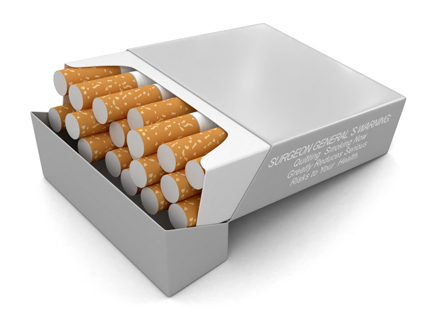 Cigarette packets could be stripped of all branding following a consultation, the health secretary, Andrew Lansley, has revealed. The minister said that he was “open minded” about putting the idea of plain cigarette packaging to the public, but added: “We don’t work in partnership with the tobacco companies because we are trying to arrive at a point where they have no business in this country.”
Deborah Arnott, of Action on Smoking and Health, said: “The consultation is just the first step, putting us in pole position to be the first European nation to put tobacco in plain, standardised packs. “Cigarettes are not like sweets or toys and should not be sold in colourful packaging which makes them appealing to children. Cigarettes are full of toxins and cause fatal diseases: plain, standardised packaging makes this explicit.”
But pro-smoking group Forest, the Freedom Organisation for the Right to Enjoy Smoking Tobacco, has launched a Hands Off Our Packs (Hoops) campaign. Director Simon Clark has described plain packaging as “the persecution of a minority lifestyle choice”. He said: “Plain packaging is yet another attack on retailers and adult consumers.”
The move comes a week after a law on tobacco promotion in England came into force, requiring all large shops and supermarkets to cover up cigarettes and hide tobacco products from public view. Lansley, who said that all levels of smoking are harmful, added that the ban on displaying cigarettes was part of a move to ensure “we no longer see smoking as a part of life.”
David Batty, The Guardian, 13 April 2012
Teen spirit: What's it really like to be a teenager? - PAU C. Valenciana 2013
>Exámenes selectividad inglés Comunidad Valenciana resueltos
 15-year-old Ellie Wilson says “The problem with being a teenager is that one minute we’re up and then we’re down; one minute I want to shout the house down, the next I feel very happy.”
The turbulent process of becoming an adult is one that for generations has baffled parents and scientists. When almost every other species manages the transition from infancy to adulthood with relative ease, why do we seem to find it so hard?
First we blamed hormones. Then scientists found that the human mind undergoes a massive restructuring during the 12th to 25th years. Between childhood and adulthood, critical physical changes are taking place. These result in behaviours that parents might have thought were designed to cause them pain, but which are in fact vital processes in the brain’s development.
The truth remains that science offers a rational explanation, but it doesn’t make everyday communication with teenagers any easier. Which is where Lovegrove and Bedwell step in. These friends published a book, Teenagers Explained, that was designed to help adults understand adolescence. Because “there are things we talk about that adults just don’t understand.”
“Try to let us make our own mistakes,” pleads Lovegrove. “If we don’t get to make our own mistakes when we’re young then, at some point, as soon as you’re not around, we’re just going to explode. It’s OK to be concerned and to ask questions but please don’t question us on everything.
Do try to talk to us and make an effort to get to know us, but also understand that there are some things we don’t want to talk to you about.”
Charlotte Philby, The Independent, 14 July 2012
Boys and girls - PAU Valencia 2003
>Exámenes selectividad inglés Comunidad Valenciana resueltos
 |
| Source: Skin&Blis |
Girls, on the other hand, play in small groups or pairs. The centre of a girl´s social life is her best friend. Within the group, intimacy is key: differentiation is measured by relative closeness. In their most frequent games, such as jump rope and hopscotch, everyone gets a turn. Many of their activities (such as playing with dolls) do not have winners or losers. Although some girls are certainly more skilled than others, girls are expected not to boast about it, or show that they think they are better than the others. Girls don´t give orders: they express their preferences as suggestions, and suggestions are likely t be accepted.
Martin, N. (2000). “Women must wait 15 years for equality on housework”
Chernobyl "poses more risk than Fukushima" - PAU C.Valenciana 2011
>Exámenes selectividad inglés Comunidad Valenciana resueltos
 |
| Sergei Supinsky/AFP/Getty Images |
The recent nuclear disaster at the Fukushima plant in Japan has been described as "the next Chernobyl" but Chernobyl itself poses an even greater threat, according to campaigners. Twenty-five years on from the accident, the sarcophagus hastily put in place to prevent further poisons seeping into the atmosphere is now crumbling. And this poses a great danger to the people of the region, according to Adi Roche, Chief Executive of Chernobyl Children International (CCI).
A quarter of the region is now unoccupiable and already 200,000 people have been displaced from their homes, but the nightmare may not be over for the people of Belarus.
In the aftermath of the explosion in 1986, emergency teams covered the stricken reactor with a massive steel and concrete structure to seal in the lethal mix of radioactive fuel and materials like concrete and sand that fused together in the 1986 blast. That has come to the end of its lifespan and must be replaced but, to date, nothing has been done.
"It is a crumbling sarcophagus", and "The next Chernobyl could be Chernobyl", said Ms Roche of the structure of nearly 700,000 tons of steel and 400,000 tons of concrete. She estimates that just three per cent of the radiation escaped in the original explosion -leaving 97% of the material "still rumbling away". She was "heartbroken" when the catastrophe struck at the Fukushima plant in Japan. She also pointed out immediately after the Japanese disaster, experts had said: "This is not Chernobyl". But now, weeks later: "It is Chernobyl".
Irish Independent, 22nd April, 2011, p. 13
Suscribirse a:
Entradas (Atom)

